Inside Distributed Rate Limiters: Token Buckets, Sliding Windows, and Global Quotas
Published:
1. One API Key, Many Gateways
Tenant acme has this contract for POST /search:
sustained rate    10 requests/second
burst capacity    40 requests
monthly budget    20 million search units
At 09:00, Acme’s batch job sends 80 requests almost simultaneously. DNS and load balancing distribute them across six API gateways in two regions.
If every gateway independently allows 40 requests, the system may admit all 80 even though the tenant owns one global burst budget. If every request must synchronously contact one remote counter, the limit is accurate but the rate limiter becomes a latency and availability dependency for the entire API.
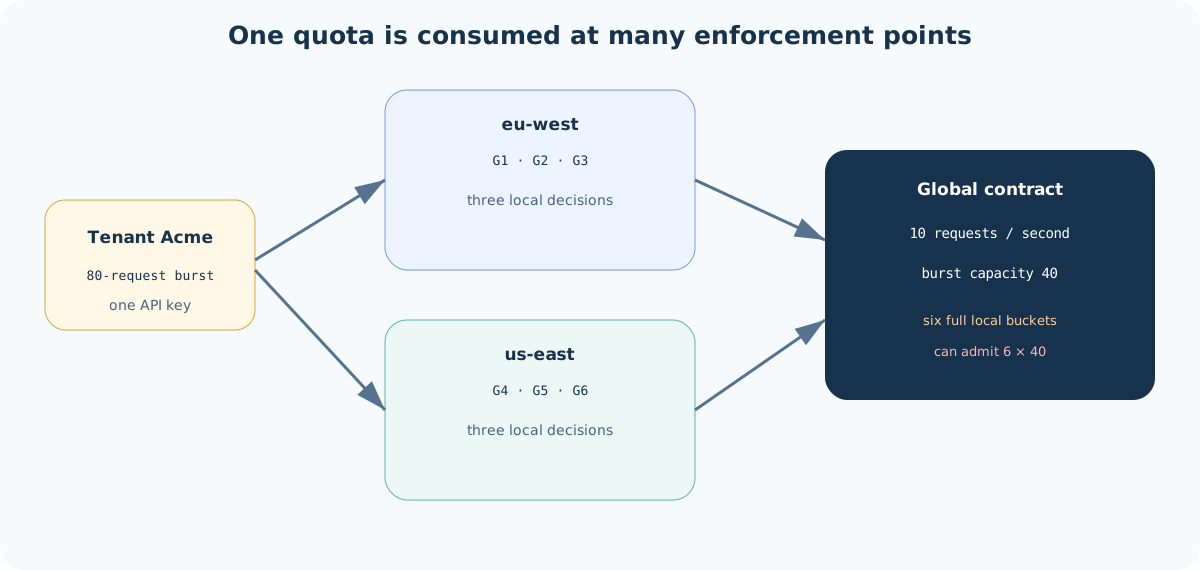
This is the central design tension:
A distributed rate limiter must preserve a useful quota while making a fast decision on every request, even though enforcement is spread across many processes and failure domains.
We will follow Acme’s traffic through local algorithms, an atomic shared counter, replicated shard failover, and finally leased regional quota backed by a highly available allocator. At every step we will calculate both the intended limit and the maximum overshoot.
2. Rate Limiting Is Admission Control
A rate limiter decides whether a unit of work may enter a protected system now. It is not the same as authentication, billing, load balancing, or a circuit breaker.
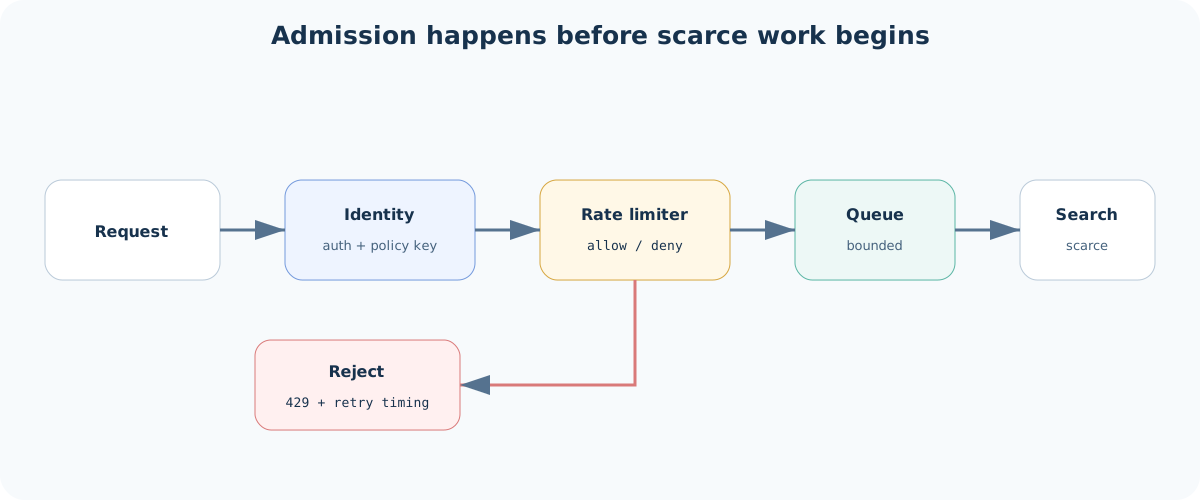
| Mechanism | Primary question |
|---|---|
| Authentication | Who is calling? |
| Authorization | May this caller use this operation? |
| Rate limit | May this unit enter under the caller’s policy now? |
| Concurrency limit | How many units may remain in flight? |
| Circuit breaker | Is the dependency healthy enough to receive work? |
| Quota accounting | How much durable entitlement remains? |
These mechanisms often compose. A caller may be below 10 requests per second but already have 500 slow requests in flight. A concurrency limit must still protect the database. A request may also pass the per-second limiter but exceed the tenant’s monthly purchased budget.
3. First Define the Policy Key
The counter is meaningless until we define which requests share it. For the story, one descriptor is:
tenant=acme | operation=search | plan=v7
Possible dimensions include:
- authenticated user or API key;
- tenant or organization;
- source IP or network prefix;
- route, method, model, or operation class;
- destination dependency;
- region or availability zone;
- risk class, account tier, or feature plan.
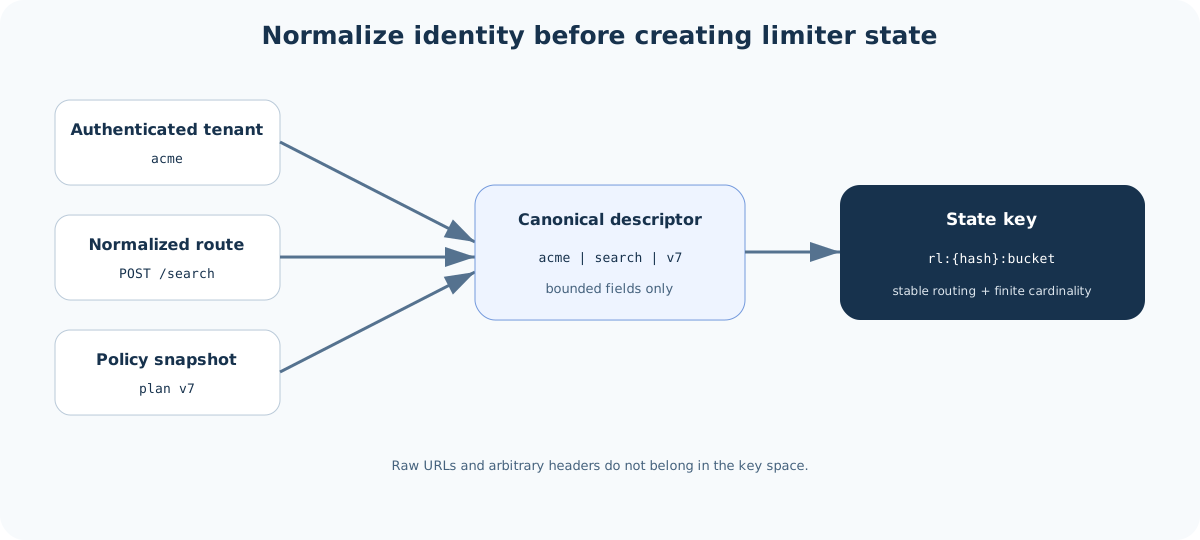
IP-only limits can punish many users behind one NAT and are easy to evade with many addresses. User-only limits do not protect unauthenticated endpoints. A production edge normally layers a coarse IP/network defense before authentication and a precise tenant or user policy afterward.
The key space must be controlled. Placing arbitrary URLs, user agents, or raw headers into keys creates unbounded state and metric cardinality. Normalize routes and allow only policy-approved dimensions.
4. State the Contract Mathematically
“10 requests per second” can mean several different traffic envelopes. Define:
A(t1, t2) = admitted cost in interval [t1, t2)
r         = sustained refill rate
B         = burst capacity
A token-bucket contract permits:
A(t1, t2) <= B + r × (t2 - t1)
For Acme, r = 10/s and B = 40. An idle client may send 40 immediately. Over the next two seconds, at most about 20 more units become available.
Also define what is counted:
- attempts or only successful requests;
- requests, bytes, records, tokens, or estimated compute units;
- rejected retries;
- cached responses;
- work that is cancelled or refunded;
- duplicate requests carrying one idempotency key.
Without this contract, two correct implementations can enforce different products.
5. Fixed Windows Are Cheap but Have a Boundary Burst
Divide time into aligned windows and maintain one counter:
key = tenant:acme:search:2026-08-17T09:00:00Z
allow if incremented count <= 10
expire key after the window
The state is one integer per active key per window. The decision is constant time and easy to make atomic.
The weakness appears at the boundary. Acme can send ten requests at 09:00:00.900 and ten more at 09:00:01.050. Both windows are valid, but 20 requests arrive within 150 milliseconds.
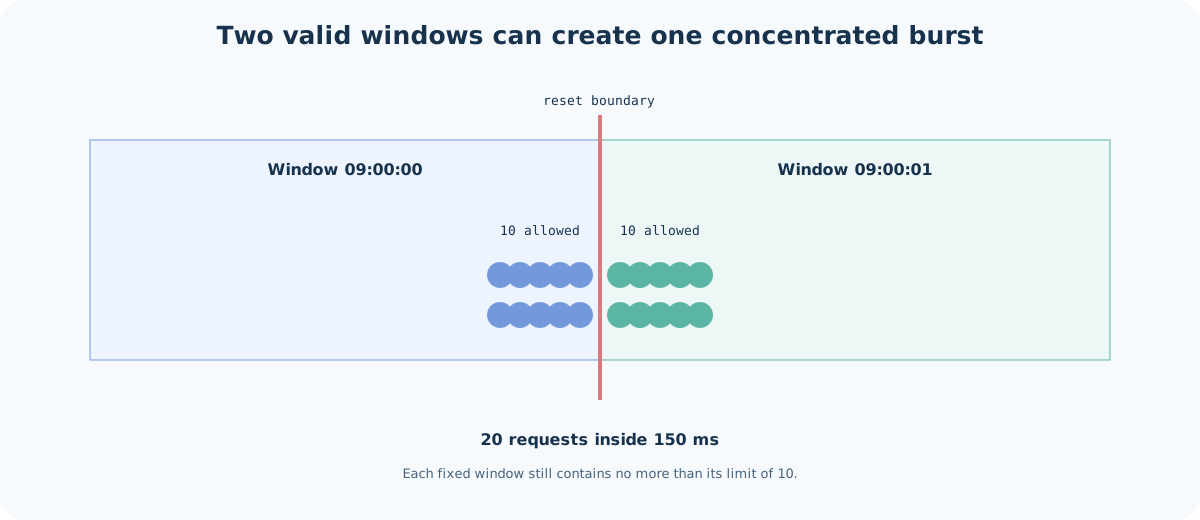
For a fixed limit L per window, a short interval crossing a boundary may observe nearly 2L. Randomizing window alignment per key spreads aggregate load but does not change the individual contract.
Fixed windows are appropriate when low state cost matters more than smoothing, or when the product itself is defined in calendar windows such as requests per day.
6. Sliding Logs Enforce the Literal Window
A sliding log stores the timestamp of every admitted request. At time now:
- remove timestamps
<= now - window; - sum the cost of remaining entries;
- admit if adding the request stays within the limit;
- append the new timestamp if admitted.
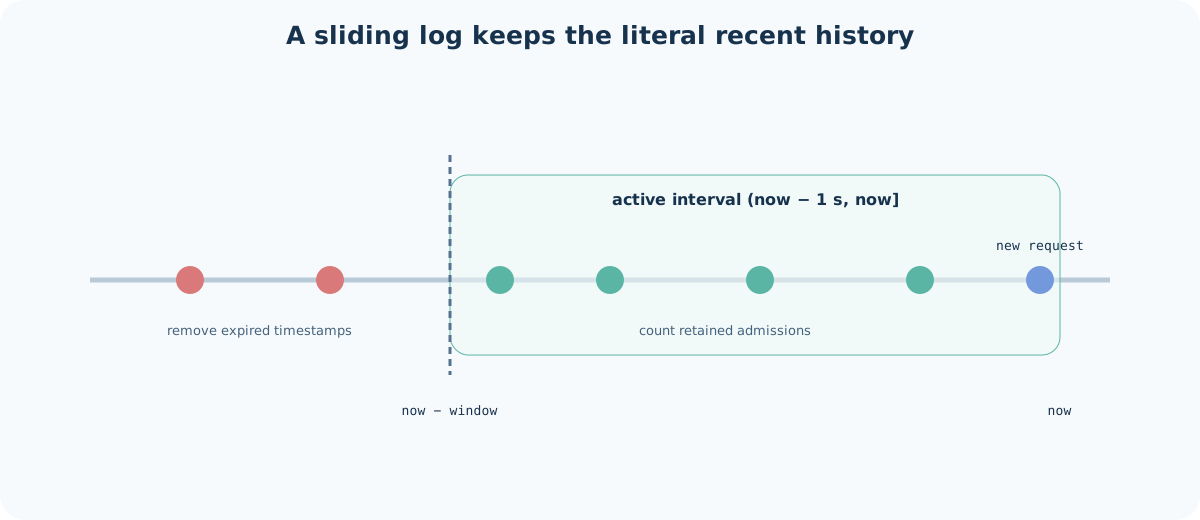
For the last-one-second contract, the decision is exact relative to the clock and serialization point used by the store. The cost is state proportional to traffic:
memory per key = O(number of events in the window)
cleanup work   = O(expired events removed)
A sorted set can implement the log, but one hot tenant at millions of requests per second creates millions of timestamp members. Unique member IDs are needed when several requests share the same timestamp.
Sliding logs fit low-volume, strict limits such as password attempts. They are usually too expensive for every request on a high-throughput API.
7. Sliding-Window Counters Approximate with Two Buckets
Keep counts for the current and previous fixed windows. If fraction p of the current window has elapsed, estimate:
estimated = current_count + previous_count × (1 - p)
At 25% into the window, retain 75% of the previous count.
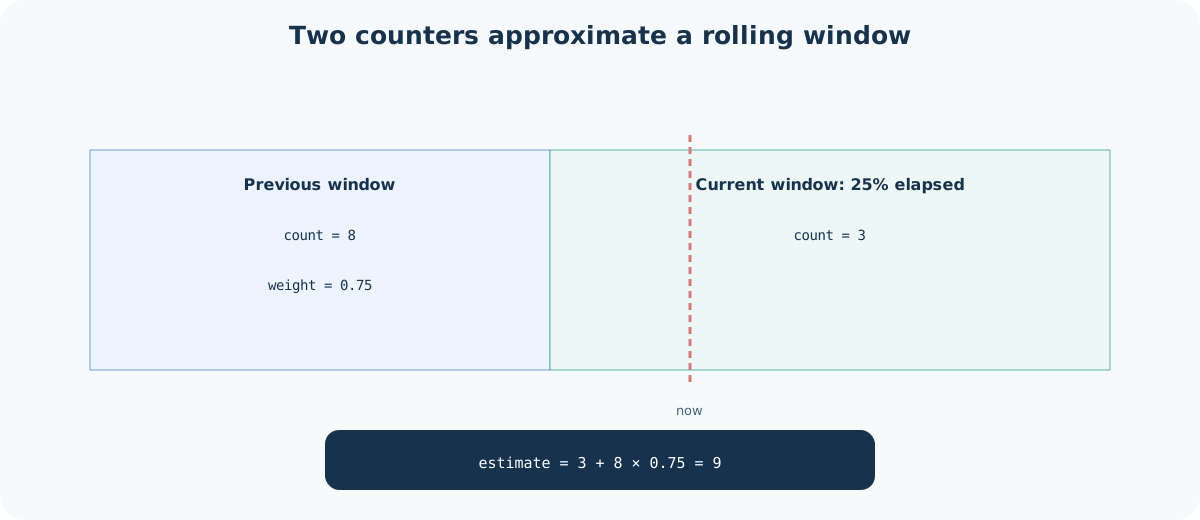
This reduces state to two counters per key and smooths the fixed-window edge. It is still an approximation: it assumes previous-window traffic was evenly distributed. If those requests were concentrated at one edge, the estimate may temporarily overcount or undercount.
More sub-windows improve accuracy at additional storage and update cost. For example, sixty one-second buckets approximate one minute more closely than two one-minute buckets.
8. Token Buckets Encode Sustained Rate and Burst
A token bucket stores:
capacity B
refill rate r tokens/second
current tokens T
last refill time t_last
For a request of cost c at time t:
T_refilled = min(B, T + r × max(0, t - t_last))

if T_refilled >= c:
    T_next = T_refilled - c
    allow
else:
    T_next = T_refilled
    deny
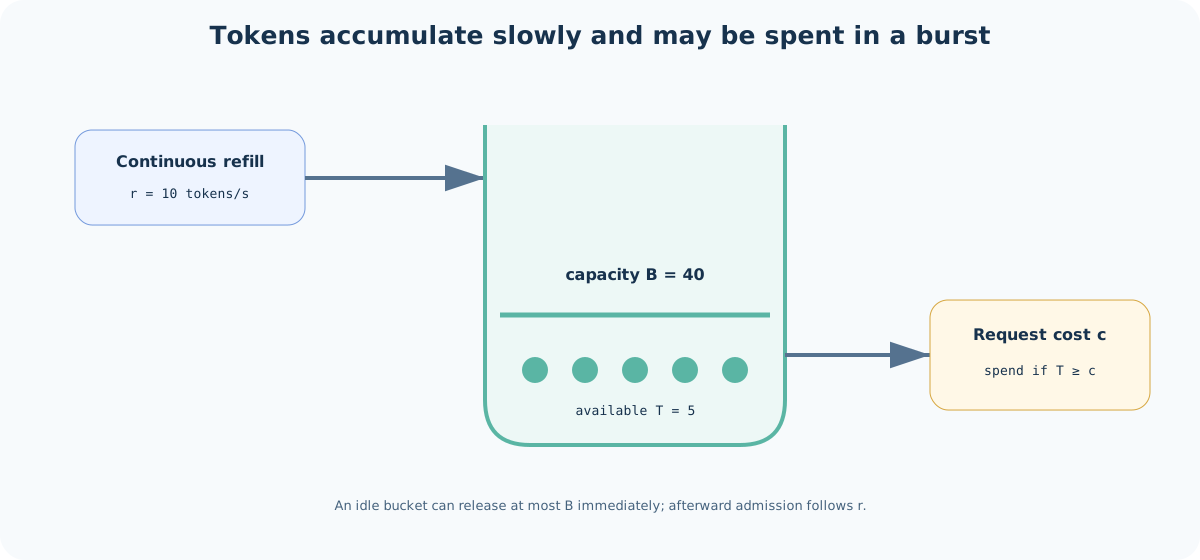
No background timer is required. Refill can be calculated lazily when the next request arrives. Use fixed-point integers—for example microtokens and monotonic nanoseconds—to avoid floating-point disagreement and fractional-token loss.
The wait until cost c becomes available is:
retry_after = max(0, c - T_refilled) / r
Token buckets are a strong default for APIs because r describes sustainable load while B makes ordinary client bursts usable.
9. Leaky Buckets Shape Output Instead of Saving Burst Credit
The phrase leaky bucket is used for related algorithms. The queue form puts accepted work into a bounded queue drained at a constant rate.
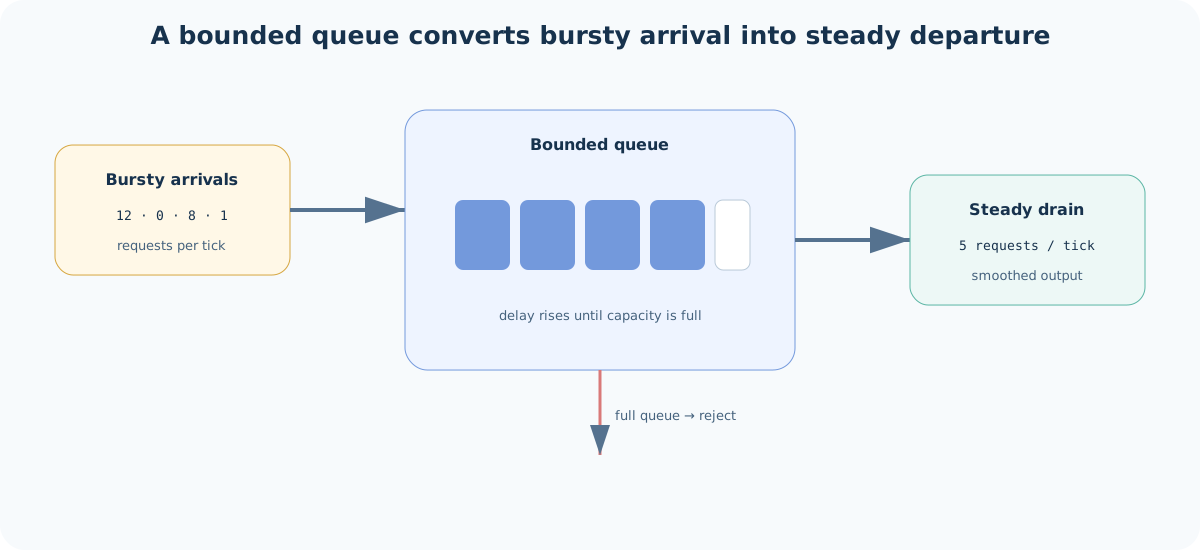
If arrivals exceed the drain rate:
- queueing delay rises;
- the queue eventually fills;
- later requests are rejected or dropped.
This is traffic shaping, not merely policing. It is useful when a downstream system needs smooth work arrival, but queued requests consume memory and caller deadlines. A rate limiter that returns immediately should usually reject rather than hide overload in an unbounded queue.
Token bucket and leaky queue can be combined: a token bucket admits a bounded burst, then a concurrency or queue limit protects slow downstream work.
10. GCRA Represents the Same Envelope as a Virtual Schedule
The Generic Cell Rate Algorithm stores a theoretical arrival time TAT. Let:
I = 1 / rate                  emission interval per unit
τ = burst tolerance          derived from burst capacity
A request at time t is conforming when:
t >= TAT - τ
If admitted:
TAT = max(t, TAT) + cost × I
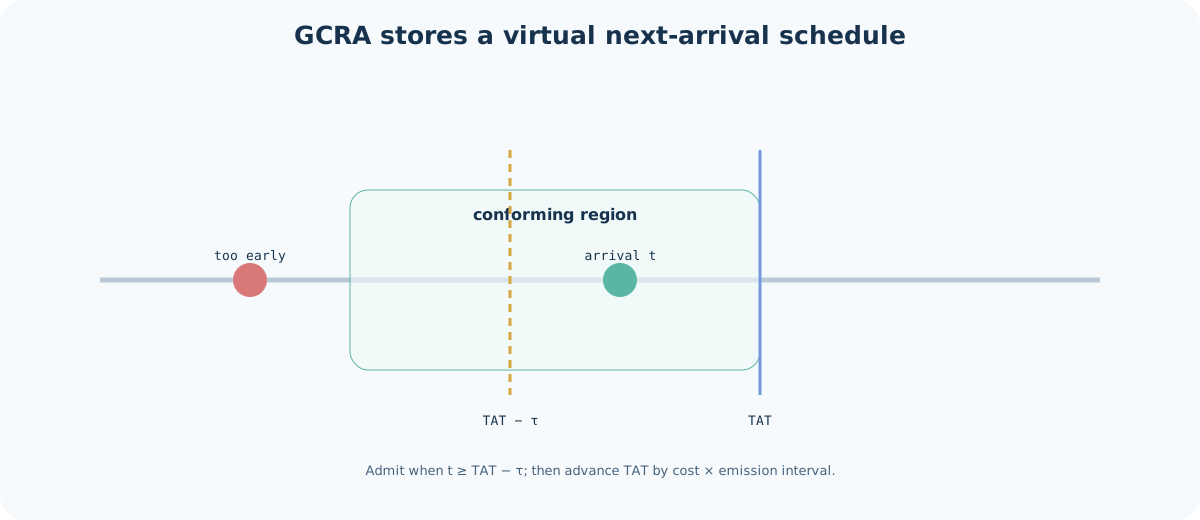
GCRA needs one timestamp-like value per key and naturally calculates a retry time. It is mathematically related to a token bucket, but its virtual-schedule form can be convenient for atomic storage scripts. Token bucket is usually the easier mental model; GCRA is worth recognizing when reading production limiter implementations.
11. A Local Token Bucket Is Fast
Within one process, protect the state with one mutex or assign each key to one event-loop shard. A compact C++ sketch is:
struct Decision {
    bool allowed;
    std::uint64_t remaining_microtokens;
    std::chrono::nanoseconds retry_after;
};

class TokenBucket {
public:
    Decision allow(std::uint64_t cost, Clock::time_point now) {
        std::lock_guard lock(mu_);
        refill(now);

        if (tokens_ < cost) {
            return {false, tokens_, waitFor(cost - tokens_)};
        }

        tokens_ -= cost;
        return {true, tokens_, std::chrono::nanoseconds::zero()};
    }

private:
    std::mutex mu_;
    std::uint64_t tokens_;       // fixed-point microtokens
    Clock::time_point updated_;
};
The refill, comparison, and deduction are one critical section. Splitting them allows concurrent requests to spend the same token.
Use a monotonic clock for elapsed time inside one process. Wall-clock steps must not create tokens or move refill backward.
12. Local Buckets Do Not Form One Global Limit
Suppose six gateways each hold a full 40-token bucket for Acme:
maximum immediate admission = gateways × local capacity
                            = 6 × 40
                            = 240 requests
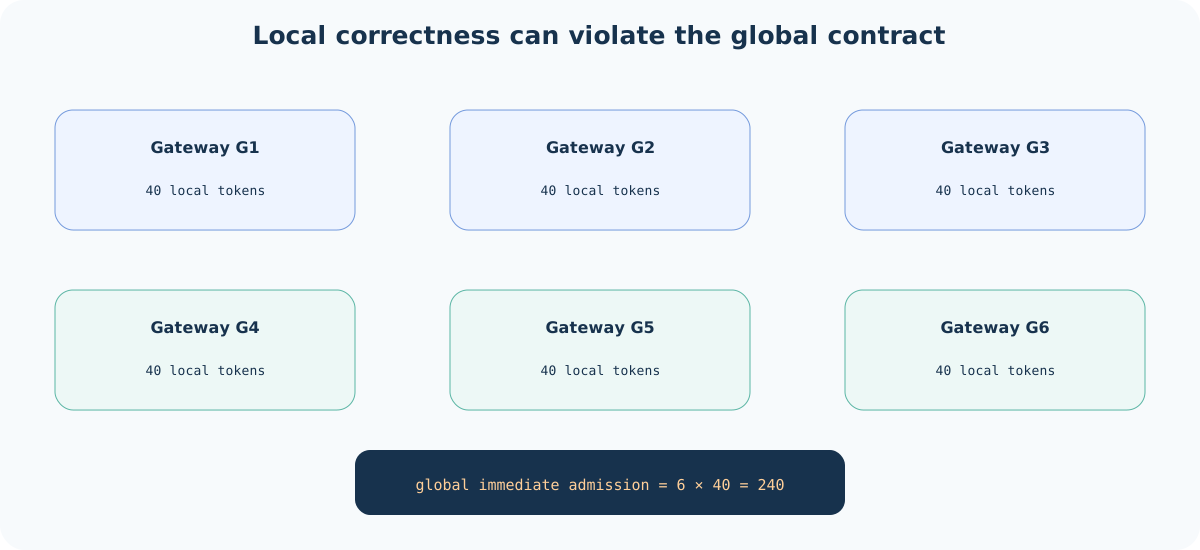
Even if the 40 tokens are divided evenly, skew causes false rejection. Gateway G1 may exhaust its allocation while G5 remains idle with unused tokens.
Local-only limiting is correct when the contract is explicitly per instance, or when its purpose is coarse overload protection. It is not a strict tenant- global quota unless the overshoot is part of the documented bound.
13. A Shared Decision Must Be Atomic
A central rate-limit service can serialize the read-refill-decide-update step for Acme’s key. Redis is a common state store because a script executes this sequence atomically on the owning shard.
One compact token-bucket script has this shape. Here time is milliseconds, tokens use fixed-point integer units, and rate is microtokens per millisecond:
local capacity = tonumber(ARGV[1])
local rate = tonumber(ARGV[2])
local now_ms = tonumber(ARGV[3])
local cost = tonumber(ARGV[4])
local ttl_ms = tonumber(ARGV[5])

local state = redis.call('HMGET', KEYS[1], 'tokens', 'updated_ms')
local tokens = tonumber(state[1]) or capacity
local updated_ms = tonumber(state[2]) or now_ms

local elapsed = math.max(0, now_ms - updated_ms)
tokens = math.min(capacity, tokens + elapsed * rate)

local allowed = 0
if tokens >= cost then
  tokens = tokens - cost
  allowed = 1
end

redis.call('HSET', KEYS[1], 'tokens', tokens, 'updated_ms', now_ms)
redis.call('PEXPIRE', KEYS[1], ttl_ms)
return {allowed, tokens}
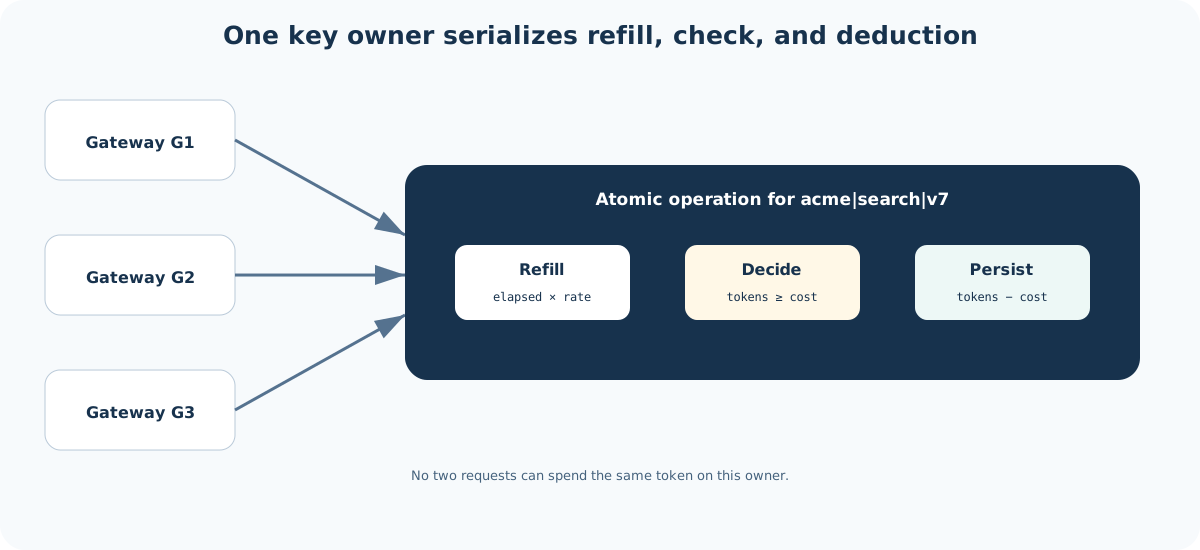
The real script must define integer units, missing-state behavior, TTL, clock source, maximum elapsed time, and response fields. Passing client wall time is dangerous if clients disagree or can manipulate it. Prefer a trusted service or store time source and clamp impossible elapsed values.
Script atomicity is local to one Redis shard. Every key needed for one atomic decision must route to that shard, often using a hash tag.
14. The Synchronous Global Path Has a Cost
With a per-request global check:
client -> gateway -> rate-limit service -> state shard -> decision -> gateway
The limiter adds network latency and one more dependency before the application can run. Its capacity must cover the request rate of every protected service, including rejected traffic during attacks.
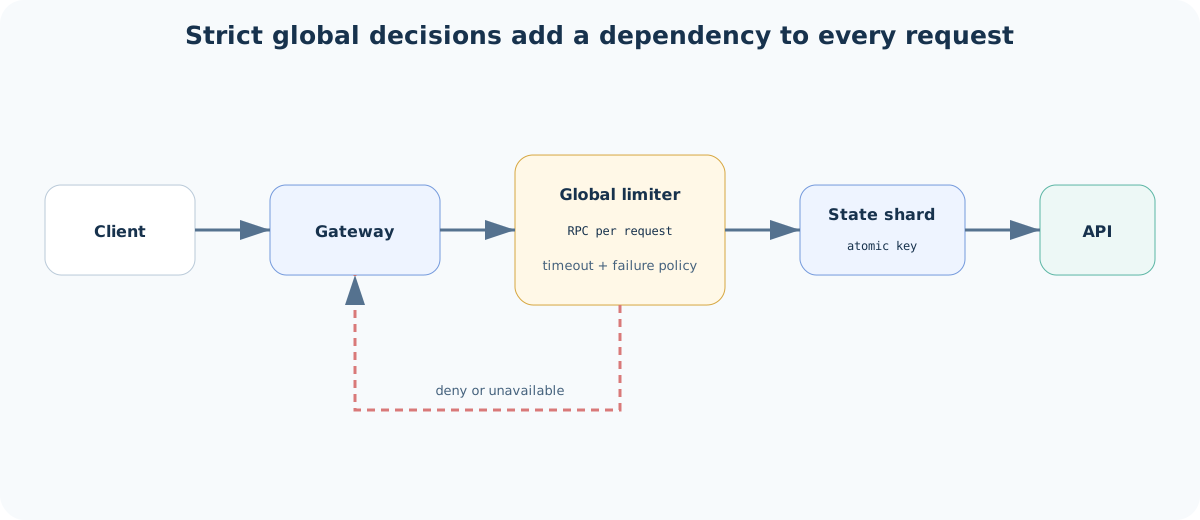
Bound the call with a short timeout and reuse connections. The gateway needs a defined policy for timeout, malformed response, and unavailable state shard. Retrying a timed-out decision is subtle: the first attempt may already have deducted tokens. A unique decision ID or conservative no-retry policy avoids double charging, but the correct choice depends on whether the quota is a safety boundary or an overload heuristic.
Coarse local protection can reject obvious floods before they overload the global service.
15. One Logical Owner Must Not Be One Physical Server
Atomicity requires one logical authority for Acme’s bucket. It does not require one physical rate-limit server.
A production synchronous path normally has three independently scalable layers:
- every gateway can call any stateless rate-limit-service replica;
- the service uses a versioned partition map to find the key’s state shard;
- the shard has one write leader plus replicas in different failure domains.
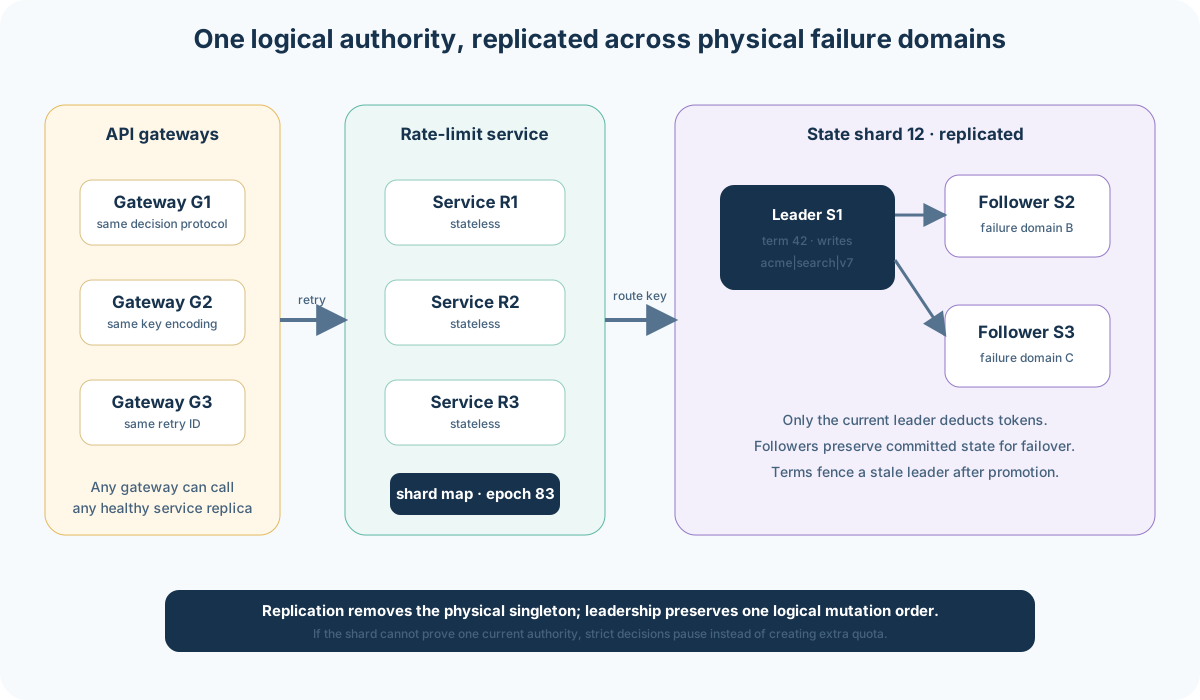
The service replicas do not each own a copy of the token bucket. They all route acme|search|v7 to the same current shard leader. Adding service replicas therefore increases request-processing capacity without multiplying Acme’s quota.
The shard leader serializes deductions. Followers exist for recovery, not as independent writers. If two shard replicas accept writes for the same key, each can spend the same remaining tokens and the safety property is already lost. Leader terms or configuration epochs must therefore fence an old leader before a promoted replica accepts writes.
Replication also changes the meaning of an allowed response:
| Acknowledgement rule | Leader failure consequence |
|---|---|
| Reply after leader memory only | Fast, but the entire deduction can disappear |
| Reply after local durable log | Survives a process restart, not loss of that node |
| Reply after asynchronous replica send | Small window of accepted deductions can still be lost |
| Reply after quorum commit | Survives minority failure, but cannot progress without a quorum |
Losing recent deductions creates tokens that clients already spent. That may be acceptable, and measurable, for approximate abuse protection. It is usually unacceptable for a purchased hard quota; use quorum-committed state or a durable reservation ledger for that boundary.
15.1 Failover Has an Uncertain-Outcome Window
Suppose the shard leader commits Acme’s deduction and crashes before the reply reaches the gateway. The gateway observes a timeout, but cannot infer whether the tokens were spent.
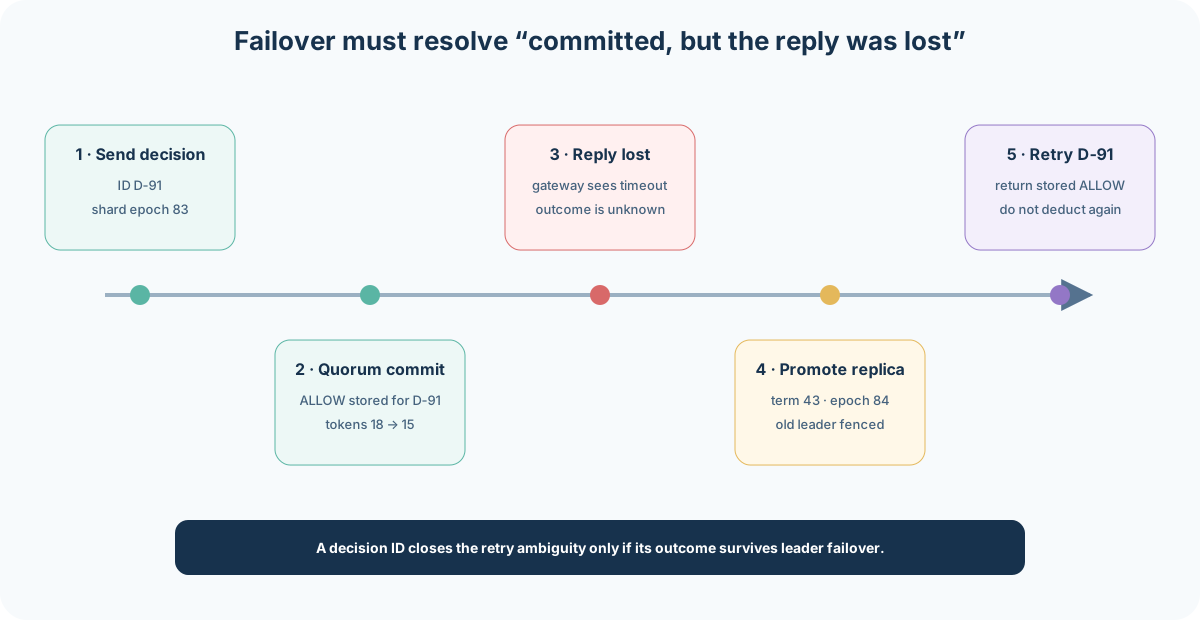
A safe failover sequence is:
- stop routing new decisions to the failed term;
- elect or promote a replica that contains every committed deduction;
- publish a greater shard-map epoch;
- fence requests carrying the old epoch;
- retry with the original decision ID;
- return the stored outcome if that decision was already committed.
The decision ID makes the operation idempotent across a lost reply. It needs a retention period at least as long as the permitted client retry window. Without deduplication, retrying may spend twice; blindly treating the timeout as an allow may spend nothing in the store while the request still executes.
This architecture removes physical single points of failure, but it does not promise continuous availability. During election or loss of a quorum, the strict path pauses. The gateway then applies the explicit bounded fallback described later: local emergency allowance, an existing regional allocation, or fail closed according to the limit’s purpose.
16. Shard by the Complete Limit Key
One state node cannot hold every tenant. Hash the canonical descriptor:
hash(tenant=acme | operation=search | plan=v7) -> shard 12
All gateways must use the same key encoding and current shard map. The state for one atomic decision remains on one owner.
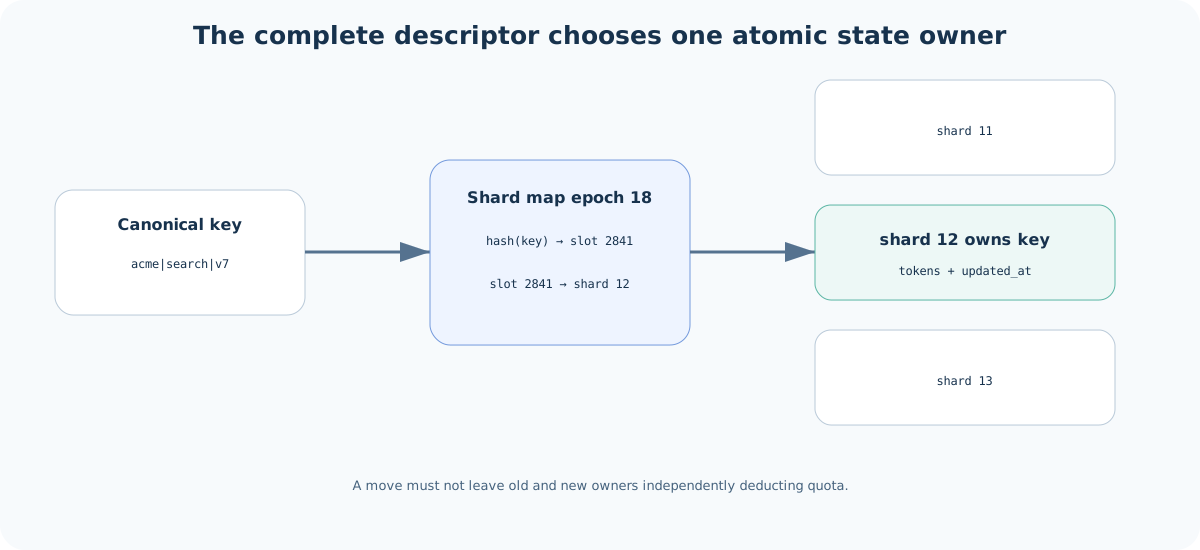
Rebalancing needs the same care as any stateful partition move. If old and new owners both accept deductions without coordination, quota is duplicated. Safe options include:
- briefly stop decisions for the moving range;
- transfer state and switch routing with an epoch;
- forward old-owner requests to the new owner;
- use a storage system whose own resharding preserves single-key atomicity.
The sharding guide develops partition maps, epochs, and live migration in detail.
17. Global Keys Become Hot Keys
Per-user keys distribute naturally. A global protection key such as destination=search-cluster receives every request and remains on one shard. Adding replicas does not make concurrent mutations to that one counter independent.
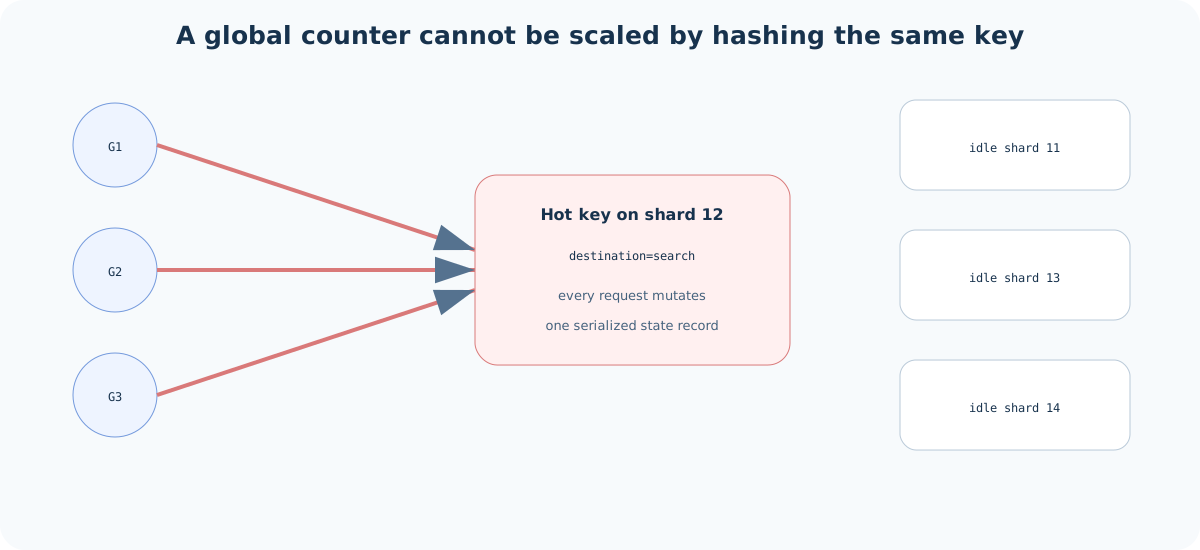
Options include:
- local coarse rejection before the global check;
- batching several units into one atomic deduction;
- partitioning entitlement into bounded local allocations;
- using a dedicated in-memory owner for the hottest key;
- enforcing a concurrency limit closer to the protected dependency;
- relaxing exactness and reconciling distributed counters.
Randomly striping a strict counter across N keys loses the ability to reject exactly at the global boundary unless requests coordinate across all stripes. Striping trades strictness for throughput; quantify that trade.
18. Entitlement and Scheduling Fairness Are Different
A per-tenant bucket stops one tenant from spending another tenant’s contractual rate. It does not guarantee fair service after admission. Acme may admit ten expensive requests just before Birch admits ten cheap ones; a FIFO worker queue can still make Birch wait behind all of Acme’s work.
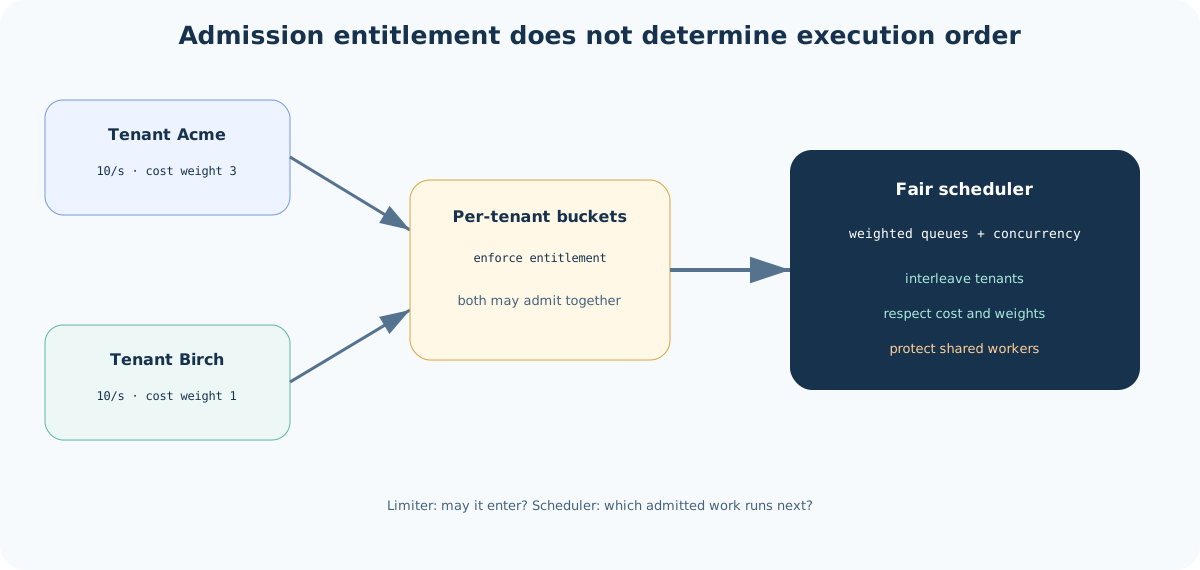
A shared multi-tenant service often needs both:
- a bucket per tenant or plan for entitlement;
- cost-weighted tokens so expensive work is not counted as one cheap request;
- a tenant aggregate limit above individual user limits;
- per-tenant concurrency caps;
- a scheduler such as weighted fair queueing or deficit round robin;
- a global overload limit that may reduce everyone’s admission proportionally.
Equal request counts are not equal resource shares when request cost differs. Define policy weights from the product contract, then measure actual CPU, I/O, memory, and latency to find tenants whose estimated cost is systematically low.
The limiter decides whether a request may enter. The scheduler decides which admitted request runs next.
19. Hierarchical Limiting Protects Multiple Boundaries
One request can consume several budgets:
edge IP defense             1 request
tenant Acme search rate     3 search units
Acme account aggregate      3 units
search-cluster protection   1 request
monthly purchased quota     3 units
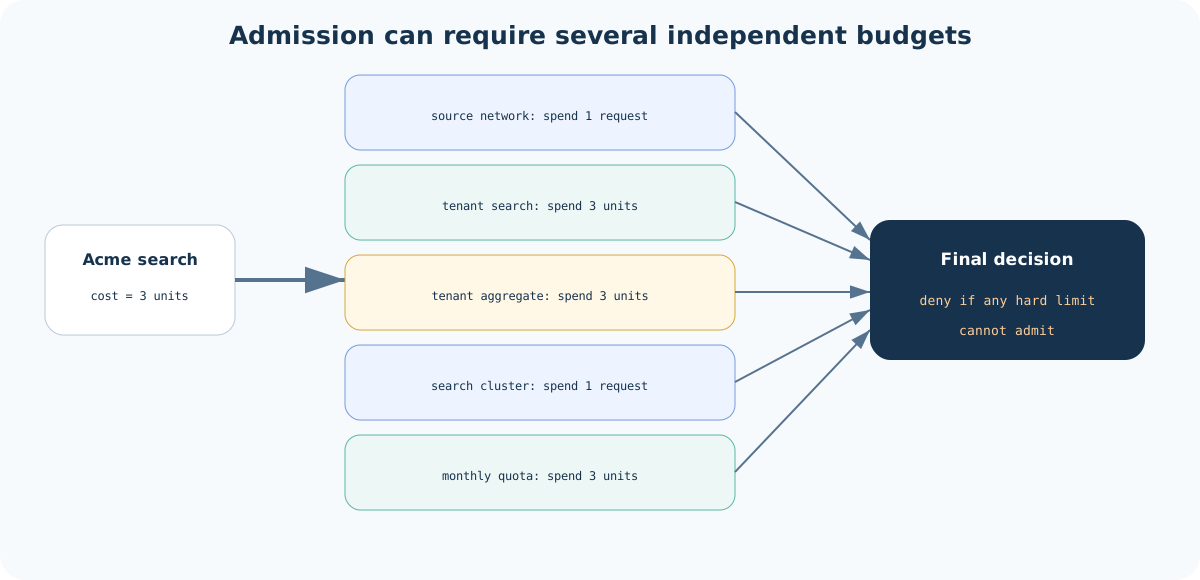
Evaluate the cheapest and broadest defense first. The final decision is deny if any mandatory limit is over quota.
Atomicity across unrelated keys is difficult. Deducting sequentially may spend an outer budget before a later inner budget rejects. Possible contracts are:
- accept conservative leakage and size it;
- colocate related keys and update them atomically;
- check hard purchased quota first and treat protection limits as independent;
- reserve all costs under one transaction in a database;
- use compensation for approximate accounting, never for a safety-critical overload boundary.
Do not promise one atomic multi-dimensional quota if the state model cannot provide it.
20. Local Plus Global Enforcement Reduces Load
A two-stage path uses:
- a local token bucket to absorb abusive bursts cheaply;
- a global service for the precise tenant-wide policy.
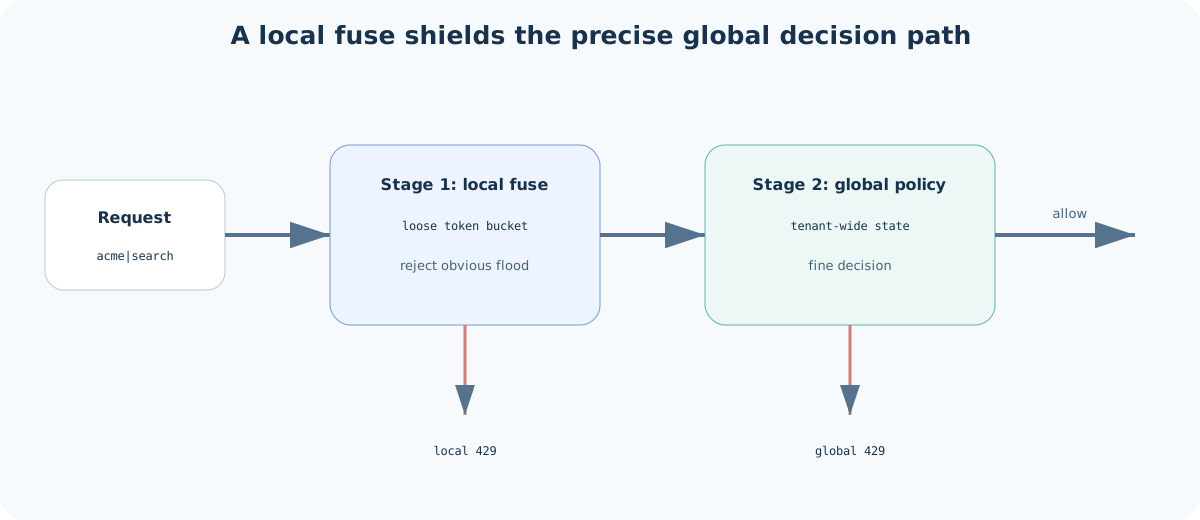
The local stage must not reject legitimate traffic merely because one instance receives more than its share, unless that false-rejection risk is acceptable. It is often configured looser than the global contract and used primarily as a fuse.
Alternatively, the global service can give each gateway a small batch of spendable tokens. Requests spend locally until the batch is low, then obtain another allocation. This removes the global round trip from most requests but turns unused allocations and failure recovery into quota-accounting problems.
21. Static Regional Quotas Are Predictable but Wasteful
For a global 1,000 requests/second limit, allocate:
eu-west     500/s
us-east     400/s
ap-south    100/s
sum       1,000/s
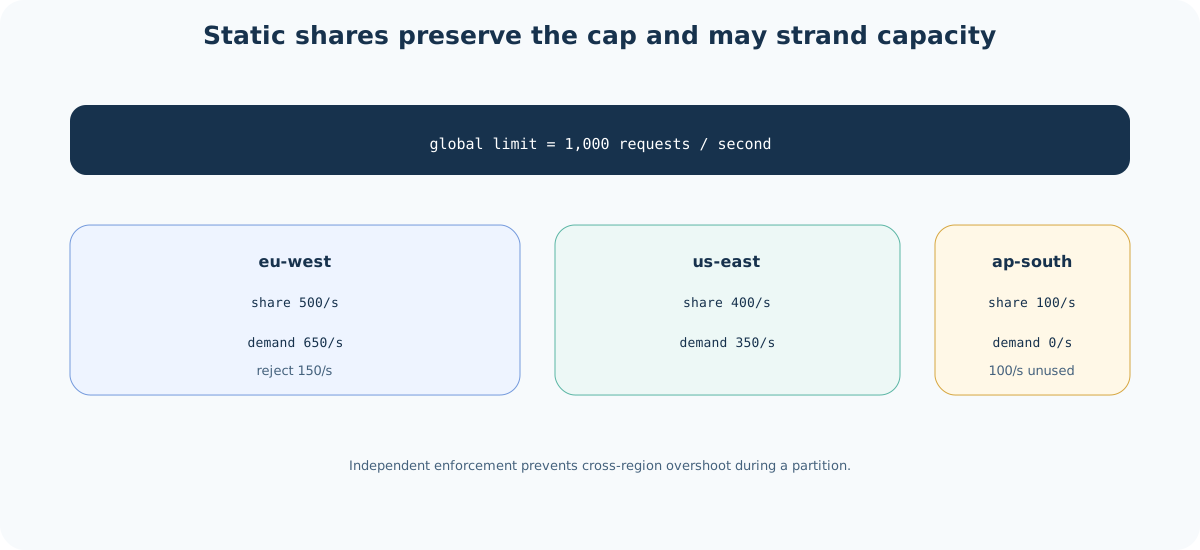
Each region enforces independently, so a cross-region partition does not cause overshoot. But if Europe needs 650/s while Asia is idle, Europe rejects traffic despite 100/s of unused global entitlement.
Operators can move shares through configuration, but slow propagation creates an overlap hazard. Do not activate eu-west=600 before ap-south=0 is known to have relinquished its old 100. Versioned handoff or expiring allocations avoid double assignment.
22. Leased Quota Buys Latency with Bounded Overshoot
A global allocator grants each region a bounded number of tokens for an epoch:
allocation A-71: eu-west  300 tokens, expires 09:00:05
allocation A-72: us-east  200 tokens, expires 09:00:05
Regions spend locally and report usage. The allocator replenishes or rebalances allocations according to demand.
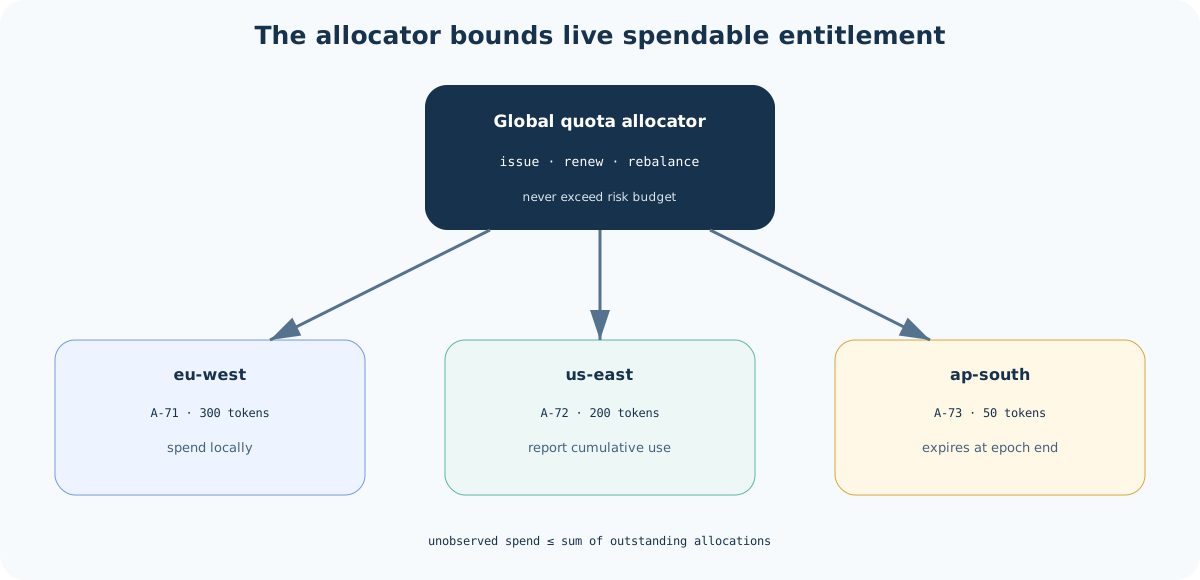
The allocator never gives out more live entitlement than the global budget it is willing to risk. A region must stop spending an expired allocation, and an allocation identity prevents replaying an old grant.
If allocation state can be lost or duplicated, the overshoot bound includes every outstanding grant. With R regions and maximum unreported allocation q_i per region:
maximum unobserved spend <= Σ q_i
Smaller batches tighten the bound but increase allocator traffic. Larger batches improve latency and partition tolerance but strand more capacity and permit more unreported spend.
23. Rebalancing Quota Needs an Epoch
Suppose Europe is busy and Asia is idle. The allocator wants to transfer 80 tokens from ap-south to eu-west.
A safe handoff is:
- stop renewing Asia allocation
A-72or revoke it if reachable; - learn its final spend or wait until the allocation can no longer be used;
- record the returned/expired amount;
- issue Europe a new allocation in a greater epoch;
- reject usage reports carrying an invalid allocation identity or epoch.
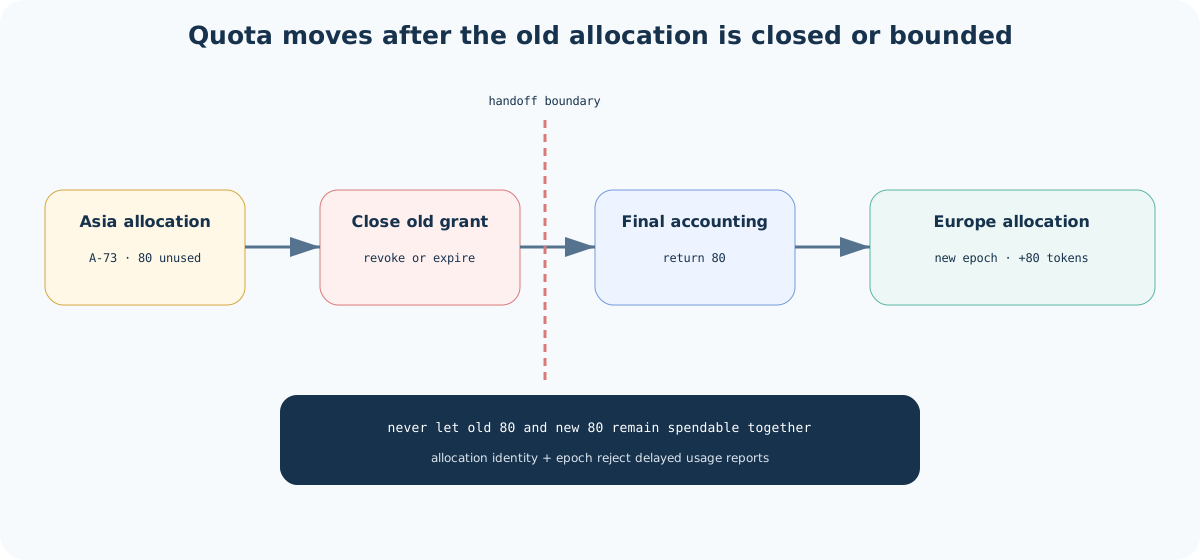
This is the lease-and-fencing pattern from the distributed locks guide, applied to spendable capacity. The scarce resource is not exclusive ownership; it is a divisible number of tokens.
During an allocator partition, a region may continue only within its existing unexpired allocation. That yields bounded autonomy instead of an unbounded fail-open policy.
24. The Global Allocator Must Also Be Highly Available
Regional leases remove the allocator from the per-request data path, but the allocator is still an authority: it decides how much simultaneously spendable quota exists. Running one allocator process would move the single point of failure rather than remove it.
Run several allocator replicas and elect one leader through a consensus-backed log or transactional database. Before returning a grant, the leader durably records:
allocation ID       A-71
policy              acme|search|v7
recipient           eu-west
amount              300
allocator term      42
allocation epoch    108
expires             09:00:05
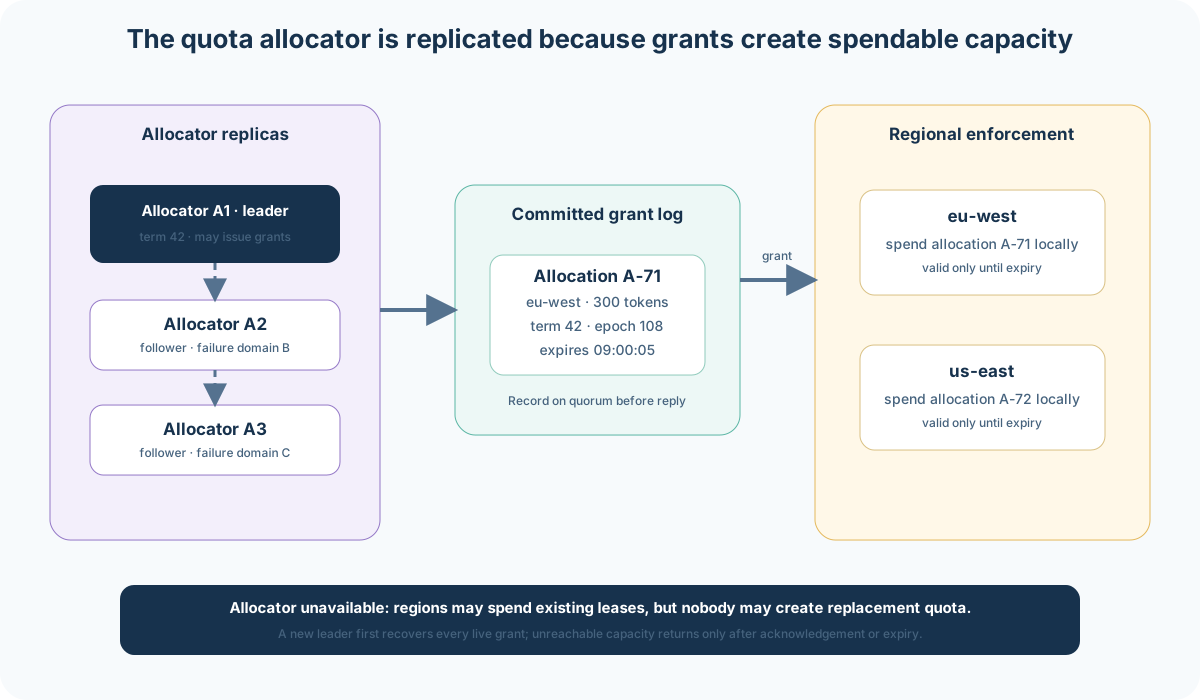
The invariant is:
sum(live grants for a policy) <= global spendable budget
Only a quorum-side allocator leader may issue grants. An isolated old leader is fenced by its term, and regions reject grants from a stale term or epoch. After leader failure, the new leader reconstructs all unexpired grants from the committed log before allocating unused capacity. It must never assume that an unreachable region has stopped spending; capacity returns only after a final usage report, explicit revocation acknowledgement, or lease expiry.
This gives each failure a bounded result:
| Failure | Safe behavior |
|---|---|
| One rate-limit-service replica dies | Gateways retry another stateless replica with the same decision ID |
| State-shard leader dies | Strict decisions pause until a committed replica is promoted |
| Minority state replicas are lost | Quorum-backed shard continues; async designs expose their documented loss window |
| Allocator leader dies | Regions spend existing unexpired grants while a new leader recovers |
| Allocator loses quorum | No new grants; existing grants remain valid only until expiry |
| Region is partitioned | It spends no more than its local unexpired allocation |
| Policy store is unavailable | Gateways use a validated last-known-good version for a bounded time |
The architecture therefore has authorities but not necessarily physical singletons. Authority is replicated; terms and epochs ensure that only one version can create new spendable quota.
25. Derive the Overshoot Budget
Approximation should be a number, not a vague warning. Consider:
N  = number of independent enforcement points
b  = maximum local unreported token batch
Δ  = propagation or report interval
rᵢ = admission rate at point i
Two useful upper bounds are:
batch bound       <= N × b
delay bound       <= Σ(rᵢ × Δ)
combined bound    <= already-issued batches + in-flight decisions
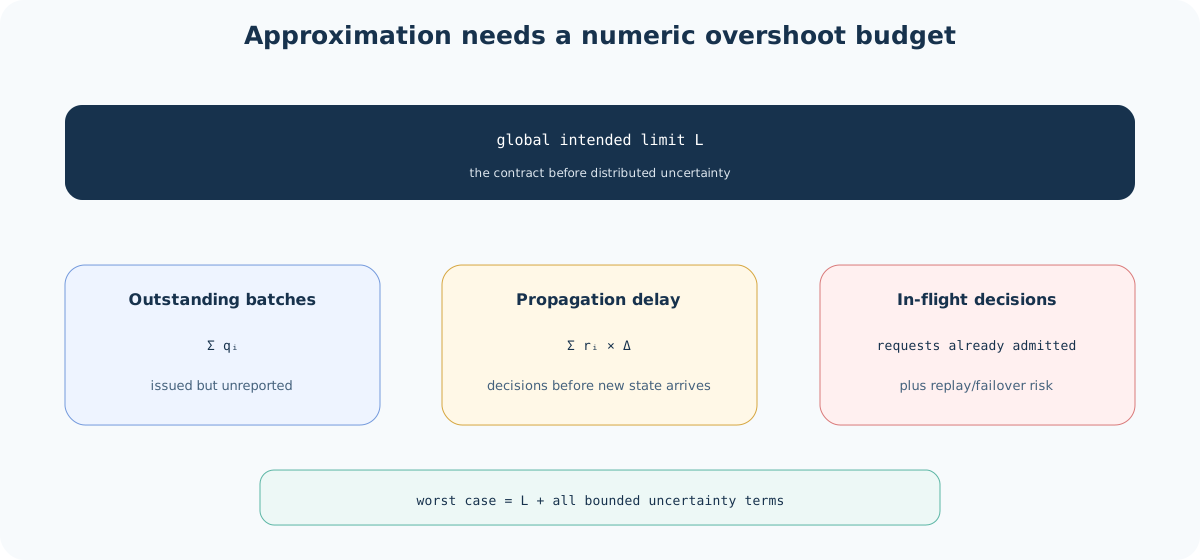
The exact expression depends on whether allocations expire, whether reports are cumulative, and whether failover can replay grants. Include retries and requests already admitted but not yet observed.
For overload protection, translate overshoot into downstream queueing and latency. For paid quota, translate it into maximum unbilled cost. The business consequence determines whether the bound is acceptable.
26. Weighted Requests Need Reservation Semantics
Not every request costs one token. Acme’s search cost may depend on requested work:
metadata lookup       1 unit
full-text search      3 units
vector rerank        10 units
export job           100 units
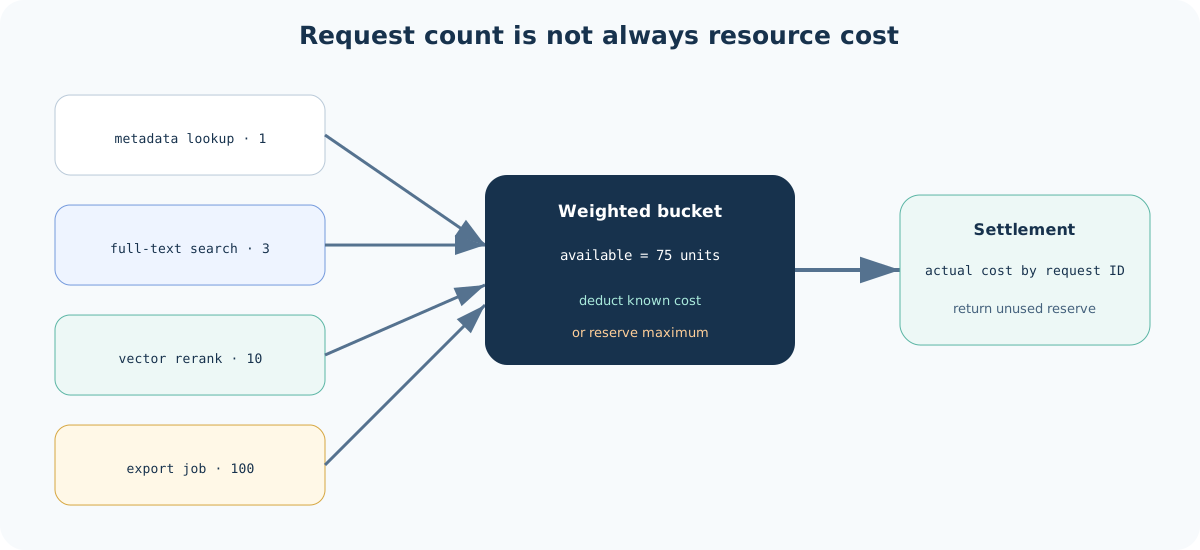
If the true cost is known before work starts, deduct it atomically. If cost is known only afterward:
- reserve a conservative maximum;
- execute the work;
- commit actual usage and return the unused reservation;
- expire abandoned reservations;
- make settlement idempotent by request ID.
Do not let a negative adjustment create tokens beyond bucket capacity. For a streaming response, enforce incremental budget as units are produced and stop cleanly when the budget is exhausted.
Weighted limits are vulnerable to underestimation. Protect the downstream with concurrency and resource limits even when quota accounting is correct.
27. Rate, Concurrency, and Queue Limits Work Together
At 10 requests/second:
50 ms average service time  -> about 0.5 requests in flight
5 s average service time    -> about 50 requests in flight
Little’s Law connects average concurrency L, admitted rate λ, and average time in system W:
L = λW
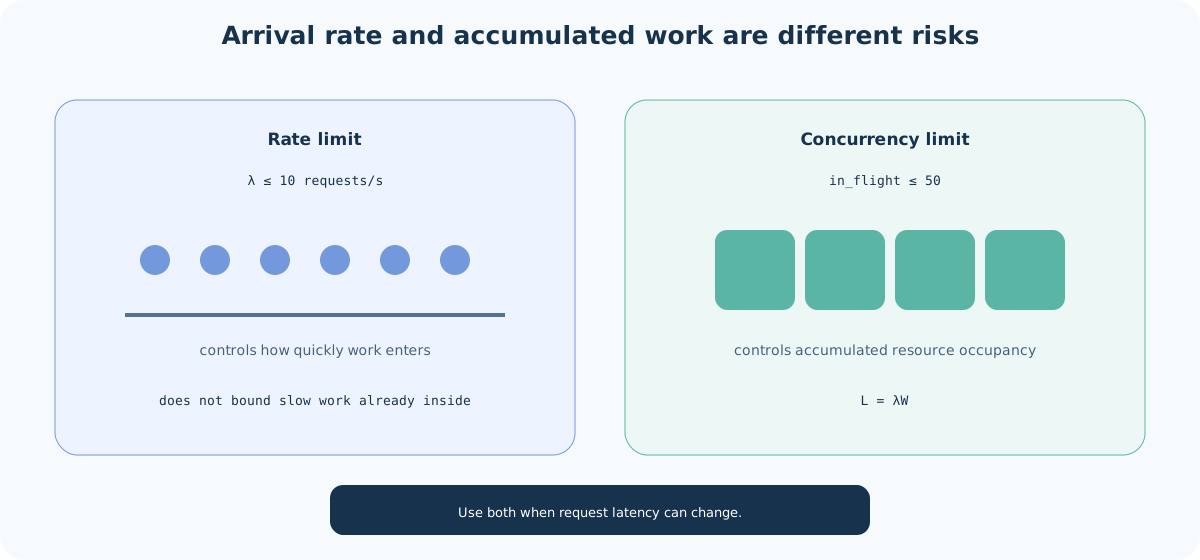
A rate limit alone cannot contain a latency spike. Use:
- rate limits for traffic entitlement and sustained arrival control;
- concurrency limits for memory, connections, and in-flight work;
- bounded queues for short scheduling gaps;
- circuit breakers and load shedding when dependencies degrade.
Retry traffic consumes capacity too. Honor Retry-After, add jitter, and avoid synchronized retry storms at the reset boundary.
28. Failure Policy Must Be Per Limit
When the rate-limit service times out, the gateway must choose deliberately.
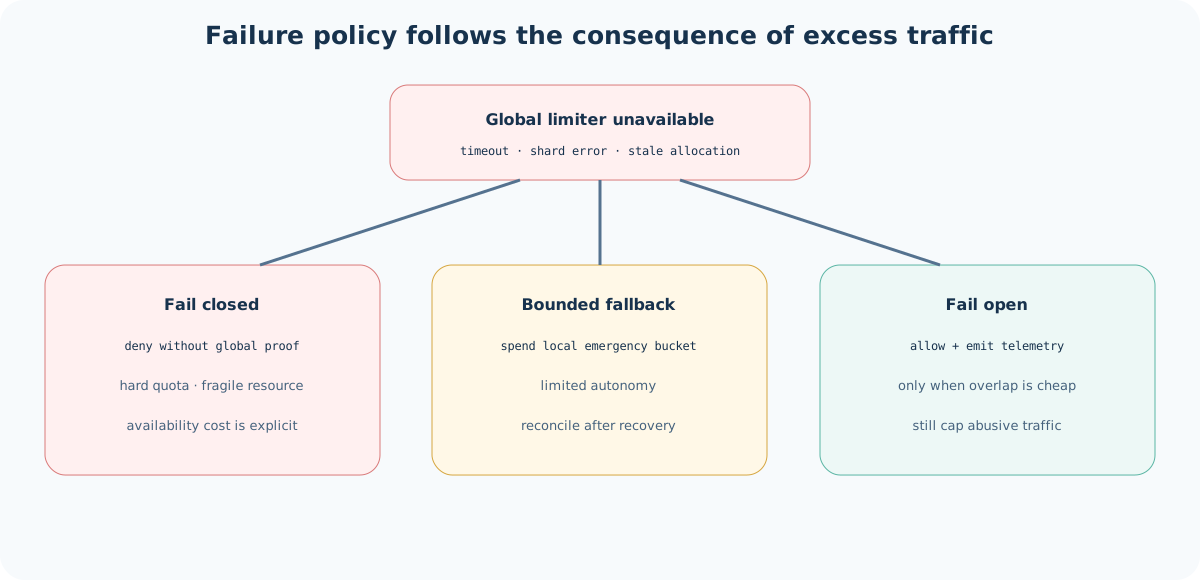
| Limit purpose | Typical fallback |
|---|---|
| Volumetric abuse defense | Fail closed or use a restrictive local fallback |
| Protect fragile database | Fail closed, shed, or enforce local concurrency |
| Product-tier fairness | Use bounded local allowance and reconcile |
| Paid hard quota | Fail closed or consume preallocated durable entitlement |
| Non-critical analytics cap | Fail open with telemetry may be acceptable |
“Fail open” should never mean unlimited. A local emergency bucket can bound admission while the global service is unavailable. “Fail closed” also needs a recovery plan; otherwise a limiter outage becomes a total application outage.
Differentiate:
- timeout before any decision is known;
- explicit over-limit response;
- invalid policy configuration;
- state-shard unavailability;
- stale local allocation;
- complete control-plane outage.
29. Return a Useful Rejection
HTTP defines status 429 Too Many Requests. A response may include Retry-After with either a delay in seconds or an HTTP date.
HTTP/1.1 429 Too Many Requests
Content-Type: application/json
Retry-After: 2

{"error":"rate_limit_exceeded","policy":"acme-search-v7"}
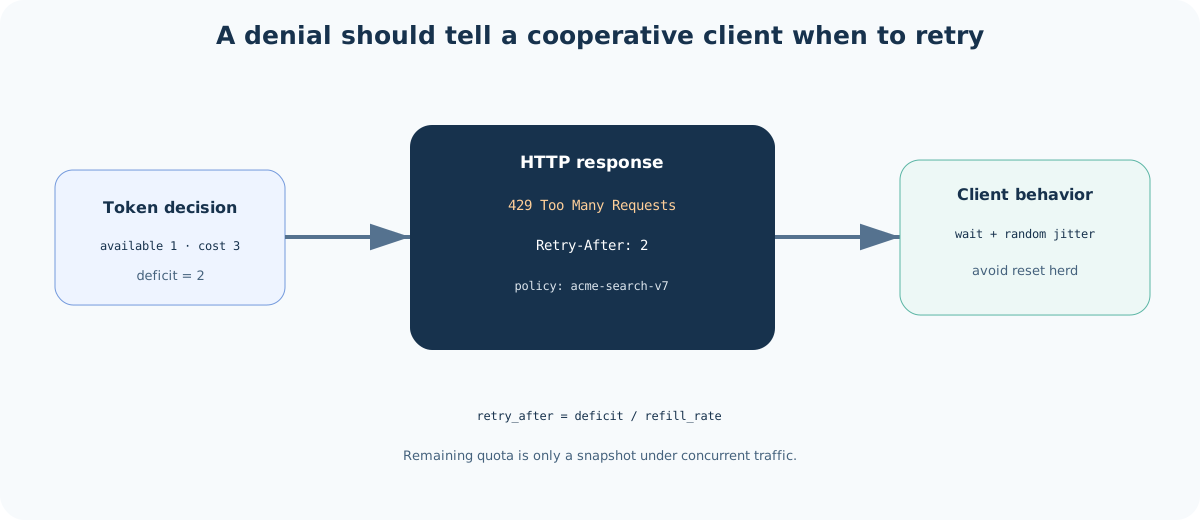
Return enough information for a cooperative client without exposing sensitive system capacity. A remaining value is a snapshot and may already be stale when several requests are concurrent. Retry-After should derive from the actual algorithm rather than a fixed guess.
Do not cache tenant-specific 429 responses in a shared cache unless the cache key and caching policy are explicitly safe.
30. Configuration Is Part of Correctness
Policy changes arrive while requests are in flight. A gateway may evaluate plan=v7 while the global service has already moved to v8.
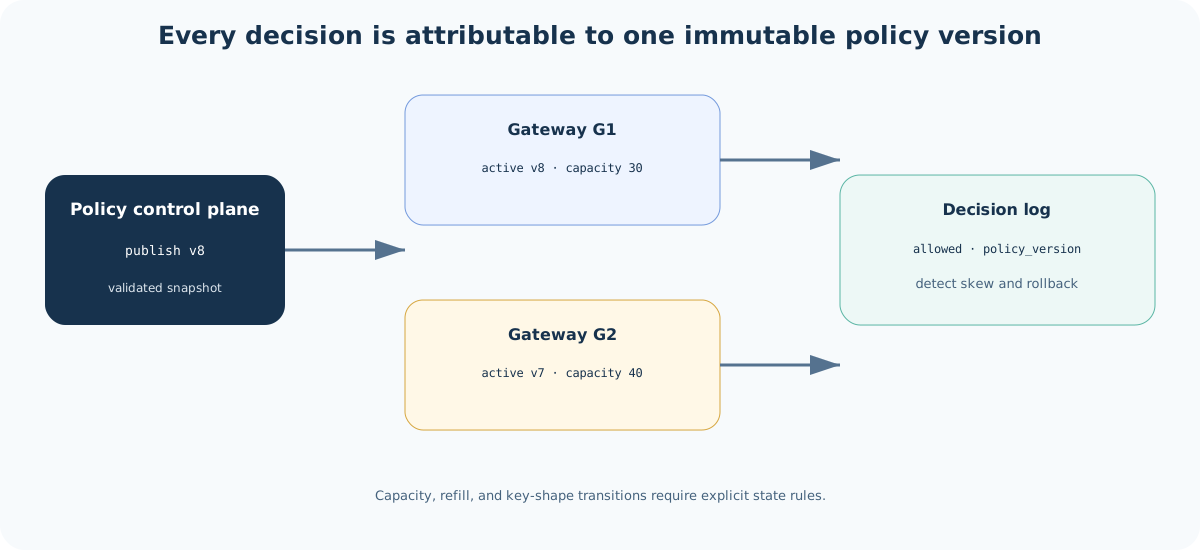
Every decision should identify the policy version. Define transitions:
- lowering capacity: clamp stored tokens to the new capacity;
- raising capacity: decide whether existing buckets receive the increase immediately;
- changing refill rate: refill under the old rate up to the transition point, then use the new rate;
- changing key shape: dual-read or explicitly start new state;
- deleting a policy: choose allow, deny, or fallback behavior.
Distribute immutable snapshots, validate them before activation, and retain a fast rollback. A partial configuration rollout can be more damaging than state store failure because it produces plausible but inconsistent decisions.
31. Observability Without Cardinality Explosion
Track:
- allowed, denied, and shadow-denied decisions by policy;
- decision latency and timeout rate;
- tokens remaining distribution;
- retry-after distribution;
- local fallback and fail-open/closed decisions;
- allocation size, utilization, expiry, and stranded quota;
- estimated overshoot and reconciliation corrections;
- state-shard CPU, memory, hot keys, and script latency;
- configuration version skew;
- downstream latency and rejection correlation.
Do not attach raw tenant IDs to every metric in a large multi-tenant system. Use logs or sampled traces for high-cardinality diagnosis and bounded labels for aggregate metrics.
Shadow mode calculates decisions but does not enforce them. It reveals which clients would be rejected before a policy launch.
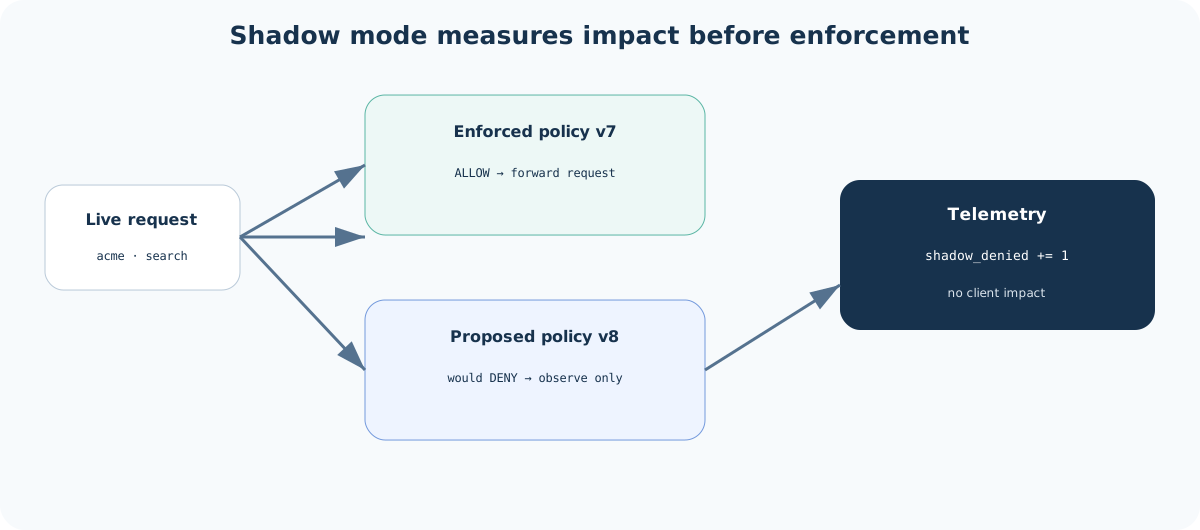
Shadow mode still consumes limiter capacity and state. Protect the shadow path from becoming the outage it is meant to prevent.
32. Test Time, Concurrency, and Failure
Use a controllable clock for algorithm tests. Avoid sleeping in unit tests.
Verify:
- empty, full, and exactly depleted buckets;
- fractional refill and long idle periods;
- time that stays equal or moves backward at an input boundary;
- many concurrent requests for one token;
- fixed-window traffic immediately before and after reset;
- sliding-log expiry at the exact boundary;
- weighted requests larger than bucket capacity;
- lost decision replies and retry behavior;
- state-shard failover during an atomic deduction;
- shard-map changes with a hot key in flight;
- regional allocation expiry during a partition;
- quota rebalancing with delayed usage reports;
- policy rollout where old and new versions overlap;
- rate-limit-service overload caused only by rejected traffic;
- retry storms after a shared
Retry-Afterinterval; - a service replica crash while gateways retry the same decision ID;
- an old shard leader attempting writes after a new term is active;
- an allocator leader crash after committing but before returning a grant;
- loss of allocator quorum while regions hold allocations;
- recovery that never makes an unexpired grant spendable twice.
The load test must use skewed keys. Uniform random tenants hide the hot-key behavior that dominates production.
33. The Complete Acme Request
Now follow one search request costing three units:
- The edge applies a coarse source-network bucket before authentication.
- Authentication resolves tenant
acmeand plan versionv7. - The gateway builds canonical descriptor
acme|search|v7. - A loose local bucket rejects obvious floods without a network call.
- The gateway’s
eu-westallocationA-71still has 18 tokens. - It atomically spends three locally, leaving 15.
- A per-destination concurrency limiter reserves one search slot.
- The request executes and returns successfully.
- The gateway reports cumulative spend for
A-71to the allocator. - When the allocation falls below its threshold, the gateway requests more.
- The allocator observes Europe is busy and safely transfers expired quota from Asia in the next epoch.
- If no allocation remains, the gateway returns 429 with calculated retry timing rather than exceeding its bounded entitlement.
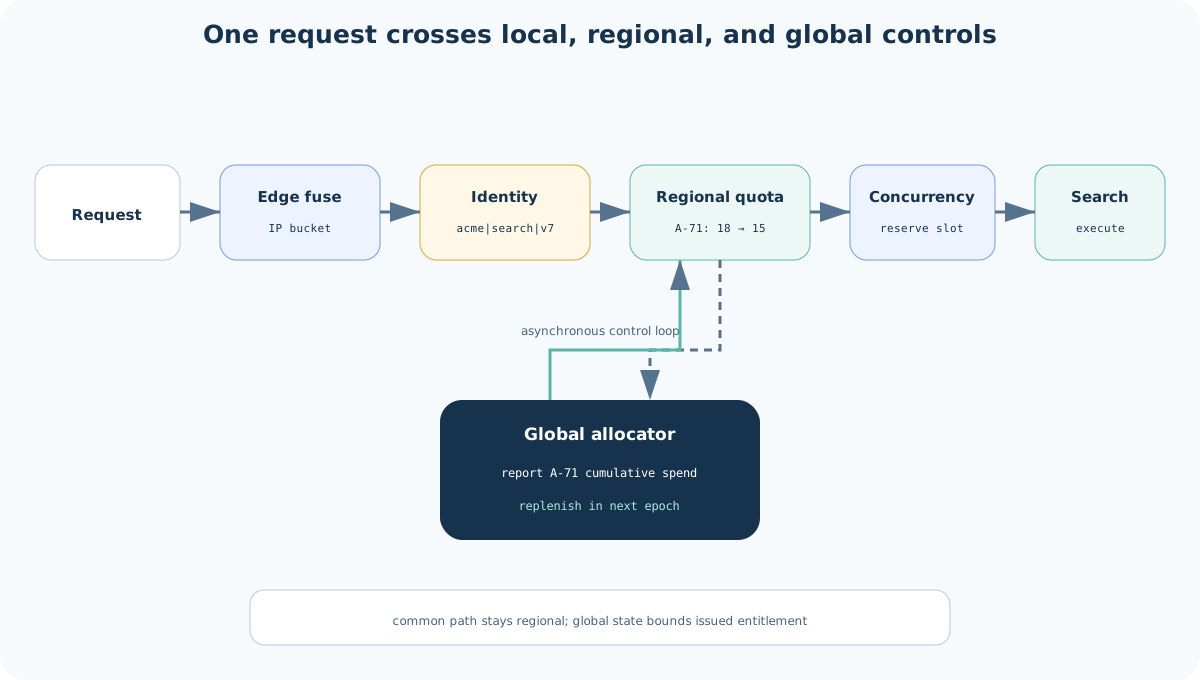
The common path needs no cross-region round trip. The global allocator controls the amount of live spendable quota. Local concurrency still protects the search cluster if requests become slow.
34. Algorithm and Architecture Guide
| Requirement | Useful starting point |
|---|---|
| Calendar quota with minimal state | Fixed-window counter |
| Exact low-volume rolling limit | Sliding log |
| Approximate rolling limit | Sliding-window counter |
| Sustained rate plus allowed burst | Token bucket or GCRA |
| Smooth downstream departures | Leaky queue plus bounded waiting |
| Strict multi-instance decision | Atomic shared state per key |
| Strict path without a physical singleton | Replicated service plus quorum-backed state shard |
| Very hot approximate global limit | Batched or leased local quota |
| Multi-region bounded autonomy | Expiring regional allocations |
| Durable purchased quota | Transactional ledger/reservation, often separate from request-rate protection |
For any design, ask:
- What exact traffic envelope is promised?
- What is the canonical key and who controls its cardinality?
- What clock and serialization point define the decision?
- Is refill/check/deduct atomic?
- Is the limit local, regional, or global?
- What is the calculated overshoot bound?
- How are hot keys handled?
- What happens during state-store, allocator, and network failure?
- Which component is the logical authority, and how is it replicated?
- What acknowledgement makes an allowed decision durable?
- How are stale shard leaders and allocator leaders fenced?
- How do rate, concurrency, and durable quota interact?
- What does a rejected client receive?
- How are policy versions rolled out and attributed?
- Can shadow traffic and rejected traffic overload the limiter itself?
35. Final Mental Model
The complete system separates several concerns:
algorithm        -> shape of one key's allowed traffic
atomic owner     -> no concurrent double-spend for that key
replication      -> survive process or node loss without duplicate authority
shard map        -> route each key to its state owner
local fuse       -> protect the global decision path
quota allocation -> trade coordination frequency for bounded overshoot
term and epoch   -> fence stale shard and allocator leaders
concurrency      -> contain slow accumulated work
failure policy   -> choose bounded behavior when coordination is unavailable
policy version   -> make every decision explainable
A distributed rate limiter is not merely a counter in Redis. It is an admission control system whose quality is determined by its traffic contract, atomicity boundary, distribution strategy, overshoot budget, and failure behavior.
Leave a Comment