Inside Distributed Transactions: 2PC, Sagas, Outbox, Idempotency, and Recovery
Published:
1. One Checkout Across Three Services
Customer C7 submits checkout request chk-9f2 for order ord-742:
item       camera-31
quantity   1
amount     £899
The checkout service must coordinate three independently durable systems:
OrderDB       create ord-742
InventoryDB   reserve one camera-31
PaymentDB     authorize £899
The business invariant sounds atomic:
Either the order, reservation, and payment authorization all succeed, or the system should behave as though the checkout did not succeed.
But no single database transaction covers all three owners. A process can crash after reserving stock but before calling payment. A reply can disappear after a charge succeeds. A broker can deliver the same event twice. A refund can fail hours after an order is cancelled.
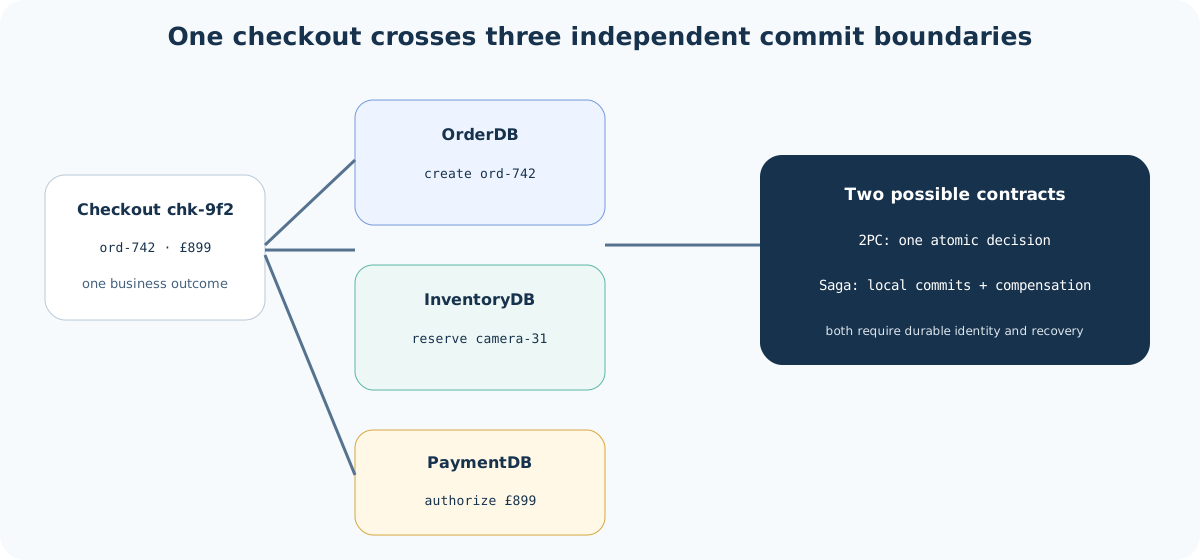
We will run this same checkout through two families of design:
- Two-phase commit (2PC) keeps participant transactions prepared until one atomic commit decision is durable.
- A saga commits each service locally and uses later transactions to move forward or compensate.
Then we will connect both to idempotency keys, transactional outbox, inbox deduplication, uncertain client outcomes, and reconciliation.
2. A Local Transaction Has One Commit Boundary
Inside one database, BEGIN and COMMIT give the storage engine one authority over logging, locks, visibility, and recovery:
BEGIN;
INSERT INTO orders(id, status) VALUES ('ord-742', 'CONFIRMED');
UPDATE inventory SET available = available - 1 WHERE sku = 'camera-31';
INSERT INTO payments(order_id, amount) VALUES ('ord-742', 89900);
COMMIT;
If all tables live in one transactional database, this is often the simplest correct design. Splitting them into services creates independent commit logs and failure domains.
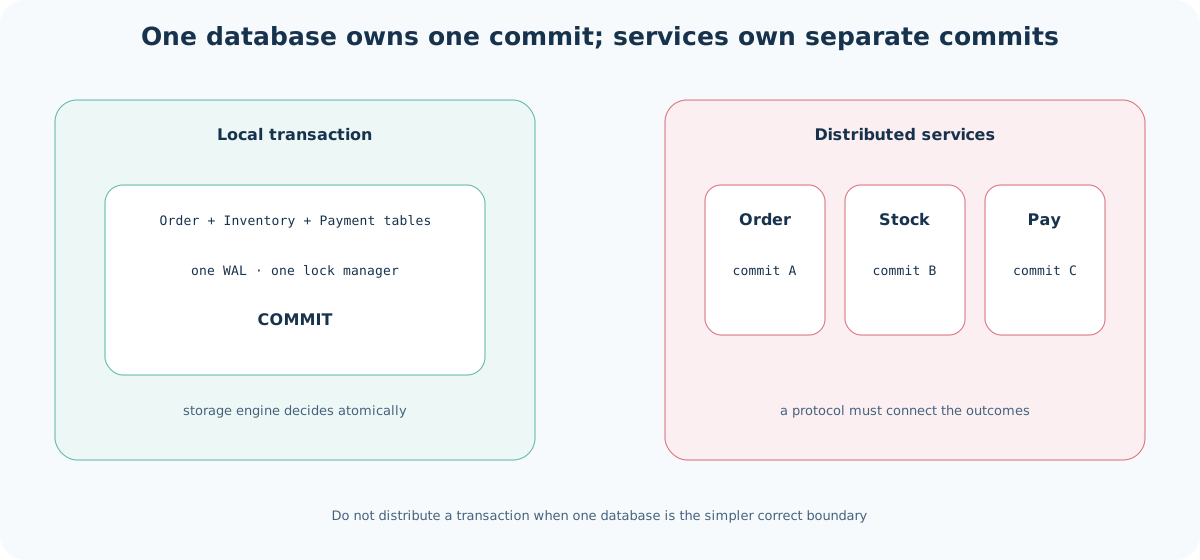
A distributed transaction must therefore answer:
- who decides the global outcome;
- what each participant durably records before replying;
- what happens if messages or processes disappear;
- how long locks and reservations remain;
- how a recovering component discovers the outcome;
- what a timed-out caller may safely retry.
3. The Double-Write Problem Appears Immediately
Suppose checkout first commits the order and then publishes OrderCreated:
1. COMMIT order row
2. publish message
A crash between the steps leaves a real order with no event. Reversing them is not safe either: the event can be delivered while the order transaction later rolls back.
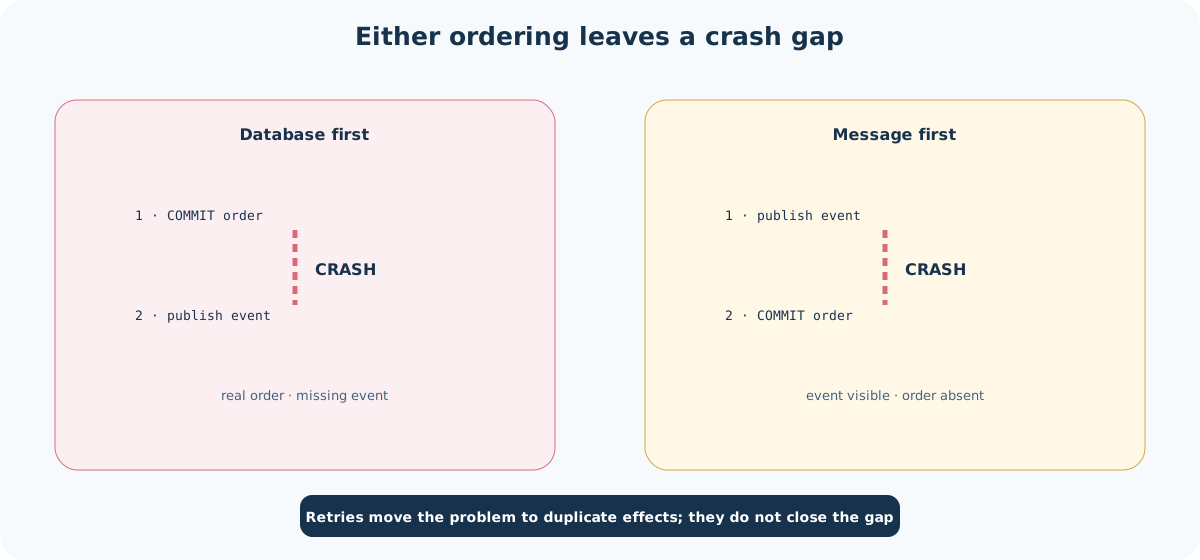
Retries do not close the gap. Retrying publish can duplicate a message; retrying the database write can duplicate a business action. The solution must create one durable boundary or make duplicate delivery harmless.
This is the core shape of distributed transactions: several individually valid actions must represent one business outcome despite partial completion.
4. First State the Invariants
Before selecting a protocol, define what must never be observed:
I1: confirmed order => inventory reservation exists
I2: confirmed order => payment authorization exists
I3: one checkout key => at most one logical order
I4: reservation quantity never drives available stock below zero
I5: every terminal failure eventually releases temporary resources
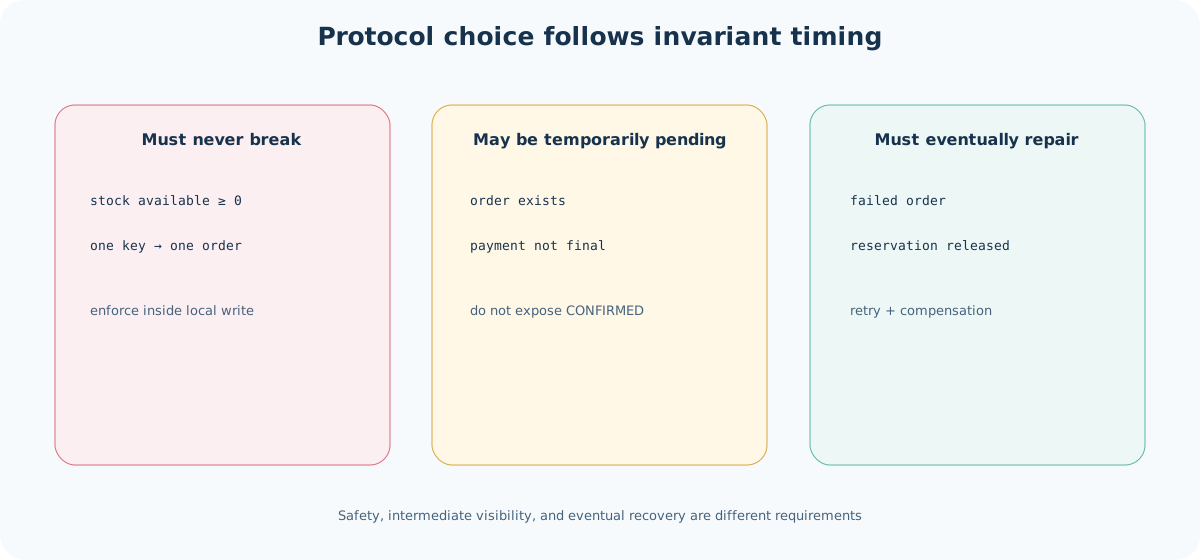
Not every invariant requires instantaneous atomicity. I4 must hold inside the inventory write. I1 and I2 might be temporarily false while an order is PENDING, provided clients do not treat it as confirmed. I5 is an eventual recovery property.
This separation tells us whether we need a synchronous atomic commit or can use explicit intermediate states and compensation.
5. Two-Phase Commit Creates One Global Decision
2PC has one coordinator and several participants. Each participant owns a local transaction. The coordinator uses transaction ID tx-742.
Phase 1: Prepare
The coordinator sends PREPARE(tx-742) to OrderDB, InventoryDB, and PaymentDB. Each participant:
- validates the requested mutation;
- acquires the locks or reservations needed to commit later;
- writes its tentative changes and
PREPARED tx-742record durably; - promises not to abort unilaterally;
- replies
YES—or records abort and repliesNO.
Phase 2: Decide
If every vote is YES, the coordinator durably records COMMIT tx-742 before sending COMMIT to participants. If any vote is NO, it records and sends ABORT.
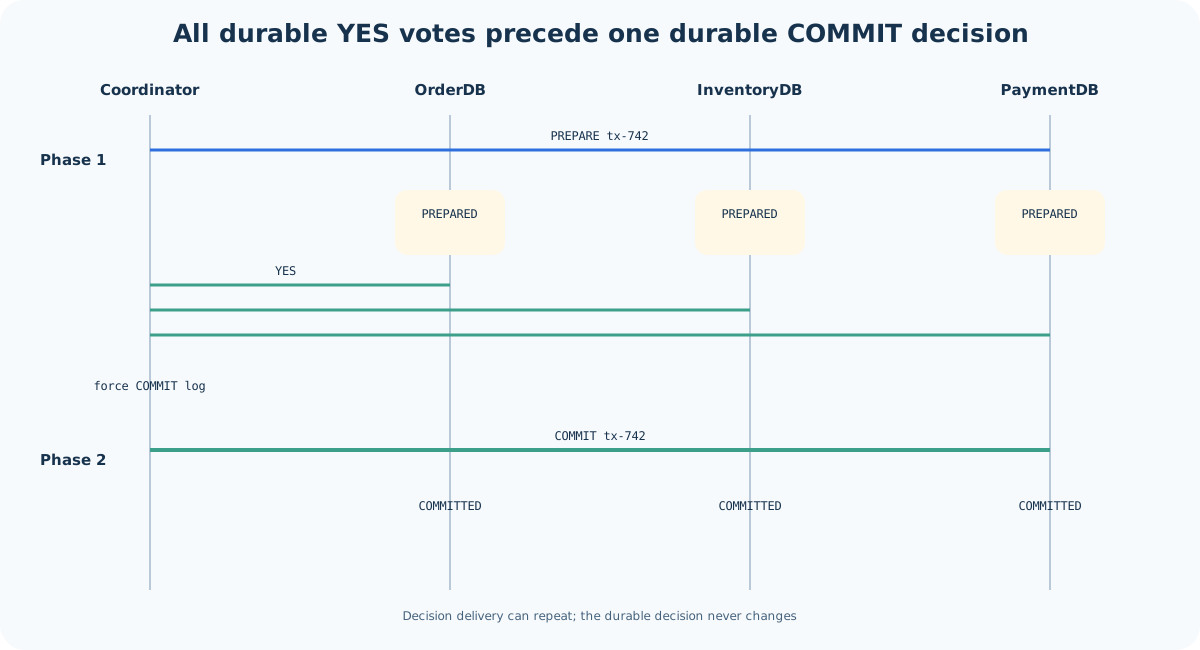
The durable coordinator decision is the global commit point. Participants may receive it at different times, but they must converge on that one outcome.
6. Prepared Means Durable but Not Yet Visible
After voting YES, InventoryDB has crossed an important boundary:
ACTIVE -> PREPARED -> COMMITTED
                  \-> ABORTED
The reservation and enough redo/undo information survive restart. Locks remain held so another transaction cannot consume the same camera and make the promised commit impossible.
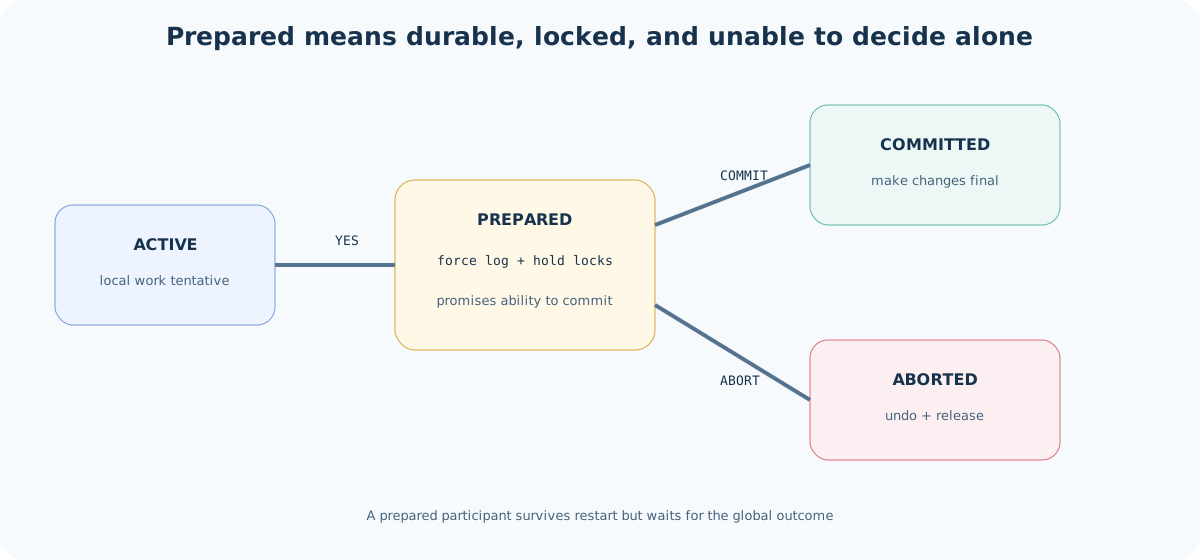
A prepared transaction is deliberately uncomfortable. It consumes resources but cannot finish locally. PostgreSQL, for example, stores prepared state on disk for later COMMIT PREPARED or ROLLBACK PREPARED, and warns that prepared transactions continue holding locks until an external manager resolves them.
Preparation converts “I might commit” into “I can commit if instructed.” That promise is what makes the global decision safe—and what makes coordinator loss dangerous.
7. Any NO Vote Aborts Everyone
Assume PaymentDB rejects the card during prepare:
OrderDB       YES
InventoryDB   YES
PaymentDB     NO
The coordinator records ABORT tx-742 and broadcasts it. The first two participants roll back tentative work and release locks. PaymentDB is already aborted.
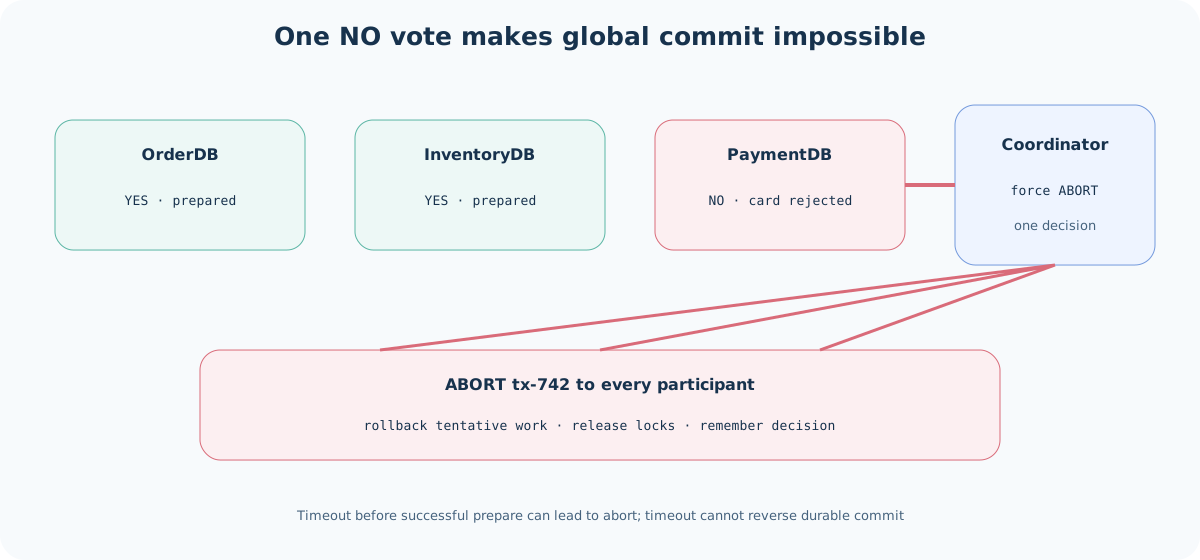
A timeout before every participant prepares is normally treated as failure to prepare, so the coordinator can choose abort. After all participants have voted yes and the commit decision is durable, timeout cannot change that decision.
8. Coordinator Failure Exposes 2PC’s Blocking Point
Now all three participants vote YES, but the coordinator crashes before any participant receives a decision.
Each participant sees:
PREPARED tx-742
decision = unknown
It cannot safely commit: the coordinator might have recorded abort. It cannot safely abort: the coordinator might have recorded commit and told another participant. It must learn the durable decision or remain prepared.
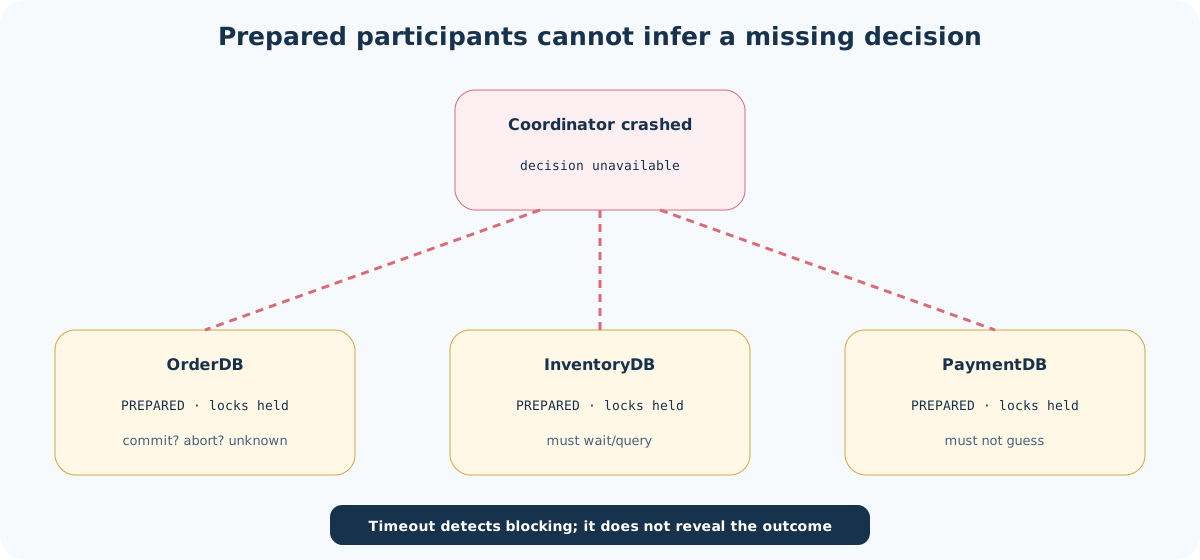
This is why classical 2PC is called a blocking protocol. Timeouts detect lack of progress; they do not manufacture knowledge of the decision.
Production systems reduce the risk by replicating coordinator state, recovering it quickly, limiting transaction duration, and alerting on old prepared work. Those measures improve availability; they do not change the logical uncertainty of a participant that knows only its own YES vote.
9. Replicate the Coordinator Without Creating Two Deciders
“Replicate coordinator state” needs a concrete authority model. Running three coordinator processes that write independent logs would be worse than running one: two processes might drive different outcomes for the same transaction.
A production coordinator exposes a stateless API tier over a partitioned, consensus-backed decision log. Transaction ID tx-742 routes to one log shard. That shard has one elected leader and replicas in different failure domains.
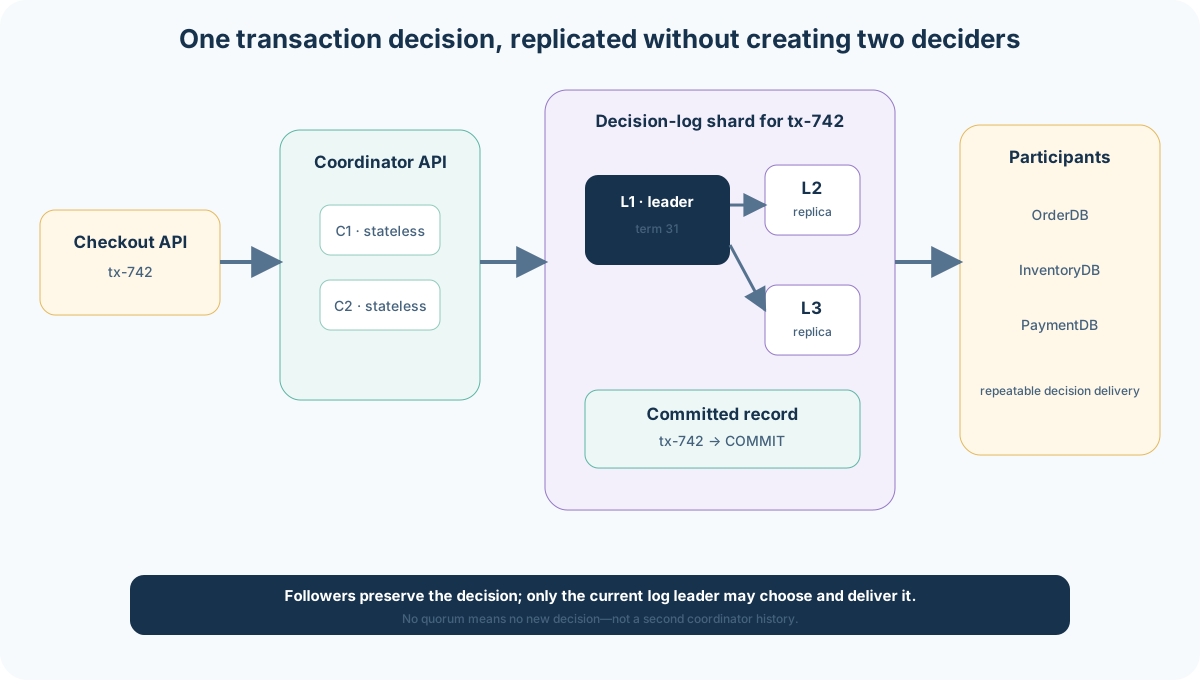
The leader records state transitions such as:
BEGIN tx-742
VOTE OrderDB YES
VOTE InventoryDB YES
VOTE PaymentDB YES
DECISION COMMIT
COMMIT becomes authoritative only after the configured quorum commits it. The coordinator may then acknowledge the client and repeatedly deliver the decision to participants. Followers preserve the history for failover; they do not independently choose outcomes.
Coordinator terms fence stale leaders. Participants accept a decision only when it is valid for the transaction and coordinator epoch, and the durable transaction ID makes repeated delivery idempotent. A participant must never infer a new outcome merely because a different coordinator replica contacted it.
9.1 Coordinator Failover Is Deterministic Log Recovery
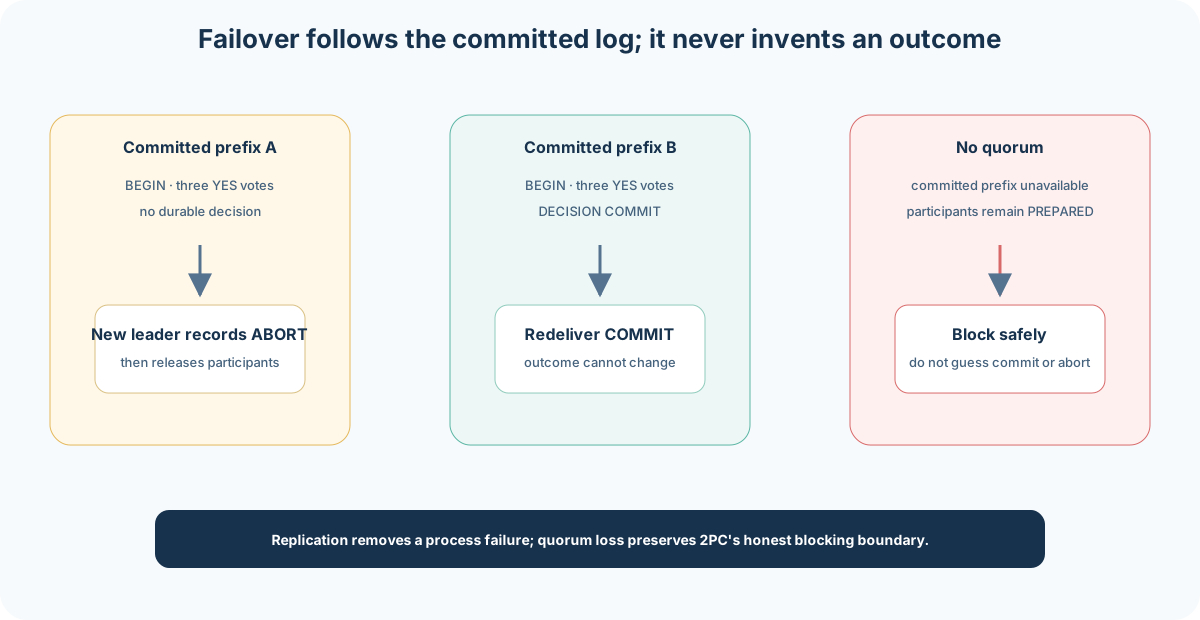
After a leader crash, the new leader reads the committed prefix:
- no durable global decision: it may durably choose
ABORTaccording to the protocol’s recovery rule, then notify prepared participants; - durable
COMMIT: it can only resendCOMMIT; - durable
ABORT: it can only resendABORT; - decision delivered to only some participants: delivery resumes until every participant converges.
If the coordinator log loses quorum, it cannot safely choose or reveal a new decision. Prepared participants remain blocked and retain their locks. This is the honest availability boundary: consensus makes the coordinator state survive minority failure, but 2PC still cannot finish without access to the authoritative decision.
The service can scale by partitioning transaction IDs across several decision log groups. Each transaction still belongs to exactly one ordered group. Moving a live transaction between groups would require an explicit epoch handoff; a simple hash-map change must not create two coordinators for it.
This removes a physical single point of failure while retaining one logical decider per transaction.
10. Recovery Is a Log-Interpretation Algorithm
After restart, each role consults durable state:
| Durable record | Safe recovery action |
|---|---|
| participant has no prepare | abort local work |
participant has PREPARED, no decision | query coordinator; wait if unavailable |
participant has COMMIT | redo/finish commit and acknowledge |
participant has ABORT | undo/finish abort and acknowledge |
| coordinator has no decision | choose/record abort if commit was never durable |
coordinator has COMMIT or ABORT | resend that decision until acknowledged |
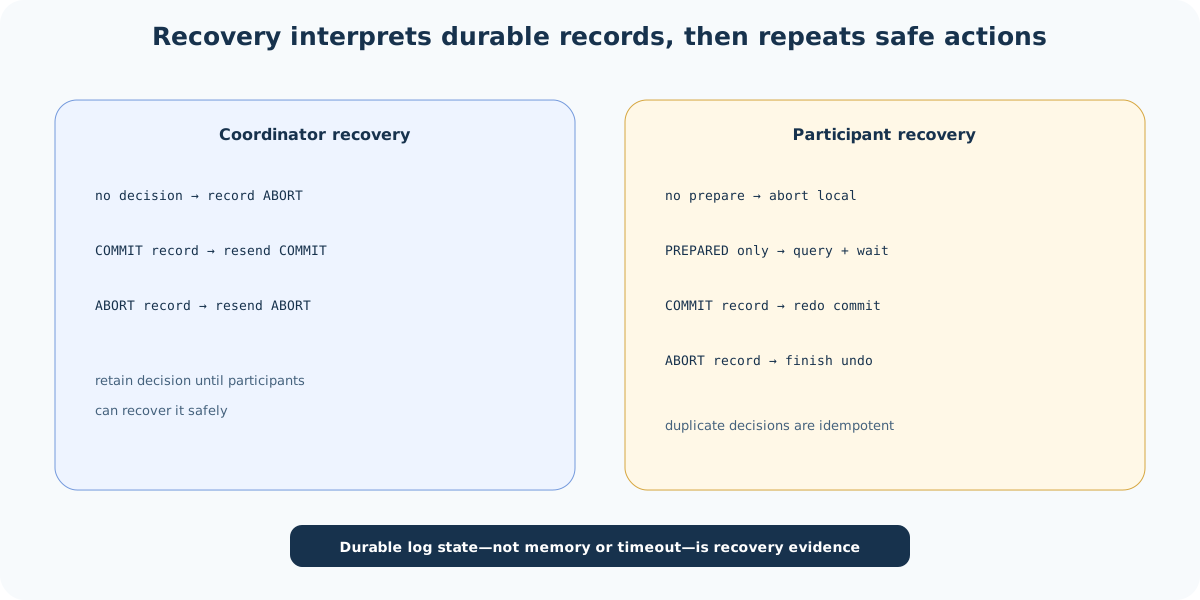
Messages are repeatable. Receiving COMMIT tx-742 twice must still produce one commit. The stable transaction ID makes decision delivery idempotent.
The coordinator cannot delete its decision record merely because it sent all messages once. It retains enough state until every participant can recover the outcome or a higher-level retention rule safely takes over.
11. Atomic Commit Is Not Distributed Isolation
2PC decides commit versus abort. It does not by itself determine how two concurrent distributed transactions interleave.
Suppose tx-742 and tx-743 both read the last camera as available before either reserves it. Atomic commit alone does not prevent both from voting yes. InventoryDB must enforce the stock invariant using a conditional update, lock, serializable transaction, or another concurrency-control mechanism.
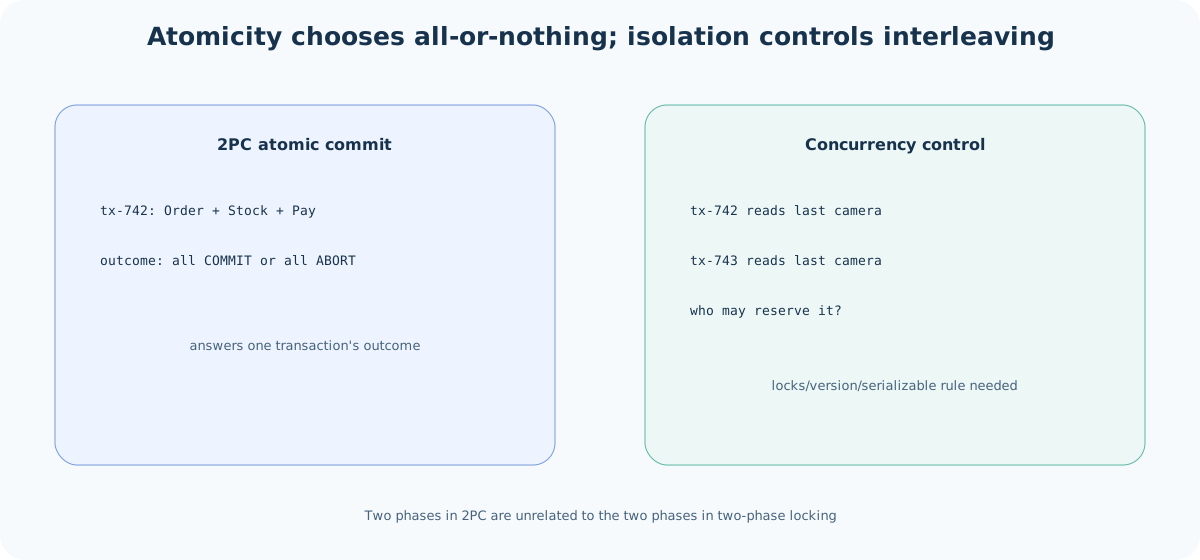
End-to-end serializability requires compatible concurrency control across the participating operations—often distributed two-phase locking, timestamp ordering, or a database that implements the whole abstraction. Do not infer serializable execution merely from the presence of two phases in 2PC.
12. 2PC Is Not Consensus
The protocols solve related but different problems:
| Property | Classical 2PC | Consensus |
|---|---|---|
| question | may every participant commit? | which proposed value is chosen? |
| decision condition | unanimous prepare votes | quorum under protocol rules |
| distinguished role | coordinator | leader/proposer can change |
| coordinator/participant failure | can block prepared work | progress with configured quorum |
| usual output | commit or abort | arbitrary agreed log/value |
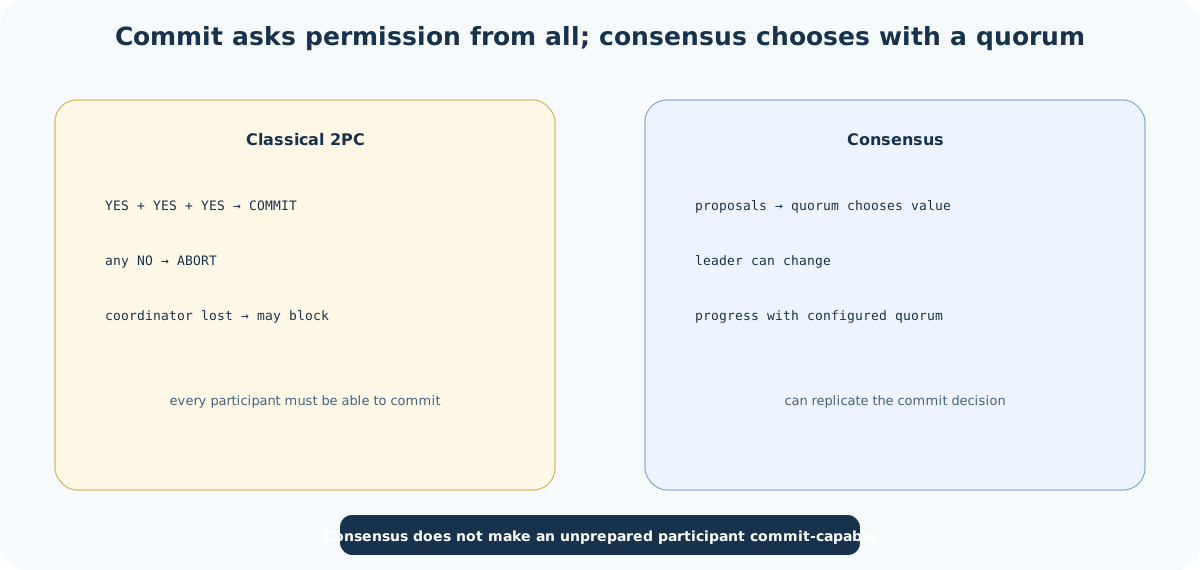
Consensus can replicate the coordinator decision or implement a non-blocking commit design such as Paxos Commit. It does not remove the business rule that every transaction participant must be able to commit before a global commit is valid.
Similarly, running a Raft cluster for each database protects each participant’s local state; it does not atomically join three independent Raft logs. Another protocol still connects them.
13. The Client Timeout Has an Unknown Outcome
The coordinator records commit and every participant applies it, but the HTTP response to C7 is lost. The client sees a timeout.
timeout != abort
timeout != commit
timeout = outcome unknown to caller
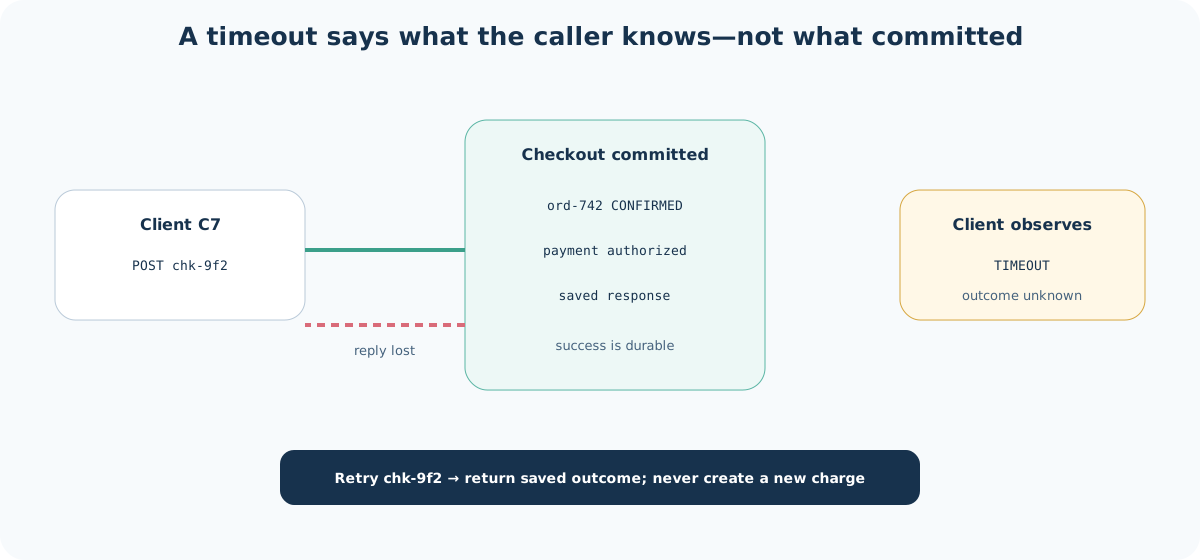
Blindly issuing a new checkout can charge twice. The API needs a stable idempotency key and an outcome lookup:
POST /checkouts
Idempotency-Key: chk-9f2
The retry asks for the same logical operation. The service returns the stored result for chk-9f2 or reports that it remains in progress.
14. Idempotency Is a Durable State Machine
An idempotency table should scope the key and bind it to the request:
(tenant, key)       atlas, chk-9f2
request_hash        sha256(camera-31|1|89900)
state               IN_PROGRESS | SUCCEEDED | FAILED_RETRYABLE | FAILED_FINAL
resource_id         ord-742
response            201 + response body
expires_at          retry-horizon boundary
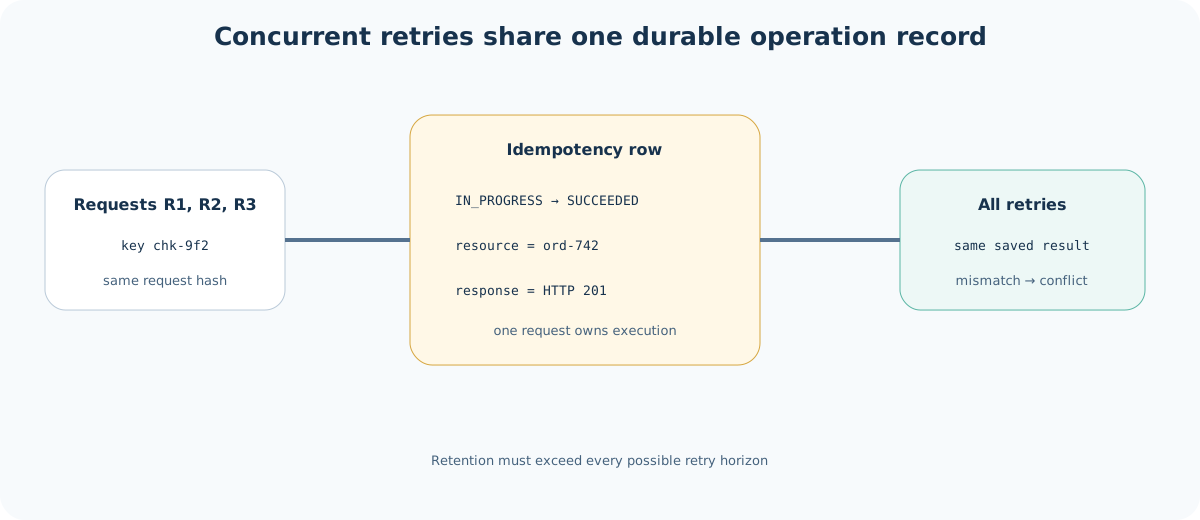
The first request atomically inserts IN_PROGRESS. Concurrent duplicates with the same payload wait, poll, or receive a retryable response. Reusing the key with a different request hash is rejected. Success stores the response before the caller is acknowledged.
A compact C++ decision sketch is:
auto claim = keys.claim(tenant, key, requestHash);
if (claim.payloadMismatch()) return conflict();
if (claim.succeeded())       return claim.savedResponse();
if (!claim.isOwner())        return stillProcessing();

auto result = runCheckout("ord-742");
keys.complete(key, result);  // durable before reply
return result;
The key’s retention must exceed every possible client and proxy retry horizon. Deleting it early turns an old retry into a new business operation.
15. When Holding Distributed Locks Is Too Expensive
2PC works well when participants support preparation, transactions are short, the coordinator is reliable, and atomic visibility is worth reduced availability.
It fits poorly when:
- a workflow lasts minutes or days;
- a participant is an external payment or email API;
- services use heterogeneous stores without prepare support;
- holding locks would block unrelated work;
- regional partitions must not freeze all checkouts;
- the business can represent pending and compensating states.
For those workflows, a saga makes partial progress explicit.
16. A Saga Is a Sequence of Local Transactions
Atlas redesigns checkout as:
T1 CreateOrder(PENDING)
T2 ReserveInventory
T3 AuthorizePayment
T4 ConfirmOrder
Every step commits locally. A durable saga record tracks which step is next. Other services can observe intermediate state, so PENDING must not be mistaken for CONFIRMED.
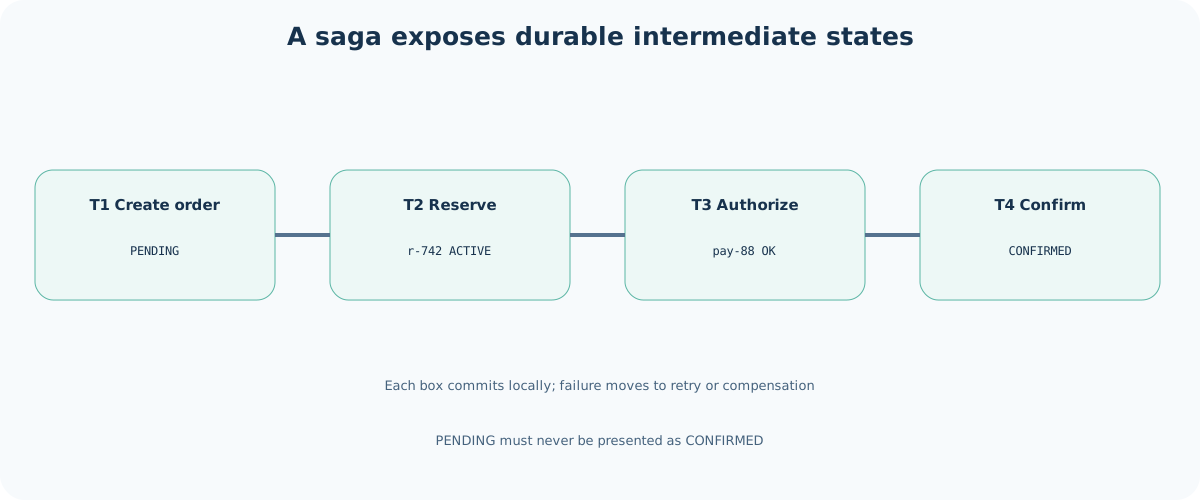
The saga trades isolation and instantaneous atomicity for availability and long-lived workflow support. Its correctness comes from explicit states, idempotent steps, durable messaging, retry, and compensating transactions.
17. Compensation Is a New Business Action, Not Time Travel
If payment authorization fails after inventory reservation, the saga runs:
C2 ReleaseInventory
C1 CancelOrder
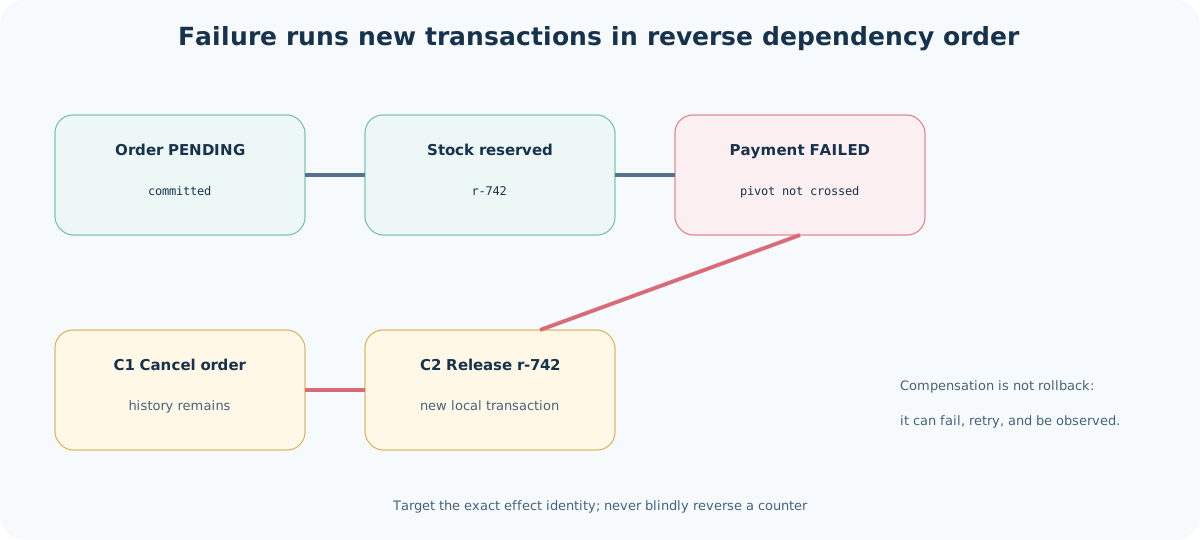
Compensation does not erase history. Another reader may have observed the pending order. Payment capture might require a refund with its own failure modes and fees. An email cannot be unsent; a correction can only follow it.
Design steps by reversibility:
- compensatable: reserve inventory, authorize rather than capture payment;
- pivot: the point after which the workflow should only move forward;
- retryable: post-pivot actions such as fulfilment notification.
Prefer authorization before irreversible capture, temporary reservation before shipment, and delayed external side effects until the workflow crosses its pivot.
18. Orchestration and Choreography Move Control Differently
An orchestrator durably records saga state and commands each step. The path is easy to inspect, retry, and compensate, but the orchestrator becomes an important workflow dependency.
In choreography, services react to events: OrderCreated triggers inventory, InventoryReserved triggers payment, and so on. There is no central caller, but the workflow becomes distributed across subscriptions and can be difficult to understand globally.
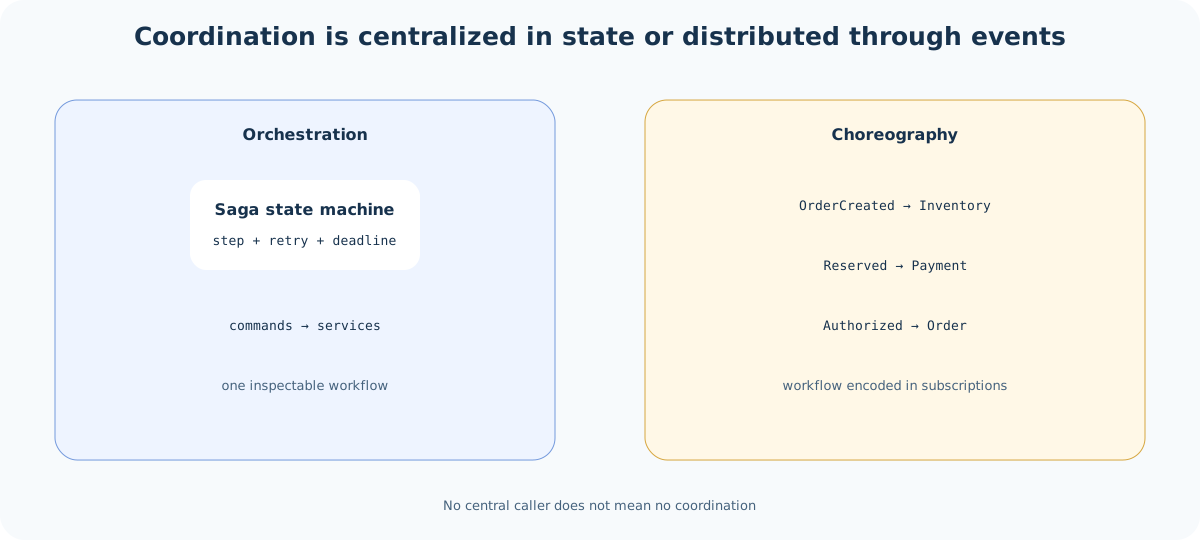
Choreography does not remove coordination; it encodes coordination in events, consumer state, and contracts. For a workflow with many branches, deadlines, and compensations, explicit orchestration is usually easier to operate.
18.1 The Saga Orchestrator Must Also Survive Failure
Do not keep the workflow cursor only in one orchestrator process. Run several workers over a replicated workflow store. A worker claims ord-742 using a versioned compare-and-swap or lease, records every transition durably, and sends commands with stable step IDs.
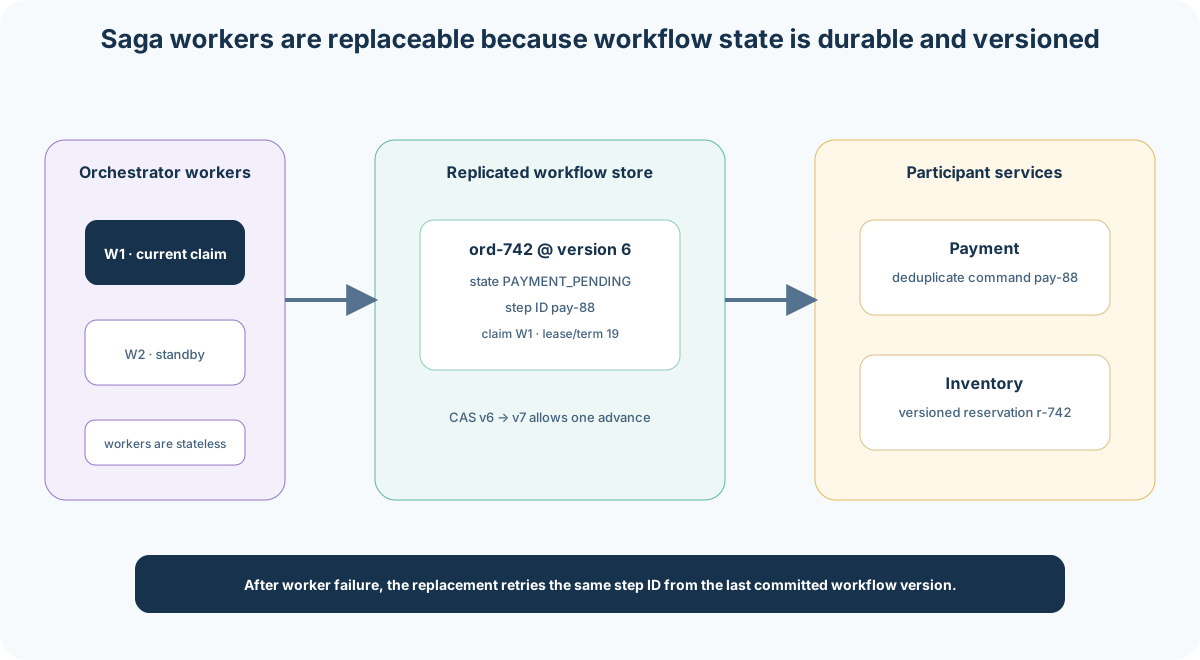
If a worker crashes after sending AuthorizePayment(pay-88) but before recording the response, its replacement sees an uncertain step. It retries the same command ID or queries Payment; it does not invent a new payment attempt. The recipient’s inbox/idempotency record converts that repeated command into one local effect.
The workflow-store version fences two workers that temporarily believe they own the same saga. Only one may advance PAYMENT_PENDING@v6 to a later state. If the store loses quorum, orchestration pauses; already committed service effects remain and recovery resumes from the last durable workflow version.
Choreography distributes this availability problem among the broker and every consumer rather than eliminating it. Consumer offsets, inbox records, and local outbox state become the recovery history.
19. Sagas Have Concurrency Anomalies
While ord-742 is pending, another workflow can observe or modify the same inventory. Compensation can overwrite a newer state if it assumes nothing happened in between.
Mitigations include:
- semantic locks such as
reservation_status=PENDING; - version checks on every transition;
- commutative operations such as increment/decrement with unique reservation ID;
- rereading state before compensation;
- escrow or bounded counters for scarce resources;
- keeping tentative data invisible to ordinary reads;
- rejecting transitions not valid from the current state.
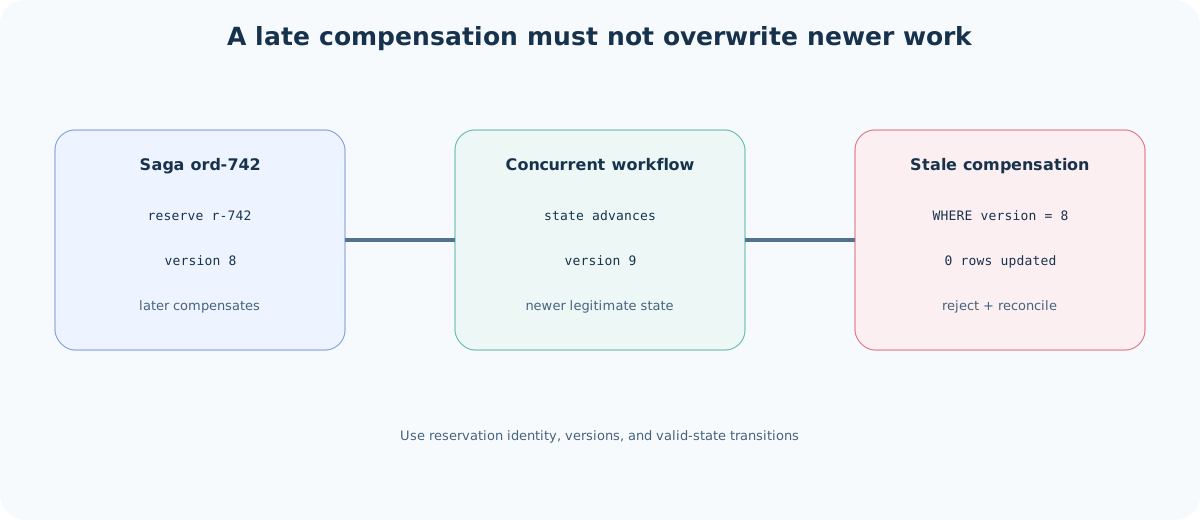
A compensation should target the effect created by reservation r-742, not blindly add one unit to a counter. Identity makes reversal precise.
20. The Transactional Outbox Closes the Database/Message Gap
When OrderDB creates the pending order, it inserts the event in the same local transaction:
BEGIN;
INSERT INTO orders(id, status) VALUES ('ord-742', 'PENDING');
INSERT INTO outbox(event_id, aggregate_id, event_type, payload)
VALUES ('evt-901', 'ord-742', 'OrderCreated', '{"sku":"camera-31"}');
COMMIT;
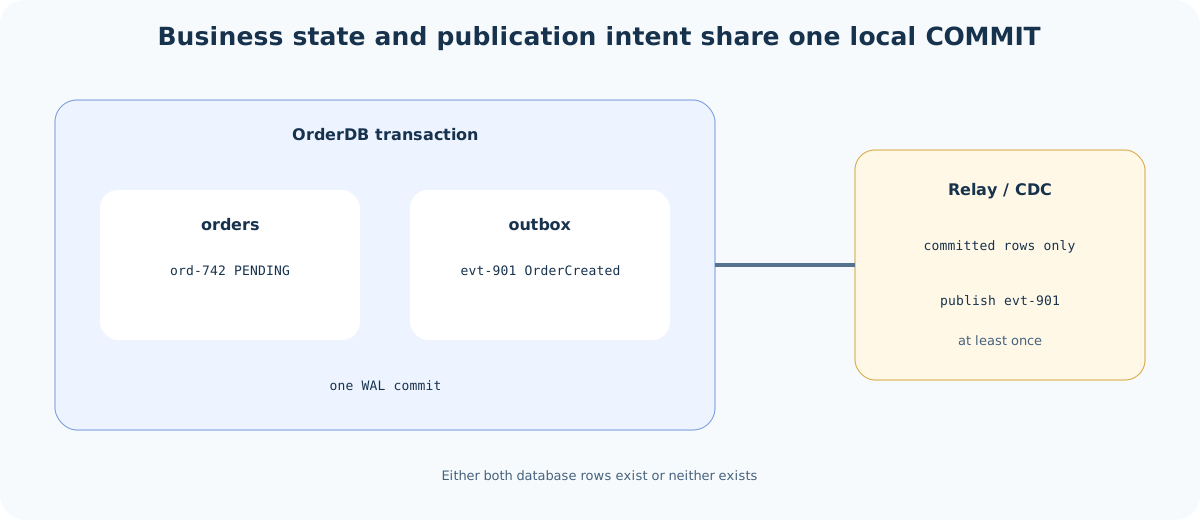
Now either both rows exist or neither does. A relay polls committed outbox rows or change-data-capture tails the database log and publishes them to the broker. The service never has to atomically commit its database and broker directly.
The outbox solves atomic recording of publication intent. It does not by itself guarantee one broker delivery.
21. The Outbox Relay Can Publish Twice
The relay publishes evt-901, the broker accepts it, and the relay crashes before recording progress. After restart it publishes evt-901 again.
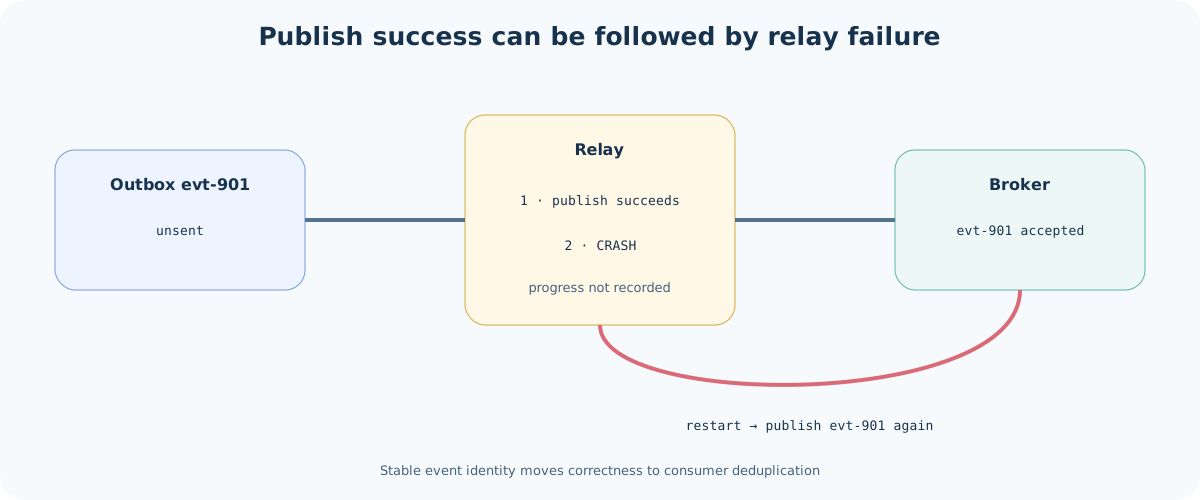
Changing the order recreates the opposite loss: marking sent before publish can lose the event. Therefore the normal outbox contract is at-least-once delivery, with stable event IDs and idempotent consumers.
Ordering also needs a defined scope. Using aggregate_id=ord-742 as the broker partition key preserves order for one order when the broker supports it. It does not create a total order across every order.
22. An Inbox Makes Consumer Effects Idempotent
Inventory consumes evt-901 in one local transaction:
BEGIN;
INSERT INTO inbox(consumer, event_id)
VALUES ('inventory', 'evt-901') ON CONFLICT DO NOTHING;
-- Continue only if the INSERT created a row.
INSERT INTO reservations(id, order_id, sku)
VALUES ('r-742', 'ord-742', 'camera-31');
COMMIT;
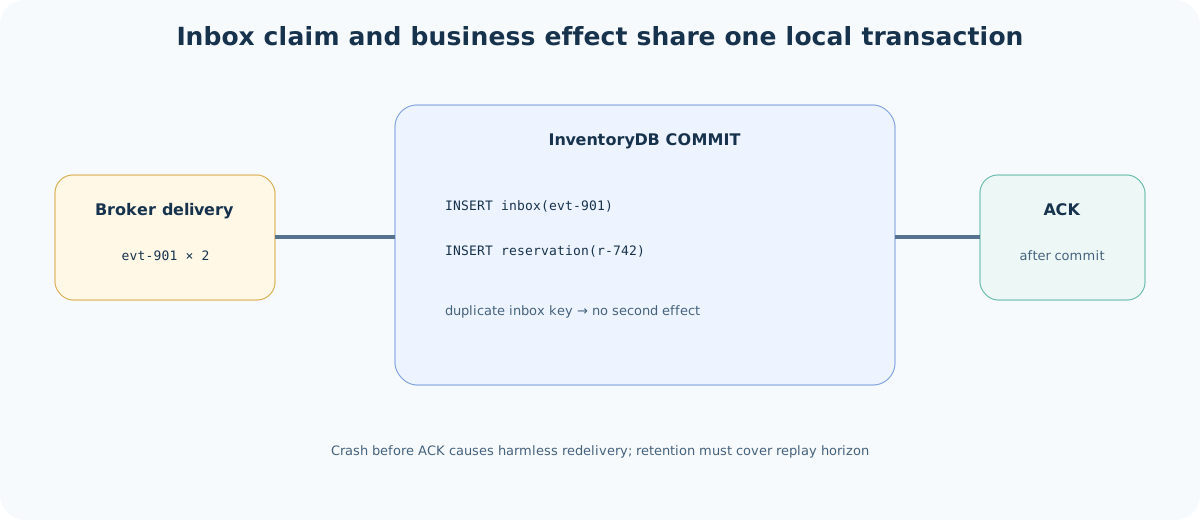
If the broker redelivers, the unique inbox key proves that this consumer already applied the event. The broker acknowledgement occurs after the local commit; a crash before acknowledgement causes a harmless redelivery.
Deduplication retention must cover the broker’s redelivery and replay horizon. Deleting inbox history while old messages can return re-enables duplicates.
23. Exactly Once Always Has a Boundary
A broker may provide exactly-once processing for records inside its own transactional domain. That does not automatically include:
- a payment provider;
- an email service;
- a database outside the broker transaction;
- a client that timed out after success;
- a human-visible physical shipment.
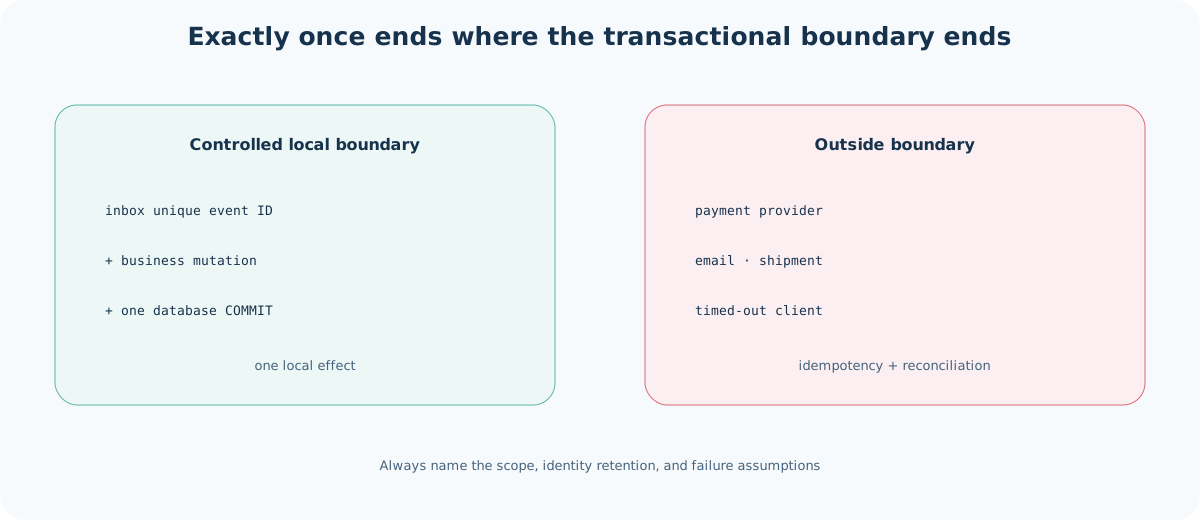
End-to-end systems usually combine:
at-least-once transport
+ stable operation/event identity
+ atomic local deduplication and effect
+ reconciliation for external ambiguity
= effectively-once business outcome within a stated horizon
The claim must name its scope, retention, and failure assumptions.
24. Reconciliation Repairs What Protocols Cannot Prove
Some outcomes remain ambiguous. Payment may accept authorization pay-88 while its response is lost. The saga must not immediately issue a second authorization. It queries by idempotency key, waits for webhook evidence, or moves to PAYMENT_UNKNOWN for reconciliation.
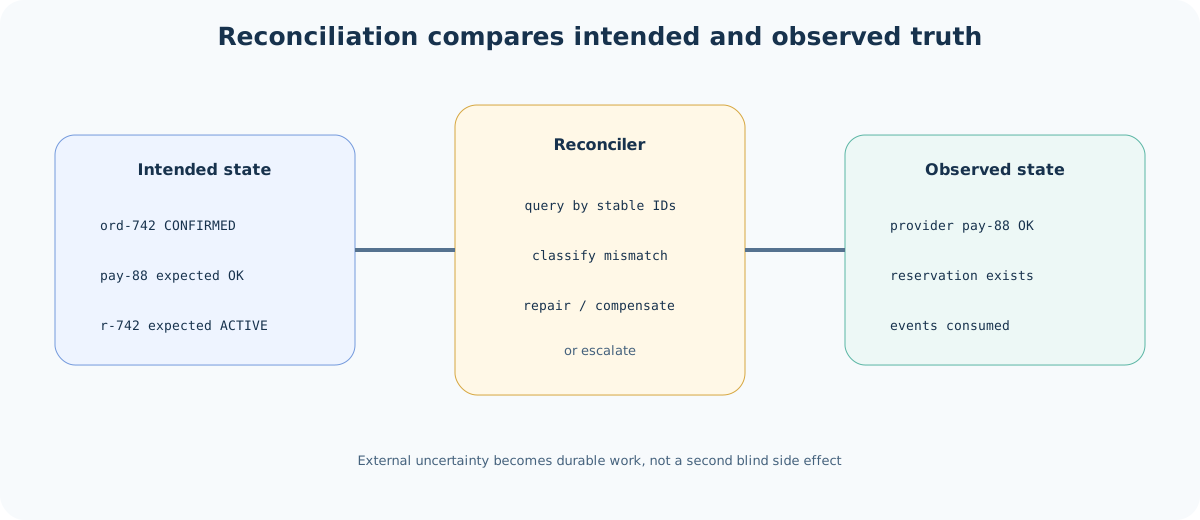
A reconciler repeatedly compares:
orders expected CONFIRMED
reservations actually ACTIVE
payment authorizations actually SUCCEEDED
outbox events actually published/consumed
It repairs missing work, triggers compensation, or raises an operator case. Reconciliation is not an admission of protocol failure; it is the recovery loop for dependencies that cannot join the same atomic boundary.
25. Choosing the Transaction Model
| Requirement | Prefer |
|---|---|
| short operations across prepare-capable databases | 2PC |
| no partial visibility is acceptable | 2PC plus suitable isolation |
| long workflow or human step | saga |
| heterogeneous services/external APIs | saga + idempotency + reconciliation |
| database update must publish an event | transactional outbox |
| broker may redeliver | inbox/idempotent consumer |
| client may retry after timeout | API idempotency record |
These mechanisms compose. A saga step can use a local database transaction and outbox. Its consumer can use an inbox. A 2PC coordinator API still needs an idempotency key for client uncertainty. Consensus can replicate the coordinator.
26. Capacity and Operational Signals
For 2PC, monitor:
- active, prepared, committed, and aborted transaction counts;
- prepare and decision latency distributions;
- age of oldest prepared transaction;
- locks, rows, and connections held by prepared work;
- coordinator term, quorum health, commit index, and replica lag;
- coordinator election duration and transactions blocked by lost quorum;
- coordinator log durability and recovery time;
- participant vote timeouts and decision-redelivery backlog.
For sagas and messaging, monitor:
- workflows by state and age;
- workflow-store quorum health, claim conflicts, and worker failovers;
- step attempts, timeouts, and retry delay;
- compensation rate, age, and terminal failures;
- outbox oldest-unpublished age and row count;
- broker consumer lag and redelivery rate;
- inbox duplicate rate and retention;
- idempotency keys stuck
IN_PROGRESS; - reconciliation mismatch count and repair latency.
Little’s Law makes lock pressure concrete. If checkout rate is λ and the average prepared interval is W, the average prepared population is:
prepared_transactions ~= λ * W
At 2,000 checkouts/s, increasing prepared time from 50 ms to 5 s grows average prepared work from 100 to 10,000 transactions—along with locks and log state.
27. Failure Scenarios
Participant Crashes Before YES
It has made no durable promise. The coordinator can abort after timeout.
Participant Crashes After YES
It recovers PREPARED, asks for the decision, and blocks if no decision source is available. It must not guess.
Coordinator Crashes After Durable Commit
Recovery reads COMMIT and resends it. A participant that did not receive the first message eventually commits.
Coordinator Loses Quorum
No replica may choose a new decision. Prepared participants remain blocked until the committed decision history is available again.
Old Coordinator Leader Returns
Its term is stale, so the decision log and participants reject new commands from it. It cannot create a second outcome for tx-742.
Client Retries After a Lost Reply
chk-9f2 returns the stored result for ord-742. A different payload with that key is rejected.
Saga Command Is Delivered Twice
The participant deduplicates command/event ID or applies a transition that is idempotent from current state.
Saga Worker Fails After Sending a Command
A replacement claims the durable workflow version and retries the same step ID or queries its outcome. The participant deduplicates the repeated command.
Compensation Fails
The saga remains in COMPENSATING, retries with backoff, and escalates after a bounded policy. It must not report fully cancelled while stock remains reserved.
Relay Publishes and Crashes
The message is published again; the consumer’s inbox prevents a second local effect.
Payment Outcome Is Unknown
Query by provider idempotency key and reconcile. Do not turn timeout into a second charge or assume rollback.
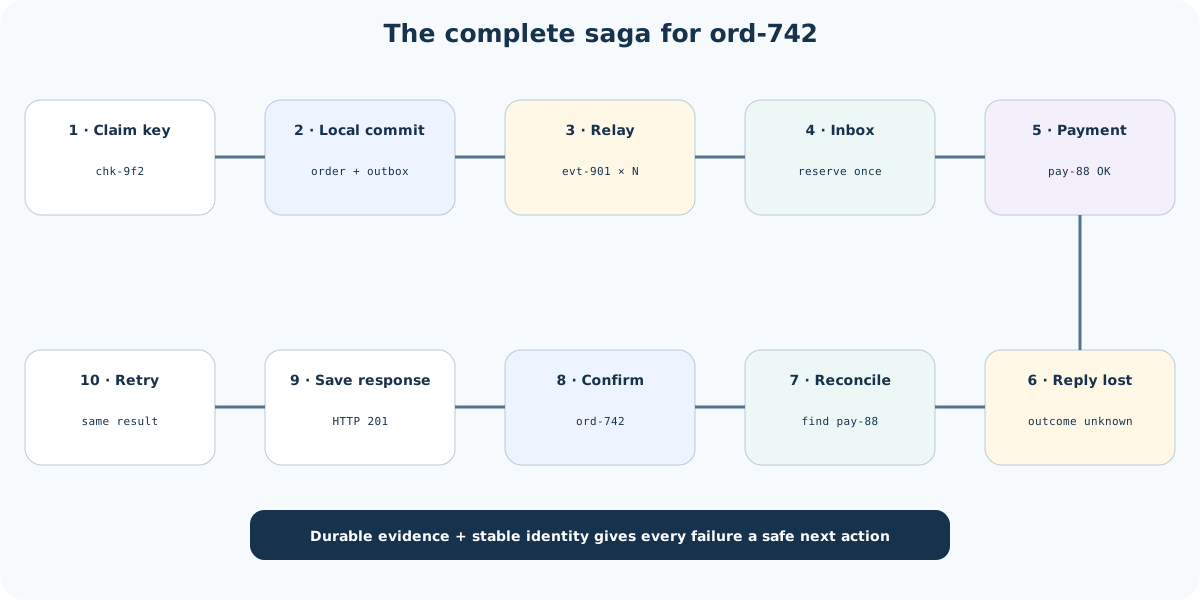
28. The Whole Checkout, End to End
Atlas chooses a saga because payment cannot join database 2PC:
C7sends checkout with idempotency keychk-9f2.- checkout atomically claims the key and creates
ord-742asPENDING. - the same transaction writes outbox event
evt-901. - the relay publishes it; a crash may cause duplicate publication.
- Inventory’s inbox admits
evt-901once and creates reservationr-742. - Inventory writes
InventoryReservedto its own outbox. - the orchestrator asks Payment to authorize with stable key
pay-88. - Payment succeeds, but the response is lost; reconciliation discovers success.
- checkout transitions
ord-742toCONFIRMEDand saves the API response. - a client retry of
chk-9f2returns that saved response. - duplicate events are ignored by consumer inboxes.
- if payment had failed, the saga would release
r-742and cancel the order.
| Risk | Containment mechanism |
|---|---|
| independent commit points | 2PC or explicit saga states |
| coordinator process fails | quorum-replicated decision log and leader recovery |
| coordinator loses quorum | block rather than create an uncommitted outcome |
| prepared participant loses coordinator | durable decision recovery; possible blocking |
| timeout hides success | stable transaction/idempotency key |
| database commit then publish crash | transactional outbox |
| relay publishes twice | stable event ID + inbox |
| saga step partially completes | idempotent retry and compensation |
| saga worker fails | replicated workflow state plus versioned worker claim |
| compensation races newer work | version/identity-checked transition |
| external API outcome unknown | provider key + reconciliation |
29. What These Mechanisms Guarantee
Classical 2PC can provide atomic commit when participants obey durable prepare and the decision is eventually recoverable. It does not automatically provide non-blocking progress, serializable isolation, client outcome knowledge, or atomicity with systems that cannot prepare.
A saga can provide durable eventual completion or compensation when every step and compensation is retryable, observable, and recoverable. It does not erase intermediate visibility, make compensation equivalent to rollback, or remove concurrency anomalies.
Outbox and inbox can provide atomic local recording plus idempotent local application under their retention assumptions. They do not prevent duplicate transport or make an external side effect transactional.
The most reliable design states each boundary instead of saying “exactly once” without qualification.
30. Conclusion
Distributed transactions are not one protocol. They are a set of answers to where atomicity must end and how uncertainty crosses that boundary.
2PC keeps tentative local transactions locked behind one durable global decision. It gives strong atomicity but can block. Sagas expose intermediate states and replace rollback with forward recovery or compensation. They improve workflow availability but move correctness into business state machines. Idempotency keys turn retries into lookup of one logical operation. Outbox and inbox turn an unsafe database/broker double write into atomic local writes plus duplicate-tolerant delivery. Reconciliation handles external systems whose outcomes cannot be proven synchronously.
The checkout can be compressed to:
business invariant
  -> choose atomic commit or explicit saga states
  -> one quorum-backed decision or workflow history
  -> durable operation identity
  -> local transaction + outbox
  -> at-least-once delivery + inbox
  -> idempotent forward/compensating step
  -> terminal state or reconciliation
The goal is not to eliminate every partial failure. It is to ensure every partial failure leaves durable evidence and a safe next action.
Leave a Comment