CAP Theorem: What a Network Partition Actually Forces You to Choose
Published:
1. One Seat, Two Regions
Atlas Tickets sells the final seat for concert C7. Its inventory record is replicated in London and Dublin:
concert C7, seat A1, remaining = 1
Under normal conditions, the replicas communicate. Then the network link between the regions stops delivering messages. Clients can still reach each region, but London and Dublin cannot exchange inventory state.
At 09:00:00, buyer B1 asks London to reserve the seat. At the same moment, buyer B2 asks Dublin.
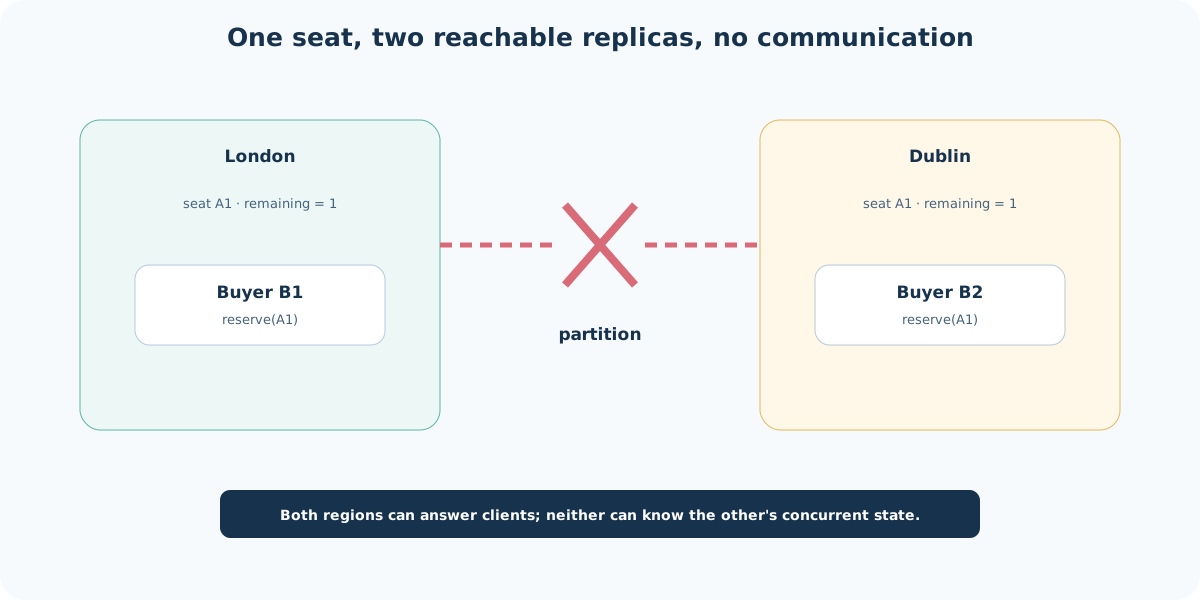
Each region must now choose what to do without knowing what the other region is doing:
- refuse or delay some operations until coordination is possible;
- answer from local state and risk conflicting outcomes.
That is the situation CAP describes. It is not a shopping exercise in which an architect casually selects two attractive letters. It is an impossibility result about what a replicated read/write system can guarantee while a network partition prevents required communication.
2. Begin With One Copy
One database copy has one obvious authority:
client -> database -> seat A1 state
There is no replica disagreement. The database can order reservations and return the result. But the one copy is also one availability and geographic boundary.
Replication adds failure tolerance and local access:
London clients -> London replica
Dublin clients -> Dublin replica
It also adds a new correctness question: when replicas cannot communicate, may both continue answering as authorities for the same data?
CAP applies because we chose to keep multiple network-separated copies that must present one logical read/write object. The theorem is not primarily about databases being slow or fast. It is about indistinguishable network states and the guarantees possible in them.
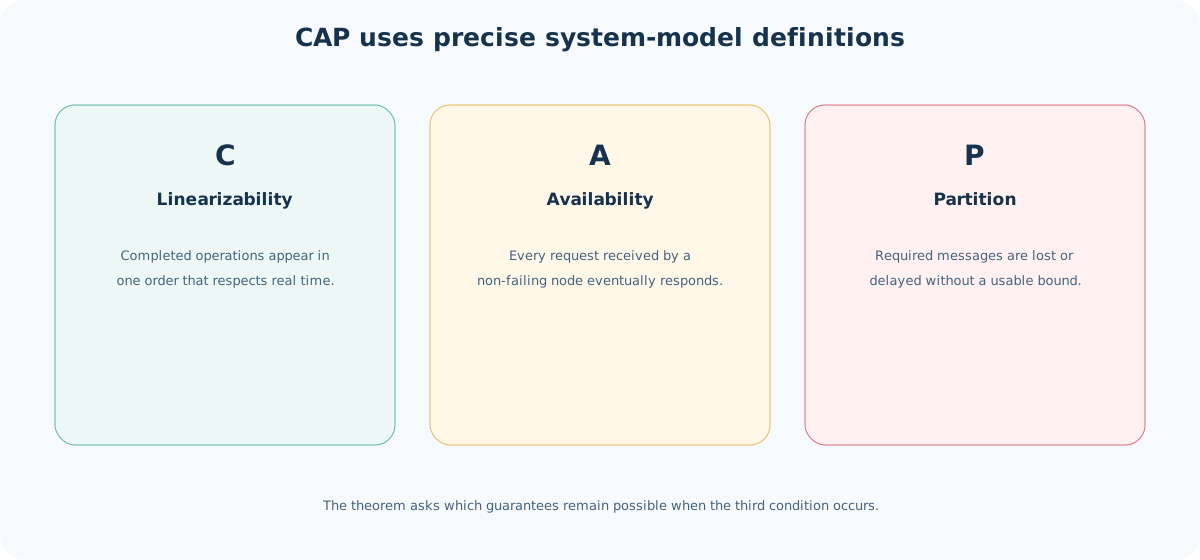
3. The Three Terms Need Precise Meanings
The letters are easy to memorize and easy to misdefine.
Consistency Means One-Copy Behavior
In CAP, consistency is normally linearizability, not merely “replicas eventually match” and not the C in database ACID.
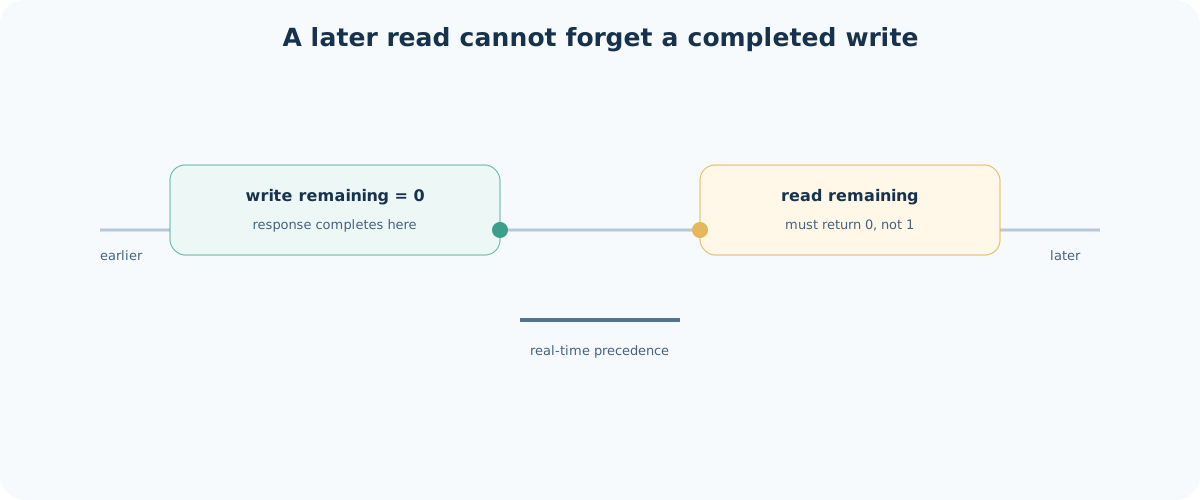
Linearizability requires each completed operation to appear as though it took effect atomically at one instant between invocation and response. If a write of remaining = 0 completes before a later read begins, that later read cannot return remaining = 1.
write(remaining = 0) completes
                         read() begins -> must not return 1
Concurrent operations may be ordered either way, but the result must be explainable by one order that respects real-time completion.
Availability Means Every Non-Failing Recipient Responds
CAP availability is stronger than a monthly uptime percentage. Every request received by a non-failing node must eventually receive a response. The node cannot wait forever for a partitioned peer.
A service that returns successful responses for 99.99% of the month may still sacrifice CAP availability for one key during a partition. Conversely, a node that responds quickly with stale data may satisfy availability while violating linearizability.
A Partition Is Lost or Unbounded Communication
A network partition means some messages between nodes are lost or delayed long enough that the algorithm cannot rely on their arrival. Both nodes may be alive and serving clients. A timeout cannot prove whether the peer crashed, the network failed, or the reply is merely slow.
P is therefore not a feature like compression that can be switched off. If the deployment contains network-separated replicas, the algorithm must have behavior for communication failure. The forced choice is what happens to consistency and availability during that condition.
4. The Indistinguishable Timeline Creates the Impossibility
London receives reserve(A1) but cannot contact Dublin. From London’s point of view, several worlds look identical:
world 1: Dublin is down
world 2: the link is broken
world 3: Dublin concurrently reserved A1
world 4: London's messages and replies are only very slow
If London waits for Dublin, it may preserve one-copy correctness but does not complete the request during an unbounded partition. If London responds from local state, Dublin can independently make the same choice, and both can sell the seat.
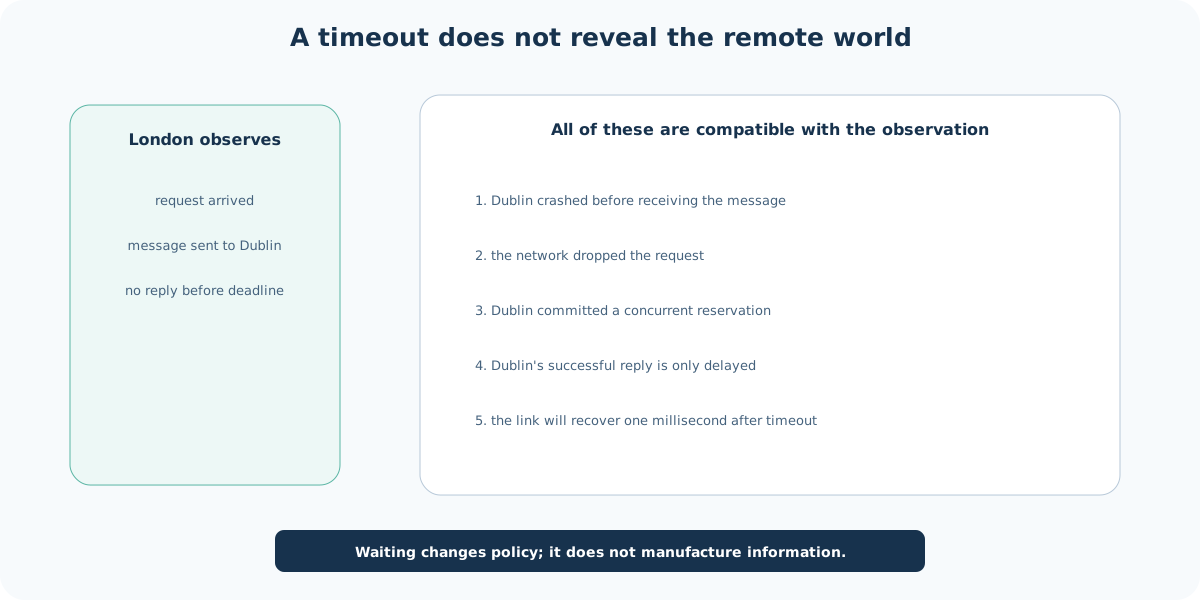
No timeout value removes the ambiguity. A longer timeout changes user experience and the probability of a false suspicion; it does not produce new information about the unreachable replica.
For an asynchronous network with a partition, the system cannot guarantee both linearizable one-copy behavior and a response from every reachable replica for every request.
5. Consistency During the Partition: Reject or Wait
Suppose Atlas chooses the seat invariant over regional write availability. Only the side containing a valid quorum or leader may complete reservations. The other side rejects, redirects, or waits.
London: has authority -> reserve A1 -> success
Dublin: no authority  -> unavailable / timeout
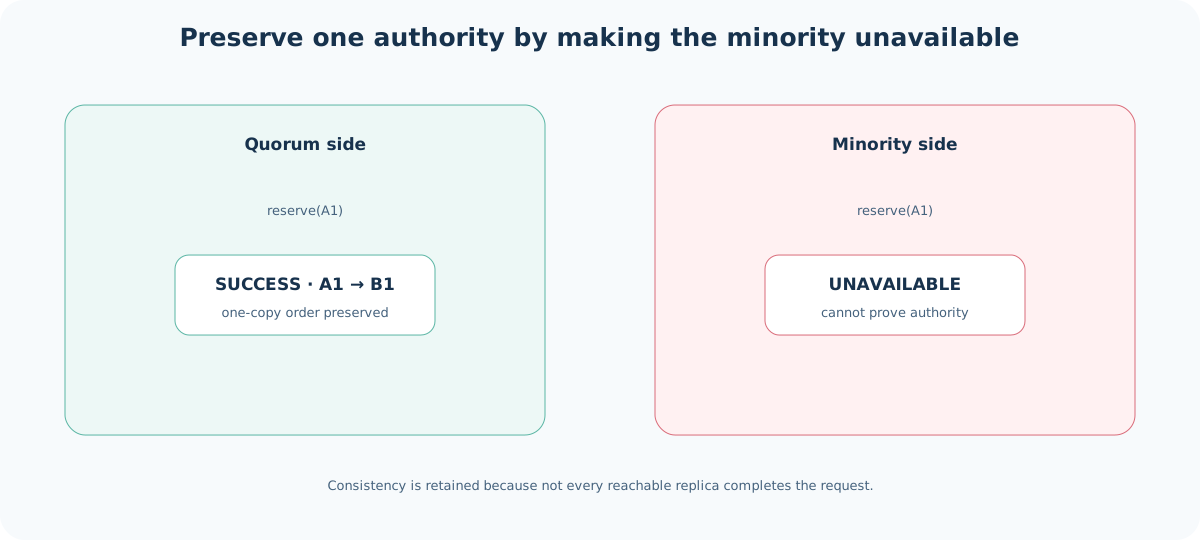
This is commonly described as CP behavior. The important statement is not the label but the operation-level contract:
During loss of quorum, reservations for seat A1 do not complete on the minority side.
Reads also need a policy. A minority replica can refuse a linearizable read, serve an explicitly stale read, or serve data under a weaker bounded-staleness contract. A system is not uniformly “CP” merely because one write path uses a quorum.
6. Availability During the Partition: Accept Divergence
Suppose Atlas instead requires both regions to accept requests. London and Dublin each decrement their local copy and respond successfully.
London: A1 -> B1
Dublin: A1 -> B2
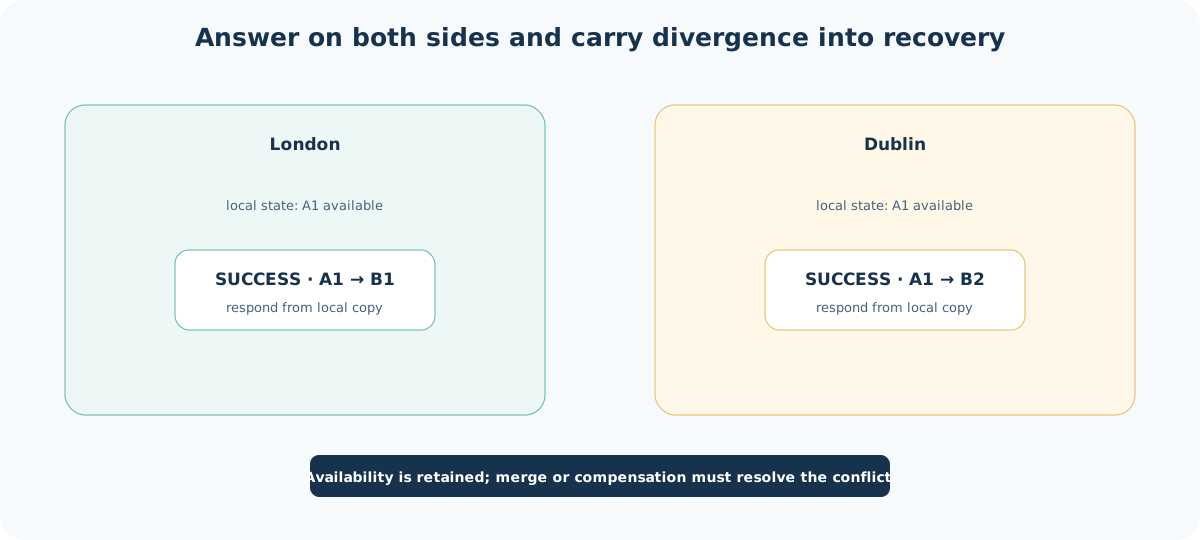
This is commonly described as AP behavior. It preserves response availability but gives up linearizability for that operation. Recovery now requires domain semantics:
- choose one reservation and cancel the other;
- allocate a different equivalent seat;
- represent the operation as a tentative hold until global confirmation;
- design the object so concurrent updates merge safely.
“Eventually consistent” does not explain which outcome is correct. The data type or business process must define how divergent states merge and how users experience compensation.
Some values, such as grow-only sets or independently accumulated counters, can merge more naturally than exclusive seat ownership. CAP behavior should be chosen per invariant, not by copying one label across an entire company.
7. Why “Pick Two of Three” Is Misleading
The familiar triangle suggests three symmetric products:
CA, CP, or AP
That picture hides the conditional nature of the theorem.
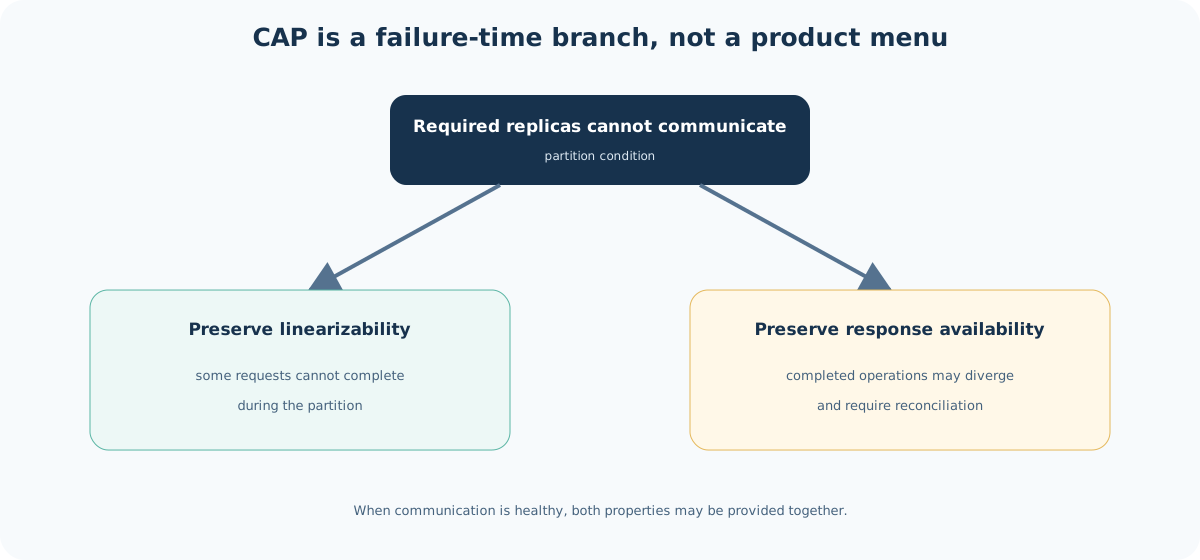
When communication is healthy, a replicated system can be both linearizable and responsive. When required messages cannot cross a partition, it must either withhold some responses or allow behavior that cannot be explained by one linearizable copy.
The useful question is therefore:
For this operation and invariant, what does each reachable side do when it cannot communicate with the authority required to preserve the guarantee?
A single-node database is not an interesting “CA system” in this framework. It avoids replica partition behavior by having one copy, but losing access to that copy still loses service. Likewise, declaring that a network is reliable does not make partitions impossible; it only makes the exceptional branch rarer.
8. Normal Operation Still Has Latency Tradeoffs
CAP describes the partitioned case. Most requests occur while communication is working, where systems still choose among latency, consistency, durability, and cost.
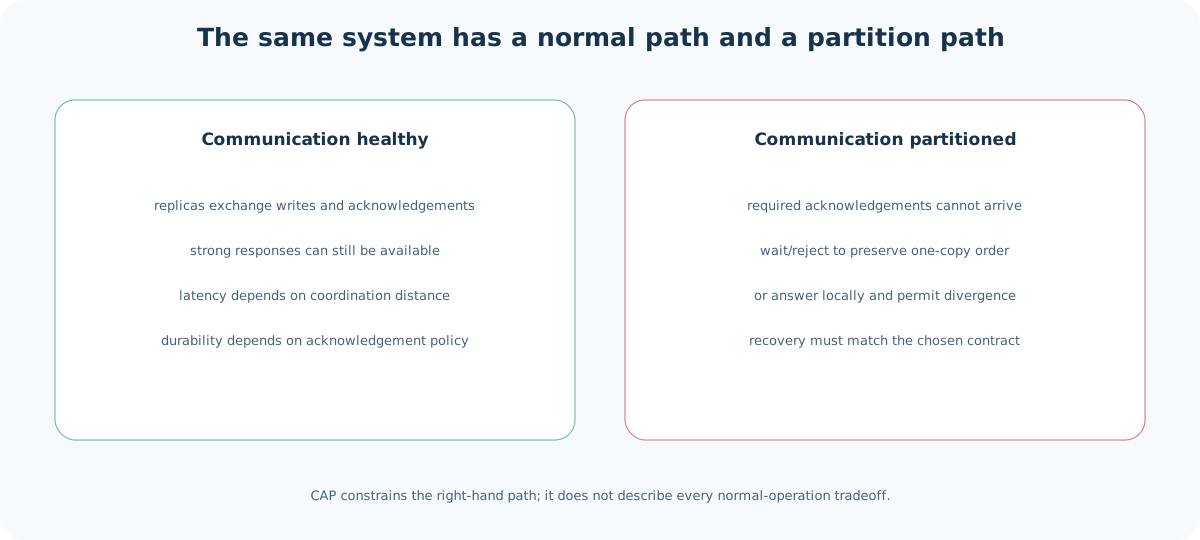
The PACELC mnemonic extends the discussion:
if Partition: choose Availability or Consistency
Else:          choose Latency or Consistency
PACELC is a design lens, not a replacement theorem. A cross-region quorum can provide a strong order while healthy but adds wide-area latency. A local read can be fast but stale. A local write acknowledged before remote replication can be fast yet vulnerable to regional data loss.
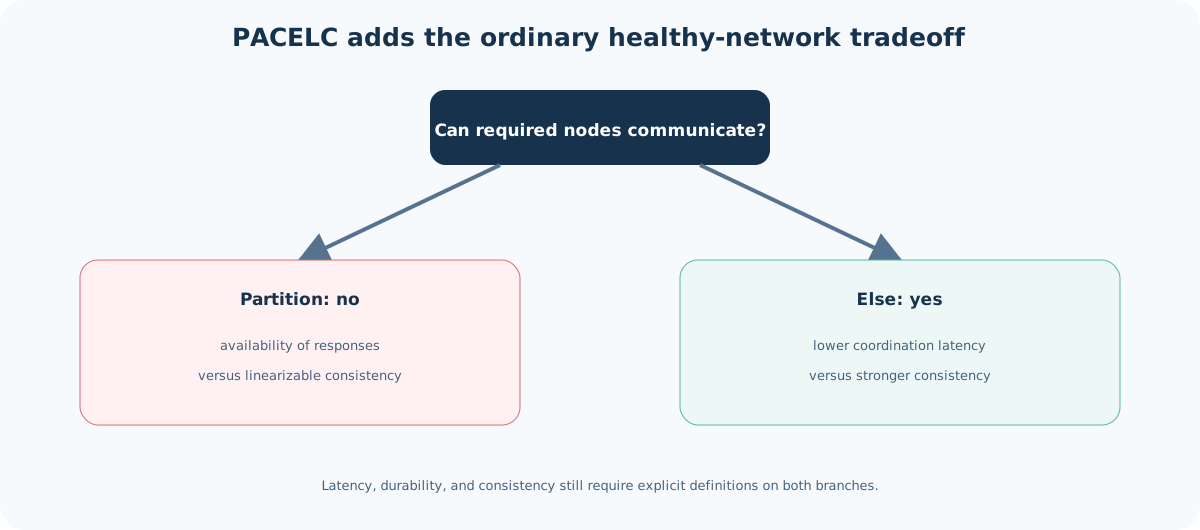
Those choices must name their durability and failure assumptions rather than being compressed into CP or AP.
9. Quorums Help Only Under Their Assumptions
For N = 3 replicas, a majority quorum requires two responses. If a partition separates one replica from two, the pair can continue and the singleton cannot complete quorum operations.
partition A: replicas L1 + L2 -> quorum available
partition B: replica D1      -> quorum unavailable
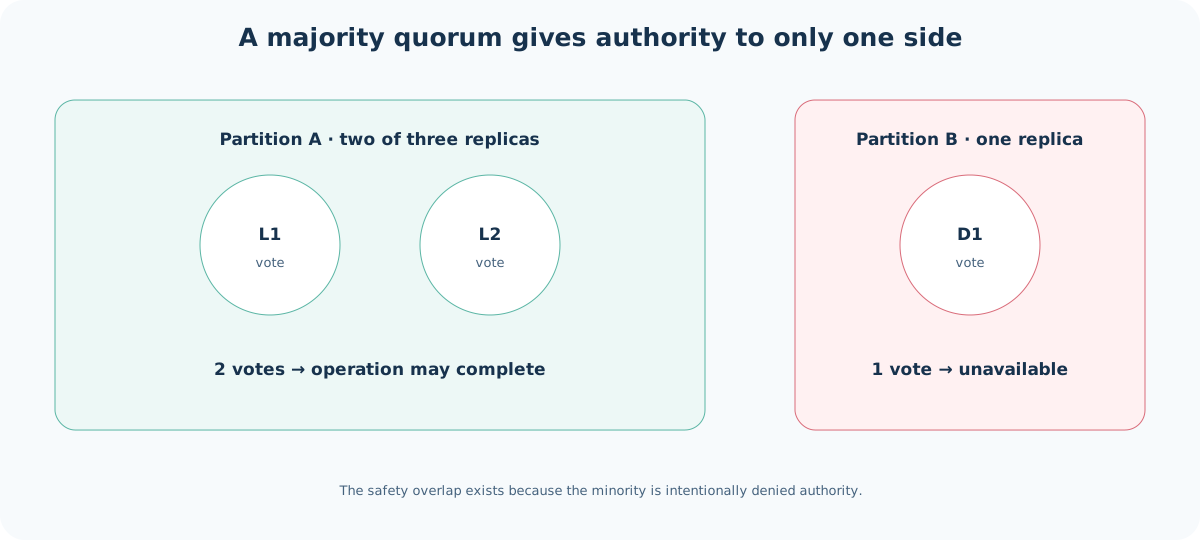
The quorum is not free availability. It deliberately removes authority from the minority. Nor does the equation R + W > N alone prove linearizability: the protocol must also handle concurrent writes, versions, membership changes, failed coordinators, and read/write ordering correctly.
Dynamic membership is especially sensitive. Two configurations must not each form an independent majority during a transition. Consensus protocols use joint or otherwise overlapping configuration rules so authority does not split.
10. Scope the Guarantee to Data and Operations
Real services rarely expose one consistency mode for every operation.
Atlas might choose:
| Operation | Partition behavior |
|---|---|
| reserve a uniquely numbered seat | require quorum; reject without authority |
| read the event description | serve a cached or stale copy |
| increment page-view analytics | accept locally and merge |
| update payment state | require the payment authority |
| show a personalized recommendation | serve a degraded local result |
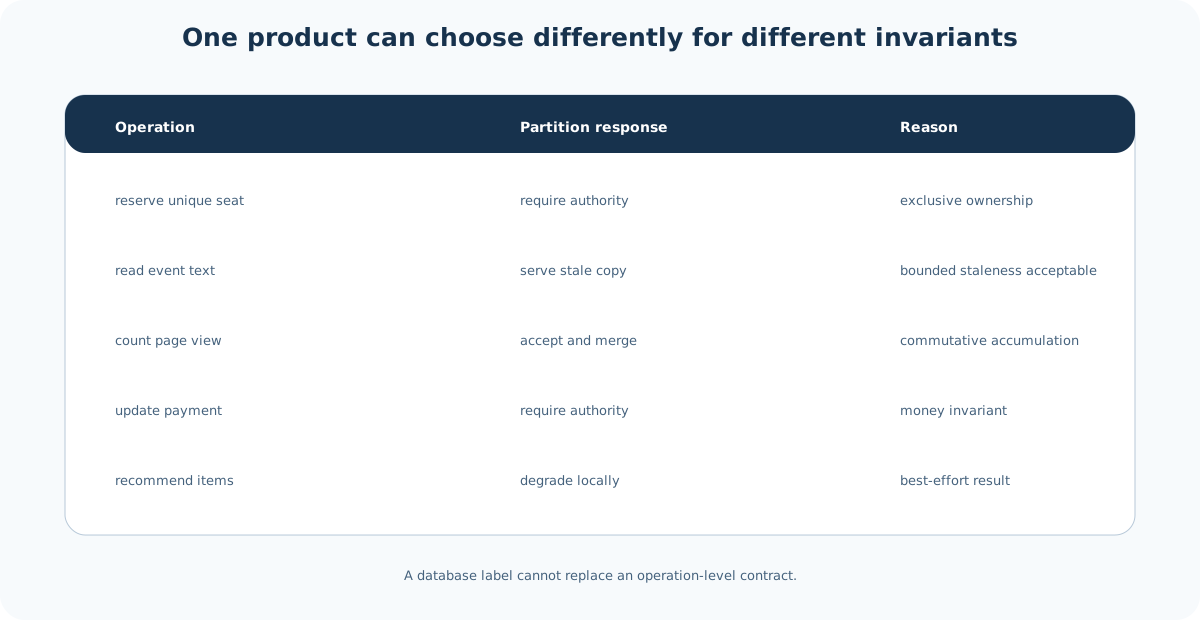
Consistency may also be scoped by key. A quorum can serialize each seat independently without creating one global order across every concert. Stating “the database is strongly consistent” is incomplete unless the statement says for which operations, keys, sessions, and failure conditions.
11. Client Timeouts Create Unknown Outcomes
Suppose London commits A1 -> B1, but the success reply is lost. The client sees a timeout:
timeout != failure
timeout = outcome unknown to caller
Retrying with a new request identity can reserve twice or trigger a conflicting business action. CAP does not solve this problem. The API still needs stable idempotency keys, status lookup, durable result records, and reconciliation.
Availability in the theorem is a server-side property under a model. User experience also depends on deadlines, retries, routing, and whether the caller can discover a previously completed outcome.
12. Recovery Is Part of the Availability Choice
When the link heals, replicas exchange state. A consistency-preserving system brings the stale side up to date before restoring authority. An availability-preserving system must reconcile accepted divergent operations.
Recovery questions include:
- Which versions causally or totally supersede others?
- Can concurrent values merge without losing intent?
- Which business operation compensates for a rejected winner?
- When is a recovering replica safe to serve strong reads?
- How is repair throttled so it does not overload foreground traffic?
The partition policy and the repair policy form one contract. “We will resolve it later” is incomplete until later has an algorithm, owner, and observable completion condition.
13. A Practical Decision Procedure
For each important operation:
- State the invariant and consistency model precisely.
- Identify the replicas or authorities that must communicate.
- Partition them deliberately in a test.
- Decide which requests may still complete on each side.
- Bound client deadlines and retry behavior.
- Define divergent-state merge or minority catch-up.
- Define the user-visible meaning of rejection, staleness, and compensation.
- Measure recovery before restoring full traffic.
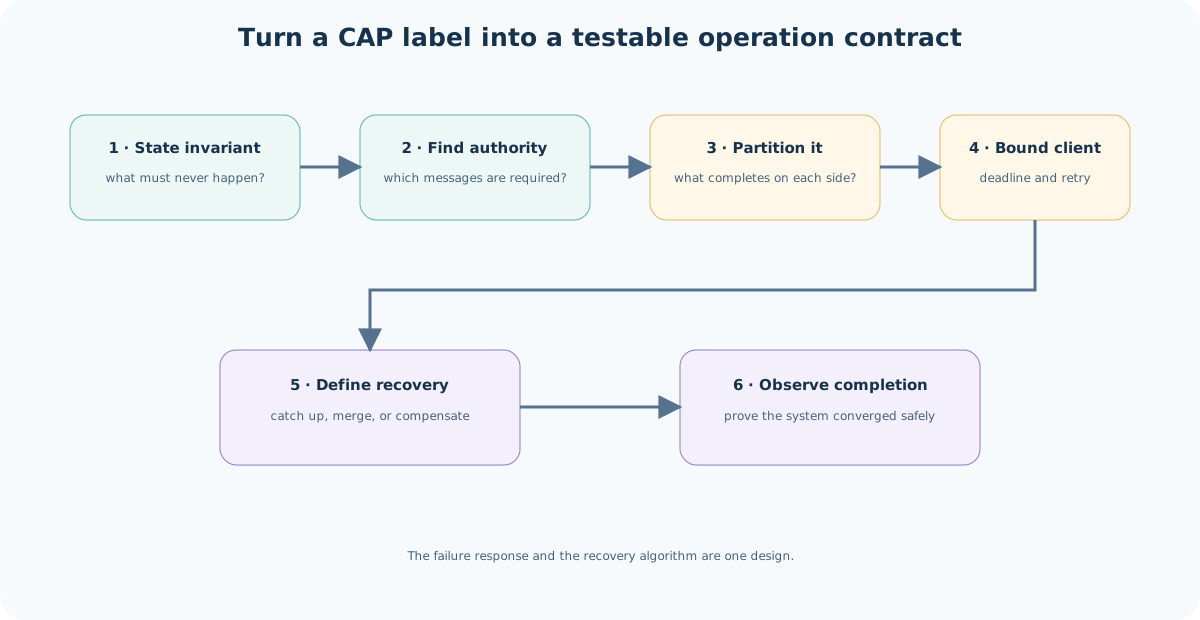
This procedure is more useful than assigning one two-letter label to an entire database product. The same database can expose linearizable conditional writes, eventually consistent reads, and local analytics counters through different APIs and configurations.
14. Failure Scenarios to Test
Minority Still Accepts Traffic
Verify that operations requiring quorum fail clearly rather than queueing without bound or silently falling back to unsafe local writes.
Old Leader Remains Reachable to Clients
Partition the old leader from its quorum but not from clients. Ensure terms, leases, or fencing prevent it from completing protected mutations.
Partition Heals After Divergent Writes
Confirm that merge rules retain both intents where required and that compensation is idempotent.
Client Reply Is Lost After Commit
Retry with the same idempotency key and verify that the original result is returned rather than performed twice.
Membership Changes During the Partition
Ensure old and new configurations cannot independently authorize conflicting writes.
Clocks Disagree
If conflict resolution uses timestamps, move clocks backward and forward. A last-write-wins rule can discard a causally later operation when physical time is trusted incorrectly.
15. Final Mental Model
CAP is best remembered as a forced branch in one concrete failure state:
replicas cannot communicate
  -> preserve one-copy order by withholding some responses
  -> or answer everywhere and permit divergence
It does not say that systems may have only two desirable properties forever. It does not classify every database with one permanent label. It does not replace decisions about durability, isolation, latency, stale reads, idempotency, merge semantics, or recovery.
For Atlas Tickets, the final seat cannot be safely confirmed by two isolated authorities. The system can make one side unavailable, or it can accept tentative outcomes that a later business process resolves. The theorem proves that no protocol can promise both unconditional response availability and one linearizable seat while the required messages cannot arrive.
That is the useful lesson: during a partition, every completed operation reveals which guarantee the system chose.
Leave a Comment