Inside ZooKeeper: Znodes, Sessions, Watches, Zab, and Fencing
Published:
1. One Coordination Story
Imagine an online shop named Orchard. Its checkout service sends payment requests to a pool of workers. Workers come and go during deployments, so checkout instances need a current worker list. One worker also acts as the controller that assigns reconciliation jobs. Configuration can change while the system is running, and no two controllers may safely update the same external ledger at once.
The application needs answers to four small but difficult questions:
- Which payment workers are alive?
- How do clients learn that the membership changed?
- Which worker is the current controller?
- How does the ledger reject a controller that lost leadership but has not realized it yet?
ZooKeeper answers these questions with a deliberately small substrate:
- a replicated hierarchy of small records called znodes;
- sessions that give temporary ownership a lifetime;
- ordered, conditional updates;
- watches that tell clients to re-read state;
- a leader-based atomic broadcast protocol named Zab.
Service discovery, leader election, configuration, and locks are not separate server features. They are client-side recipes composed from those primitives.
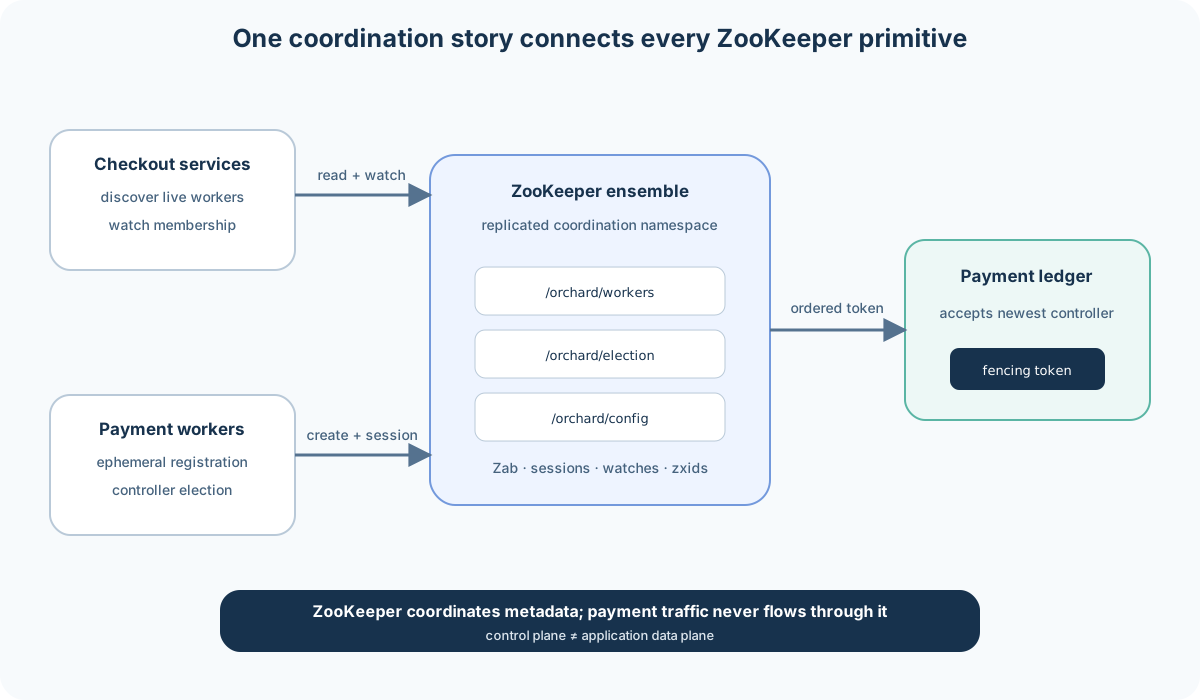
This article follows one worker, payments-3, through the entire lifecycle. It registers an ephemeral znode. Checkout clients watch the worker directory. A write passes through Zab. The worker joins an election. Then a network partition expires its session, another controller takes over, and a fencing token prevents the old controller from corrupting the ledger.
That continuity matters. ZooKeeper is easiest to understand as a sequence of state transitions, not a list of APIs.
Why a Separate Coordination Service?
Orchard could place membership in a database table and poll it. That immediately creates more questions: who removes a crashed worker, how quickly, under which clock, and how do thousands of clients avoid polling together? It could embed a consensus protocol inside every service, but then every service must implement, test, deploy, and operate the same failure-sensitive machinery.
ZooKeeper centralizes the small amount of strongly ordered metadata that helps other distributed systems coordinate. It is not the data plane for payments. Payment events and ledger entries remain in systems built for large data. Only their coordination state lives in ZooKeeper.
Design boundary: if Orchard starts storing receipts, images, or event history in znodes, it has turned a coordination service into a badly shaped database.
2. The Ensemble Behind the Story
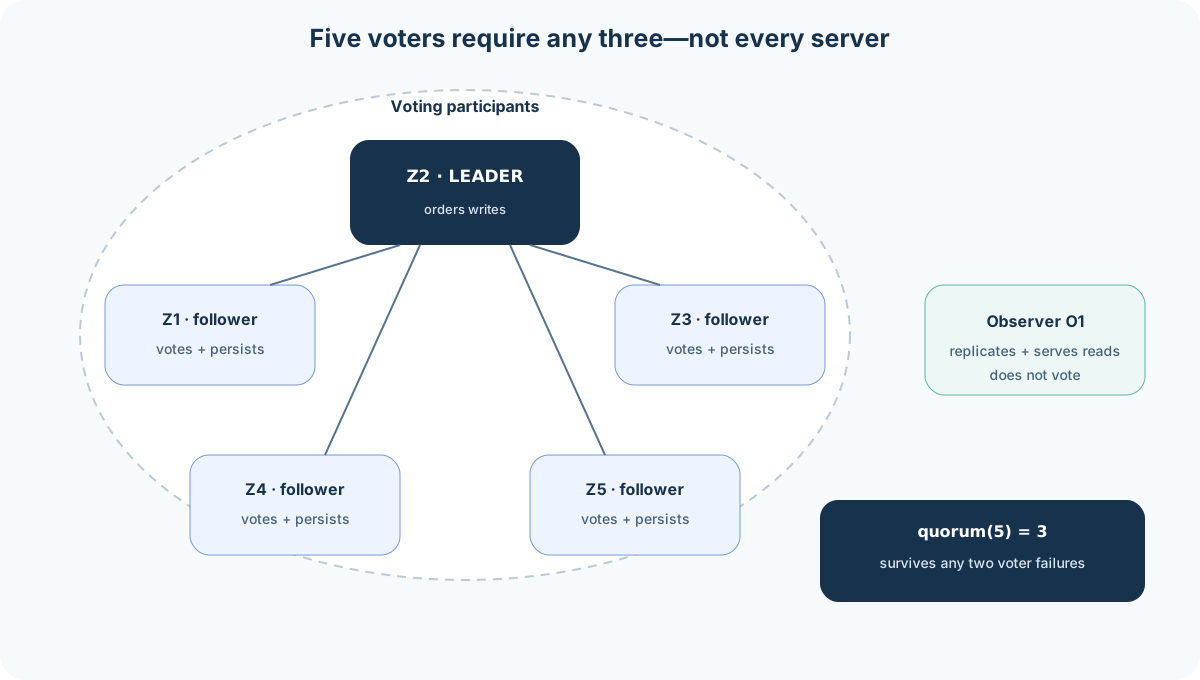
Orchard runs five ZooKeeper servers across separate failure domains:
Z1, Z2, Z3, Z4, Z5
At one moment, Z2 is the ZooKeeper leader and the others are followers. Clients can connect to any of them. This creates two different request paths:
- a read is normally served by the connected server from its local replicated state;
- a write is ordered by the leader and committed through a voting quorum.
The leader is an implementation role inside the ensemble. It is unrelated to the Orchard payment controller elected by application znodes. ZooKeeper may elect Z2 as its protocol leader while Orchard elects payments-3 as its business controller.
Voting Participants and Observers
A five-participant ensemble needs three votes for a quorum:
quorum(5) = floor(5 / 2) + 1 = 3
It remains available after two participant failures, assuming the remaining three can communicate. Adding a sixth voting server does not increase the number of failures tolerated: both five and six require three surviving failures to lose a majority. Odd participant counts usually buy fault tolerance more efficiently.
An observer receives committed state and can serve clients, but does not vote in leader election or Zab acknowledgement quorums. Observers can add read capacity or provide a local endpoint without increasing the size and latency of the voting quorum.
Availability Is Majority Availability
The ensemble does not continue accepting writes merely because some server is alive. A partition containing Z1 and Z2 has two of five votes and cannot form a quorum. A partition containing Z3, Z4, and Z5 can elect a leader and continue.
That majority rule is what prevents two sides from committing divergent write histories. Every pair of majorities intersects in at least one server.
Now that the ensemble can order metadata, Orchard needs a shape for that metadata.
3. The Namespace Becomes the Shared Story
ZooKeeper exposes a hierarchical namespace. A znode can hold a byte array and also have children, so it resembles a file and directory at the same time. Paths are absolute.
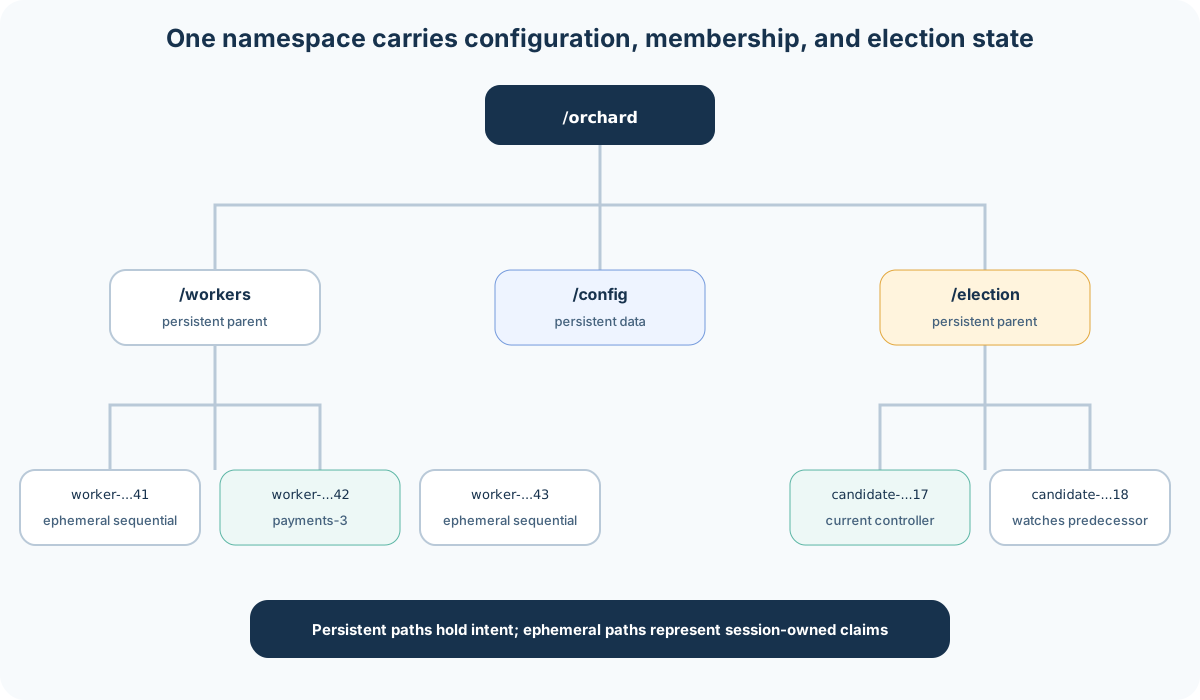
Orchard uses this tree:
/orchard
├── config
│   └── checkout-routing
├── workers
│   ├── worker-0000000041
│   ├── worker-0000000042   <- payments-3
│   └── worker-0000000043
└── election
    ├── candidate-0000000017
    ├── candidate-0000000018
    └── candidate-0000000019
The worker znodes contain small endpoint records such as 10.24.8.19:8443|zone-b. The configuration znode contains a small versioned document. Election znodes identify controller candidates.
Persistent, Ephemeral, and Sequential
The names describe lifecycle and naming behavior:
| Property | Meaning | Orchard use |
|---|---|---|
| persistent | remains until explicitly deleted | configuration and parent paths |
| ephemeral | removed when the owning session ends | live worker and election entries |
| sequential | server appends an increasing suffix under the parent | ordered membership and election candidates |
Properties can be combined. payments-3 creates an EPHEMERAL | SEQUENTIAL child using the prefix /orchard/workers/worker-. ZooKeeper returns the actual path ending in 0000000042.
Ephemeral znodes cannot have children. Their lifetime belongs to a session, not to a TCP socket, process ID, hostname, or application heartbeat timestamp.
Data and Stat Travel Together
Reading a znode returns its data plus a Stat structure. Important fields include:
version: number of data changes;cversion: number of child-list changes;aversion: number of ACL changes;czxid: transaction that created the znode;mzxid: transaction that last changed its data;pzxid: transaction that last changed its children;ephemeralOwner: owning session ID, or zero for a non-ephemeral znode.
Versions support optimistic concurrency. If two administrators read checkout-routing at version 8, only the first setData(path, bytes, 8) can advance it to version 9. The second receives a bad-version result instead of silently overwriting a concurrent change.
A zxid orders transactions across the entire ZooKeeper history; a znode version counts changes to one znode. They answer different questions.
Keep Znodes Small
ZooKeeper atomically reads or replaces an entire znode value. It is designed for coordination data measured in kilobytes, with a hard sanity limit below one megabyte per znode in normal configurations. Large values increase network, serialization, snapshot, recovery, and tail-latency costs for the ensemble.
The namespace can now describe a worker. A session gives that description a meaningful lifetime.
4. A Session Gives Membership a Lifetime
payments-3 creates a ZooKeeper client with the ensemble address list and a requested session timeout. The library connects to one server and negotiates a timeout. ZooKeeper assigns a 64-bit session ID and credentials that allow the session to reconnect through another server.
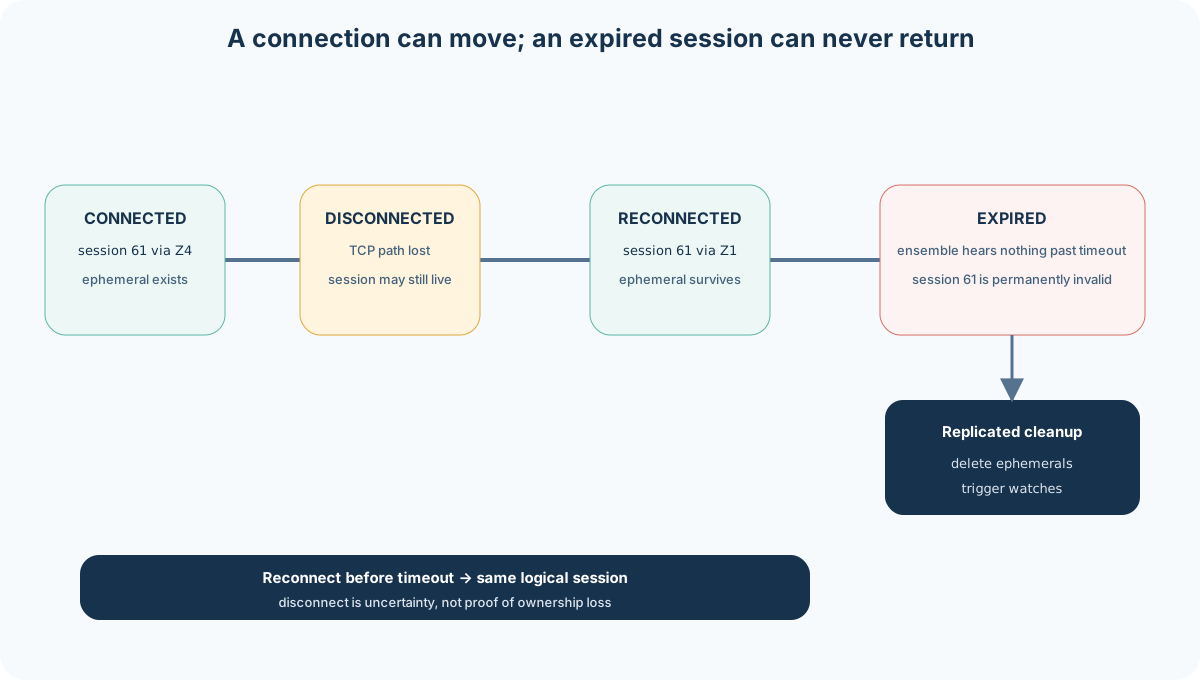
A connection is one network channel to one server. A session is logical state that can survive a connection change.
This distinction drives the worker story:
payments-3connects toZ4and creates its ephemeral worker znode.Z4fails, breaking the TCP connection.- The client library reconnects the same session through
Z1before timeout. - The ephemeral znode remains; checkout does not see a false worker removal.
Disconnected Is Not Expired
When connectivity is lost, the client enters DISCONNECTED. It cannot know whether the ensemble can still hear from the session through another delayed path or whether the ensemble will soon expire it. The client should enter a safe mode rather than inventing a local answer.
If the same session reconnects before the negotiated timeout, it returns to CONNECTED. If the ensemble hears nothing for the timeout, it expires the session. Expiration is decided by the ZooKeeper service, not the disconnected client.
Expiration causes a replicated state transition:
- the session becomes invalid;
- its ephemeral znodes are deleted;
- those deletions receive ordered zxids;
- relevant watches are triggered;
- the old session can never be revived.
The client may only learn that it expired when network connectivity returns. By then another Orchard worker may already be controller.
Timeout Is a Correctness–Recovery Tradeoff
A short timeout removes dead workers quickly but turns brief network stalls, GC pauses, and overloaded servers into session expiration. A long timeout survives longer pauses but delays membership cleanup and failover.
The timeout must be designed alongside:
- maximum expected process pause;
- network failover time;
- application recovery objective;
- cost of duplicate controllers;
- fencing support at external resources.
Ephemeral membership solves cleanup, but checkout instances still need to learn that the child list changed. That is the job of watches.
5. Watches Turn Membership Into Discovery
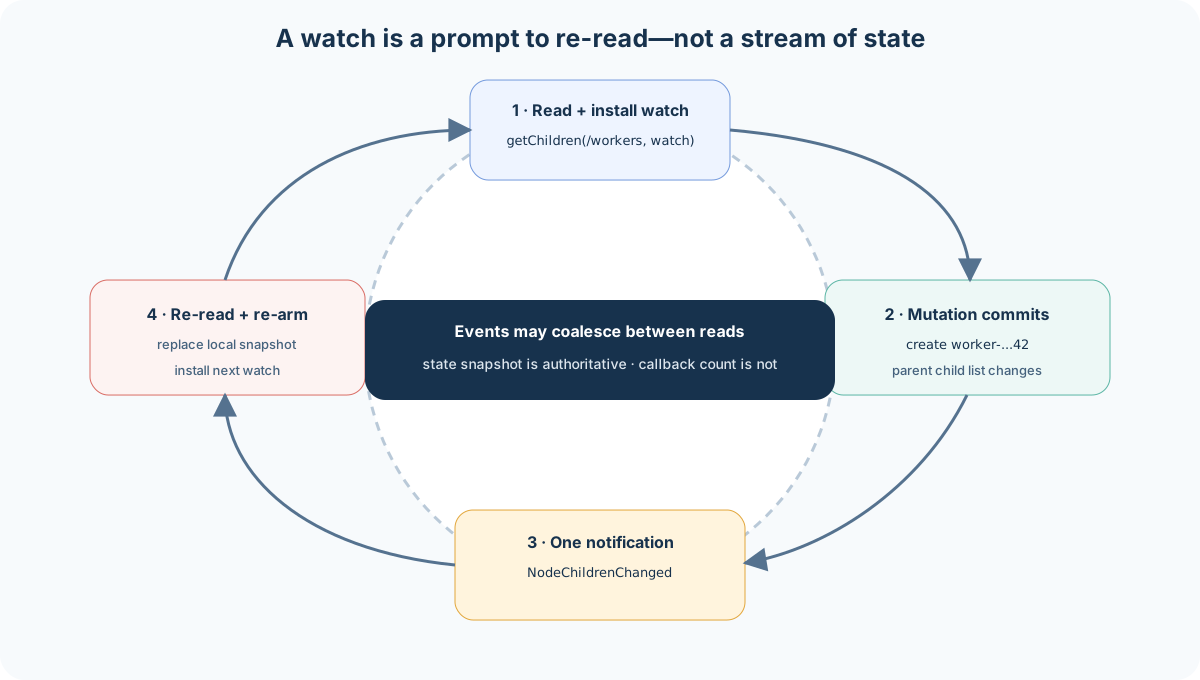
At startup, a checkout instance calls getChildren("/orchard/workers", watch). The response contains a snapshot of current child names and installs a child watch on the connected ZooKeeper server.
When payments-3 registers, the parent child list changes. After the create is committed and applied, ZooKeeper emits a watch event. The event does not contain the new authoritative worker list. It means:
Something relevant changed. Read the state again.
The checkout instance reissues getChildren with a new watch and replaces its local routing snapshot.
Standard Watches Are One-Shot
A standard watch fires once and is removed. The safe loop is therefore:
read state and install watch atomically
    -> use returned snapshot
    -> receive notification
    -> read state and install the next watch
    -> replace snapshot
Several changes may happen between notification and the next read. The client must converge to current state, not assume one event per mutation. ZooKeeper 3.6 and later also support persistent and persistent-recursive watches, but notifications still indicate change; clients should derive truth from state.
C++: The Entire Discovery Loop
The application logic can remain compact when a client library wraps the raw callbacks:
void WorkerDirectory::refresh() {
    auto children = zk.getChildren(
        "/orchard/workers",
        [this](const WatchEvent&) { refresh(); });

    std::vector<Endpoint> next;
    for (const auto& child : children) {
        next.push_back(decode(zk.getData(
            "/orchard/workers/" + child)));
    }
    routes.replace(std::move(next));
}
Production code must serialize refreshes, handle session events, retry recoverable failures, tolerate a child disappearing between getChildren and getData, and avoid doing slow work on the watch callback thread. The important pattern is visible: notification leads to a new read, and the read replaces local state.
Watch Ordering and Gaps
ZooKeeper orders watch events with updates and asynchronous replies for a client. A client will receive the watch event before it observes the new data through that connection.
Watches are not a durable event log:
- no watches arrive while disconnected;
- an existence watch can miss a create-and-delete entirely while disconnected;
- different clients need not receive events at the same wall-clock instant;
- watching every child can consume server memory and create notification load.
On disconnection, Orchard checkout freezes or conservatively ages its last worker snapshot. On reconnection, it re-reads the directory. It never treats a count of watch callbacks as the source of truth.
The create and delete operations that trigger those watches must appear in one order on every server. Zab supplies that order.
6. One Registration Through Zab
Follow the registration of payments-3. The client happens to be connected to follower Z4, while Z2 is leader.
Step 1: Forward to the Leader
Z4 accepts the create request and forwards the write toward Z2. Clients do not need to discover and connect directly to the ZooKeeper leader.
Step 2: Assign a zxid and Propose
The leader validates the request, chooses the sequential suffix, and assigns a zxid. A zxid is a 64-bit transaction identifier:
zxid = (epoch, counter)
The epoch identifies a period of ZooKeeper leadership. The counter increases for proposals within that epoch. Lexicographic ordering of the pair exposes the global transaction order.
Z2 broadcasts the proposal to followers. Zab pipelines proposals, so it can have several writes in flight while preserving FIFO proposal order.
Step 3: Persist and Acknowledge
Participants append the proposal to their transaction logs before acknowledging. When the leader has acknowledgements from a voting quorum—including itself—it can commit the proposal.
In a five-node ensemble, three durable acknowledgements suffice. Observers do not count toward this quorum.
Step 4: Commit, Apply, Notify, Reply
The leader broadcasts the commit. Servers apply the create to their in-memory data tree in zxid order. The server holding the checkout watch can now enqueue the child-change event. The originating server returns the created sequential path to payments-3.
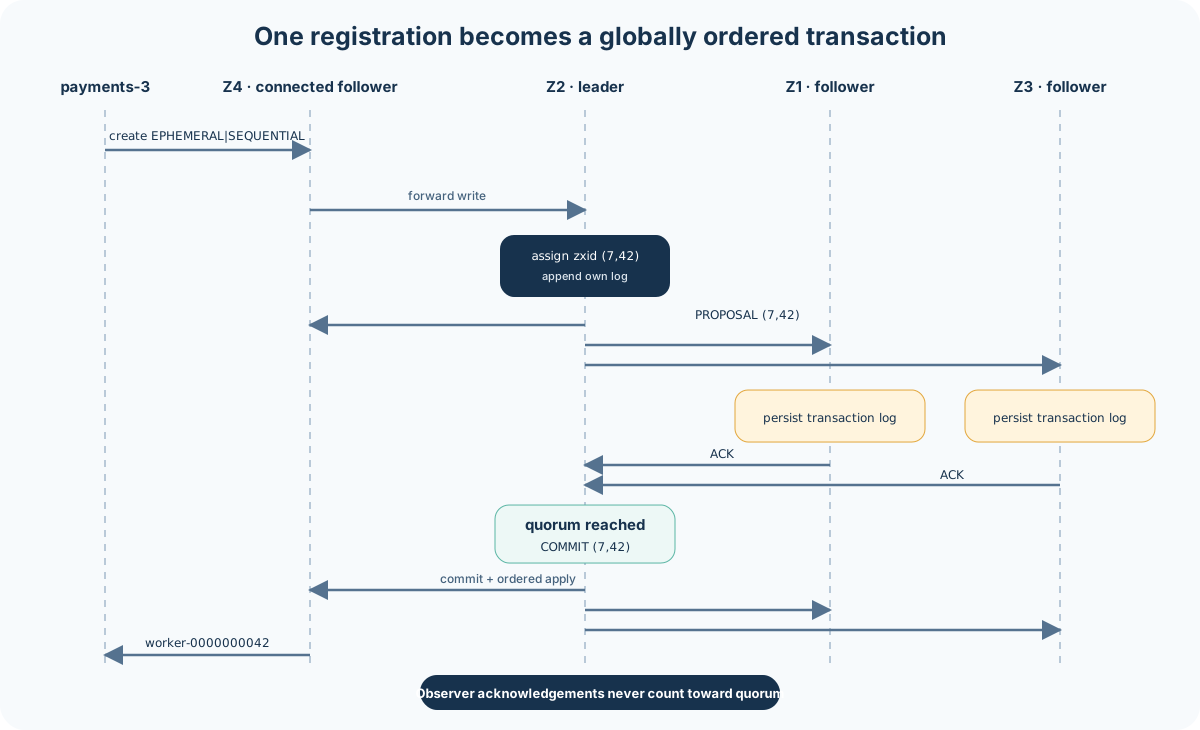
The simplified foreground path is:
client -> connected server -> leader
       -> durable proposal on quorum
       -> commit broadcast
       -> ordered apply
       -> watch notification and client response
What the Acknowledgement Means
A successful create means the write was committed in ZooKeeper’s global order. It does not mean every follower has applied it at the exact response instant. Lagging followers learn and apply committed proposals in order.
A connection-loss result is different. The server may have committed the create and lost the response, or it may never have processed it. This outcome ambiguity is especially important for sequential creates because retrying can create a second child with a different suffix.
Recipes commonly include a unique client GUID in the prefix or data, then scan children after reconnecting to determine whether the original create succeeded before retrying.
The Zab path explains linearizable writes. Reads deliberately take a shorter path and therefore have a different guarantee.
7. Reads Are Fast Because They Are Local
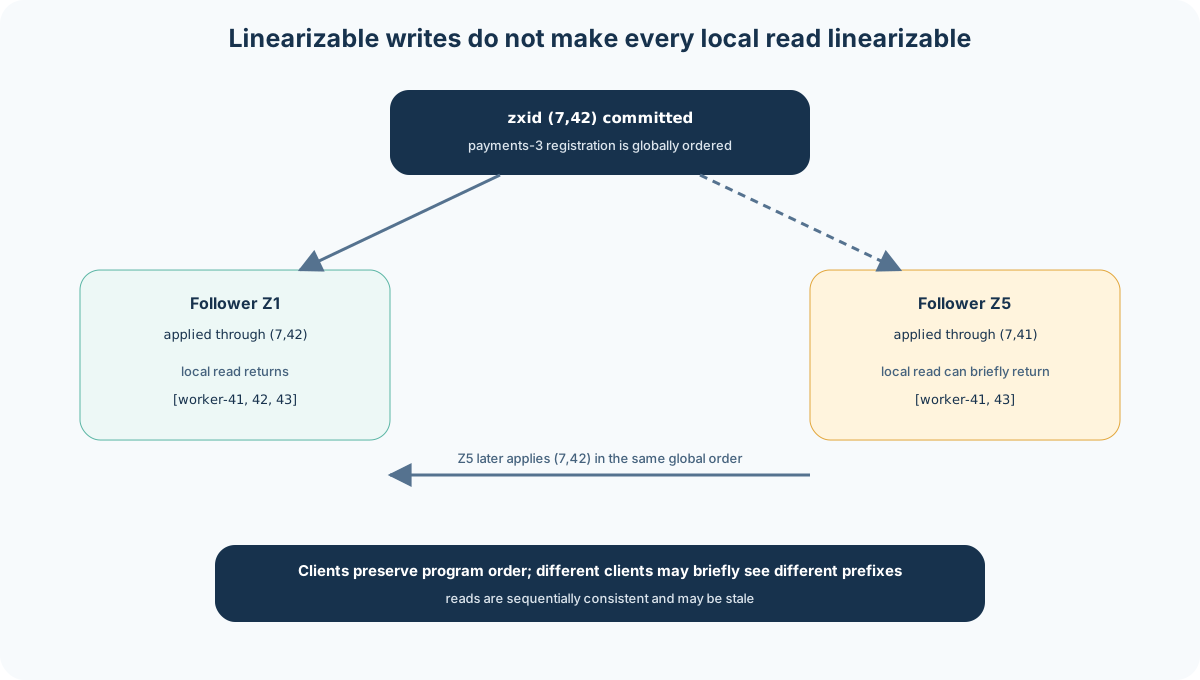
Checkout is connected to Z5. When it reads /orchard/workers, Z5 normally answers from its local data tree without asking a quorum and without forwarding the read to Z2.
That keeps read latency and throughput attractive for read-heavy coordination workloads. It also means Z5 can briefly lag the newest committed transaction.
The Actual Consistency Contract
ZooKeeper provides several connected guarantees:
- writes are linearizable and globally ordered;
- each client’s operations preserve program order;
- a client’s view never moves backward after it has observed a zxid;
- reads are sequentially consistent but may be stale;
- watches are ordered with the updates observed by the client.
ZooKeeper does not guarantee that two clients connected to different servers have identical views at every wall-clock instant.
Read-Your-Writes Without Global Freshness
If one client successfully writes and then reads, ZooKeeper preserves that client’s ordering as it moves between servers. That does not make an arbitrary read by a different client linearizable.
Historically, applications used sync(path) before a read to advance the connected server. Current ZooKeeper documentation makes an important formal qualification: sync is not itself a quorum operation, so it is not a strict proof of the freshest possible state under every theoretical failure. An actual quorum operation before the read provides the stronger barrier.
Most discovery use cases do not need every read to be linearizable. They need ordered changes, bounded staleness, session-aware failure handling, and a re-read when notified. The design should state which is required rather than calling all ZooKeeper operations “strongly consistent.”
Now consider what happens when ZooKeeper’s own leader fails with proposals in flight.
8. Leader Failure and Zab Recovery
Suppose leader Z2 has assigned three zxids:
(7, 41) committed
(7, 42) acknowledged by a quorum, commit message partly delivered
(7, 43) seen only by Z2 and Z4
Then Z2 crashes.
The ensemble must preserve (7,42) because a quorum accepted it. It must not accidentally commit (7,43) merely because one possible leader saw it. Before serving new writes, ZooKeeper enters leader election and synchronization.
Discovery and Election
Peers exchange election state including epochs and zxids. The elected leader must have a history capable of containing every committed proposal. Quorum intersection ensures at least one voter from the old commit quorum participates in the new quorum.
Synchronization
The prospective leader establishes a common prefix with followers. Depending on their state, learners may receive missing committed transactions, truncate uncommitted suffixes, or install a snapshot plus subsequent log entries.
New Epoch and Broadcast
Only after a quorum synchronizes with the new leader does it become active. It uses a higher epoch—say 8—so new proposals cannot collide with zxids from the old leadership period.
(7,42) preserved and committed
(7,43) discarded if it was never committed
(8, 1) first proposal of the new leader
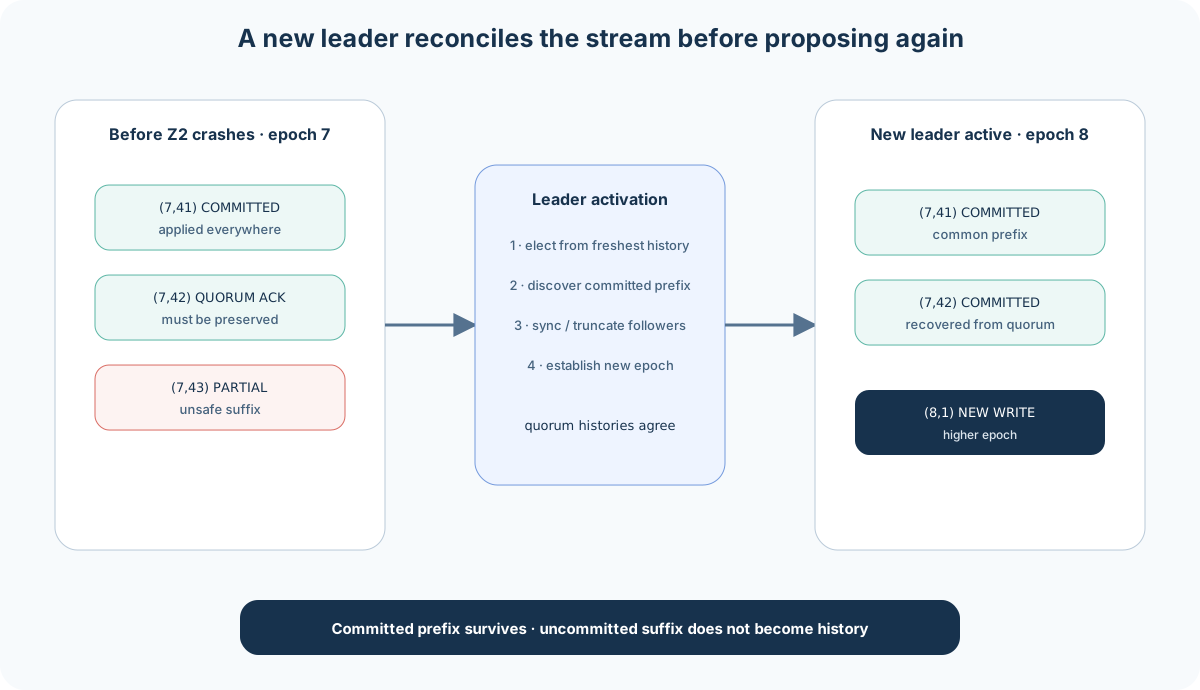
Leader activation is why Zab is more than “send a write to a majority.” The protocol coordinates an ordered stream and makes a new leader reconcile that stream before accepting more writes.
ZooKeeper’s internal leader is recovered. Orchard still needs to elect its application controller from the worker sessions.
9. Application Leader Election Without a Herd
Each eligible payment worker creates an ephemeral sequential znode under /orchard/election:
candidate-0000000017  payments-3
candidate-0000000018  payments-7
candidate-0000000019  payments-9
The smallest suffix wins, so payments-3 becomes controller.
The Naive Watch
Every candidate could watch the smallest znode. When it disappears, every candidate wakes, lists all children, sorts them, and attempts leadership. With thousands of candidates, one failure creates a traffic spike known as the herd effect.
Watch the Predecessor
Instead, each non-leader watches only the candidate immediately before it:
17  <- leader
18  watches 17
19  watches 18
20  watches 19
When 17 disappears, only 18 wakes. It re-lists the election directory, confirms that it is now smallest, and becomes leader. If 18 disappears too, 19’s watch fires.
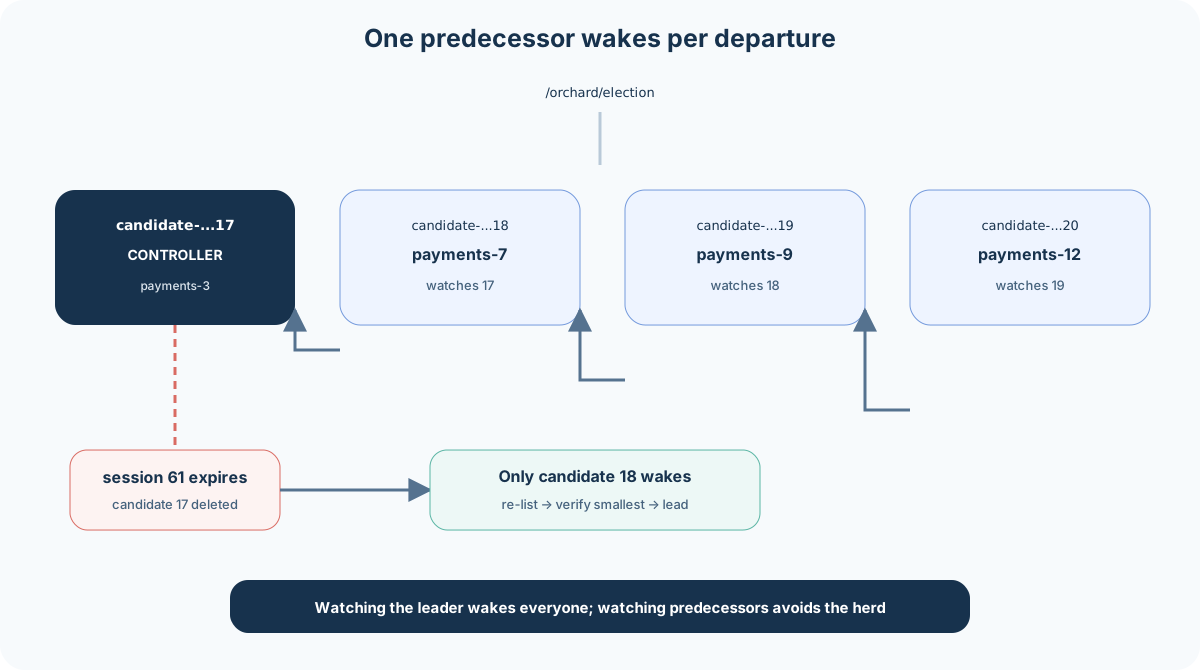
The Correct Election Loop
The recipe must handle races:
- create one ephemeral sequential candidate;
- list and sort children;
- if this candidate is smallest, become leader;
- otherwise call
exists(predecessor, watch); - if the predecessor already vanished, return to step 2 immediately;
- if the watch is installed, wait for deletion and return to step 2.
The exists result closes the gap between listing and installing the watch. The candidate never assumes a watch event grants leadership; it re-reads and proves that it is smallest.
Election establishes who ZooKeeper considers current. It does not physically stop an old process from continuing to use an external database. That requires fencing.
10. Election Is Not Fencing
Now partition payments-3 from ZooKeeper but not from the payment ledger.
From the old controller’s perspective:
- its process is alive;
- a reconciliation request is still running;
- it has not yet received a session-expired event.
From the ensemble’s perspective, the session eventually expires. ZooKeeper deletes candidate 17, triggers candidate 18’s watch, and elects payments-7. For a period, both processes may believe they can act.
An ephemeral znode removes an ownership claim inside ZooKeeper. It cannot reach into the ledger and pause an old process.
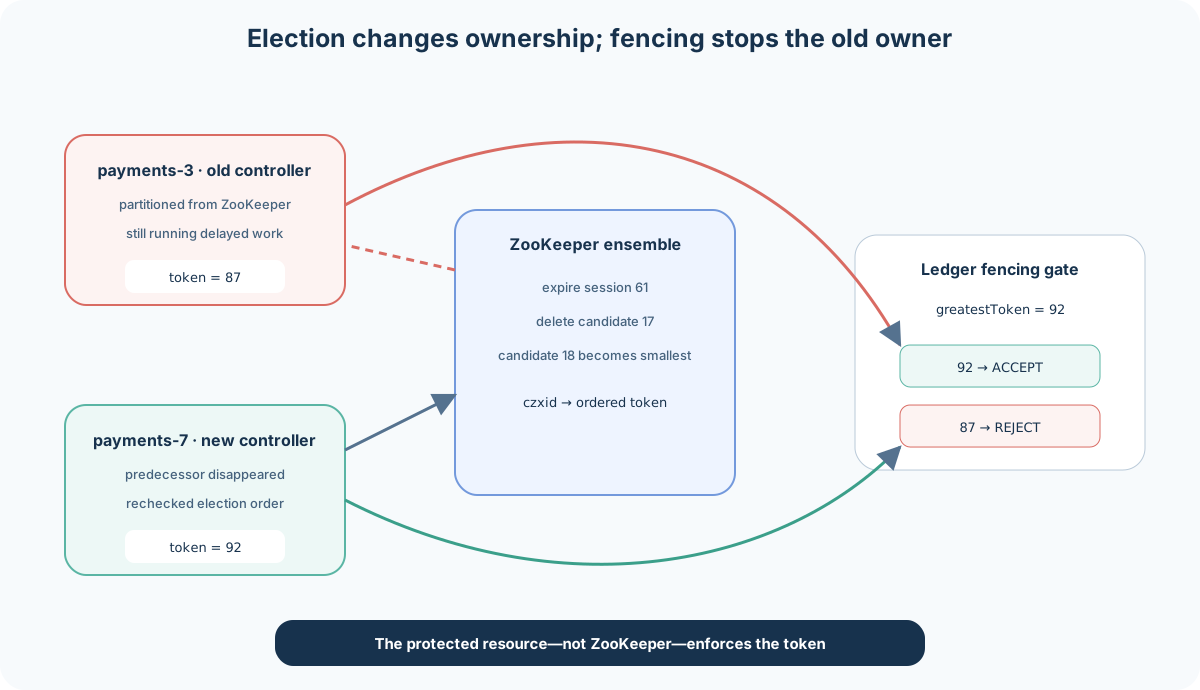
Monotonic Fencing Tokens
When a candidate becomes controller, it derives a monotonically increasing token from its ordered election record—for example the candidate creation zxid stored in Stat.czxid. Every command to the ledger includes that token.
The ledger persists the greatest accepted token and rejects any smaller token:
bool Ledger::apply(std::uint64_t fencingToken, Mutation mutation) {
    std::lock_guard lock(mu);
    if (fencingToken < greatestToken) return false; // stale controller

    greatestToken = fencingToken;
    commit(std::move(mutation));
    return true;
}
If payments-7 first writes with token 92, a delayed command from payments-3 carrying token 87 is rejected. This protection exists only because the external resource validates the token atomically with the mutation.
The new controller should establish its token at the protected resource before performing work. A token checked only in application memory is not fencing.
Disconnection Policy Still Matters
On DISCONNECTED, the old controller should stop starting new work as quickly as practical. Fencing is the final correctness boundary for work already in flight or for a paused process that resumes late. Safe-mode behavior reduces conflicts; fencing makes stale conflicts harmless.
The same principle applies to locks. Acquiring a ZooKeeper lock grants an ordered claim, but a resource that cannot reject stale holders may still be damaged after pauses or partitions.
11. Other Recipes Reuse the Same Primitives
The story has already built the pieces used by most ZooKeeper recipes.
Dynamic Configuration
Checkout reads /orchard/config/checkout-routing with its version and a watch. An administrator updates it conditionally:
setData(path, newBytes, expectedVersion=8)
Zab commits version 9. The data watch fires. Checkout re-reads and atomically replaces its local configuration snapshot. If another administrator already created version 9, the stale update fails rather than overwriting it.
Exclusive Lock
Lock contenders create ephemeral sequential children. The smallest child owns the lock; others watch their predecessors. This is the election recipe with a different application meaning.
Correct error handling is essential. If create succeeds but the reply is lost, blindly retrying creates two lock nodes. A GUID lets the client recover its original node. A session expiration means the contender must start over, not resume as if it still owned the lock.
Atomic Multi-Operation
ZooKeeper’s multi groups several checks and mutations into one atomic transaction. Orchard could check a configuration version, update a pointer, and create an audit marker so either all operations commit or none do.
This is atomicity inside the ZooKeeper namespace. It is not a transaction that atomically spans ZooKeeper and the external ledger. Cross-system workflows still need idempotency, fencing, or a protocol designed for both systems.
ACLs Are Part of Coordination Correctness
Orchard should not leave the namespace world-writable. ZooKeeper ACLs control create, delete, read, write, and administrative permissions. Workers may create membership children without gaining permission to rewrite configuration.
Authentication and TLS protect different boundaries:
- client authentication identifies principals;
- znode ACLs authorize operations;
- client TLS protects client-server traffic;
- quorum TLS protects election and replication traffic between servers.
12. Failure Scenarios in the Running Story
A Client Loses One Server
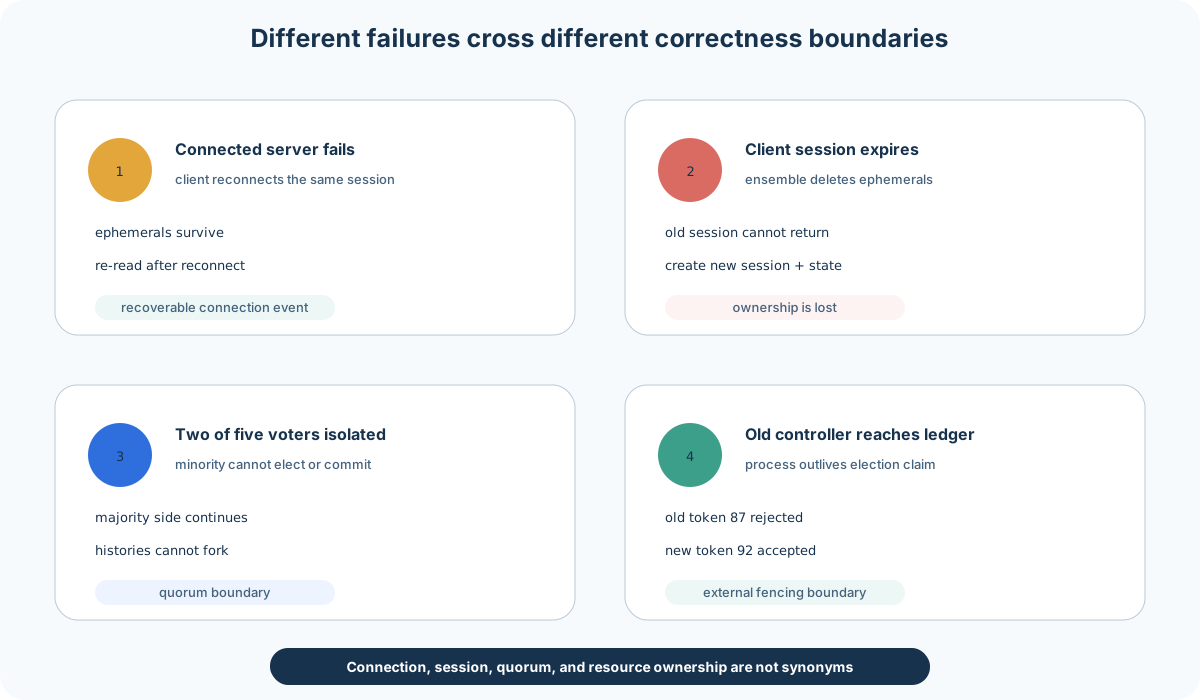
The library reconnects the same session to another server. Ephemeral nodes and watches remain logically associated with the session. The application treats the interval as disconnected and refreshes state after reconnecting.
A Client Is Partitioned Past Its Timeout
The ensemble expires the session and deletes its ephemerals. The client cannot resurrect that session. It creates a new session, re-registers, reinstalls watches, and re-enters elections as a new candidate.
The ZooKeeper Leader Fails
Followers stop processing new writes, elect a new leader, reconcile committed history, establish a new epoch, and resume. Reads from connected servers may continue only within the behavior of the current server state and connection; applications must handle disconnection and retryable errors.
A Minority of the Ensemble Is Isolated
It cannot elect an active leader or commit writes. Clients connected there are redirected by reconnection behavior or become disconnected. The majority side continues.
A Write Response Is Lost
The result is unknown. Retrying setData with the same expected version is often naturally detectable. Retrying an unconditional or sequential create may duplicate state. Each operation needs a recovery rule.
A Follower Is Slow
The leader does not need every follower to commit, but disk or network latency on enough voting participants raises write latency or loses quorum. Slow servers can also accumulate synchronization work and serve staler local reads.
The Old Orchard Controller Keeps Running
Session expiration and election choose a new controller, but only the ledger’s fencing-token check rejects the old controller’s delayed mutation.
13. Persistence and Recovery
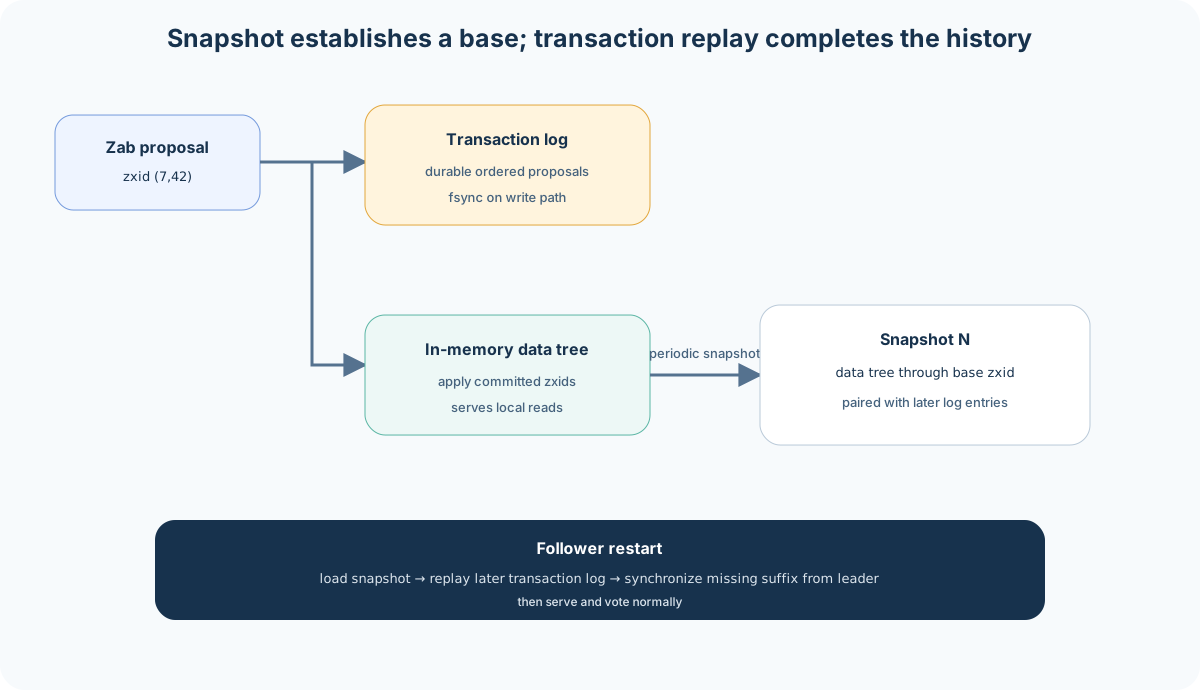
Every voting server maintains a transaction log and periodic snapshots of the in-memory data tree.
Transaction Log
Zab acknowledgements depend on durable proposal logging. Sequential disk latency therefore sits directly on the write path. ZooKeeper should not share a busy data disk with compaction-heavy databases, log aggregation, or other unpredictable I/O workloads.
Snapshots
Snapshots bound recovery work by capturing the data tree. ZooKeeper snapshots are paired with subsequent transaction-log replay to reconstruct committed state. Old snapshots and logs require retention and purge configuration; an unbounded data directory eventually becomes its own outage.
Restart and Catch-Up
A restarted follower loads a snapshot, replays transactions, then synchronizes with the leader before participating normally. Depending on how far it lags, catch-up may send a transaction diff or a larger snapshot.
Ensemble Metadata Is Small but Critical
Because ZooKeeper state is small, operators sometimes under-plan its storage. The bytes may be modest, but their latency and durability decide whether every dependent control plane can make progress. Fast, isolated, monitored storage is more important than raw capacity.
14. Operating the Ensemble
Placement
Place voting participants across independent machines and failure domains. Five servers behind one switch or on one storage host are not five meaningful failure domains. Keep quorum latency within the write-latency objective; a geographically stretched voting ensemble pays WAN latency on coordination writes and leader recovery.
Session Capacity
Every connected client creates server-side connection and watch state. Avoid one ZooKeeper session per application request. Long-lived service processes should reuse managed clients, and applications should control watch cardinality.
Signals That Tell the Story
Monitor:
- request latency and outstanding requests;
- leader and follower role changes;
- quorum health and election duration;
- transaction-log fsync latency;
- follower synchronization and packet backlog;
- active connections, sessions, and expirations;
- watch count and watch-related memory;
- znode count, data size, and large-request failures;
- snapshot age and data-directory growth;
- authentication, ACL, and TLS failures.
Useful health endpoints should be restricted and allow-listed. ZooKeeper’s administrative commands expose sensitive operational state and are not a public application interface.
Test the Failure Path
Orchard should rehearse:
- one follower loss;
- current ZooKeeper leader loss;
- client reconnect within timeout;
- client session expiration;
- ambiguous sequential-create outcome;
- stale Orchard controller rejected by the ledger;
- snapshot restore and follower replacement;
- rolling maintenance while preserving quorum.
If the test stops at “a new leader was elected,” it has not tested fencing or application recovery.
15. The Whole Story, End to End
The pieces now form one causal chain:
payments-3opens session 61 through followerZ4.- It creates
/orchard/workers/worker-as ephemeral sequential. Z4forwards the write to ZooKeeper leaderZ2.Z2assigns zxid(7,42)and proposes it.- Three participants persist and acknowledge; Zab commits the create.
- The znode becomes
worker-0000000042on the replicated data tree. - Checkout’s child watch fires, so checkout re-reads and replaces its routes.
- The worker creates
candidate-0000000017under/orchard/election. - It is the smallest candidate and becomes Orchard controller with fencing token equal to its creation zxid.
- A network partition disconnects
payments-3from ZooKeeper. - The ensemble expires session 61 and commits deletion of its ephemerals.
- Only successor candidate 18 wakes, rechecks, and becomes controller.
- The new controller establishes its greater token at the ledger.
- The old controller resumes and sends a delayed command with its old token.
- The ledger rejects the command as stale.
payments-3reconnects, learns that its session expired, creates a new session, and starts again as a new worker and election candidate.
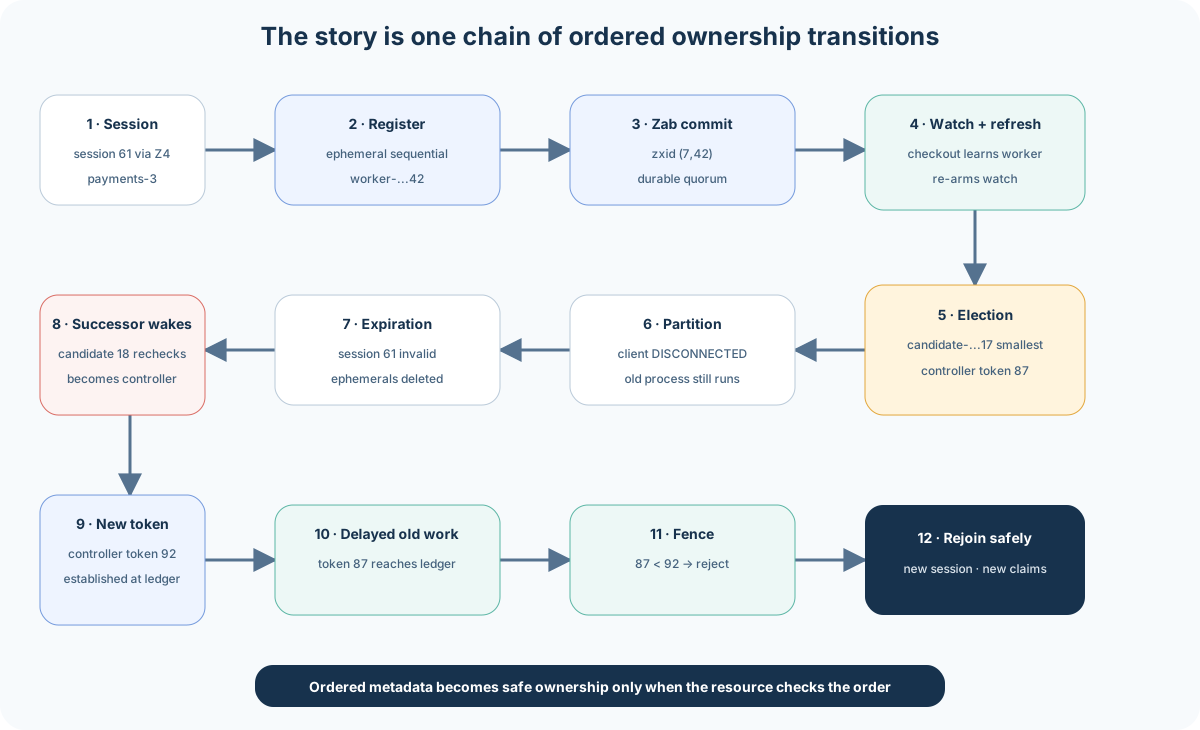
No single primitive solved the whole problem:
| Need | ZooKeeper mechanism | Application responsibility |
|---|---|---|
| ordered metadata | Zab and zxids | keep metadata small |
| live membership | session-owned ephemeral znode | safe mode on disconnect |
| change notification | watch | re-read and replace state |
| controller election | ephemeral sequential recipe | predecessor watch and recovery |
| stale-controller safety | ordered token source | external resource enforces fencing |
16. What ZooKeeper Guarantees—and What It Does Not
ZooKeeper provides:
- globally ordered, linearizable writes;
- FIFO ordering for each client’s operations;
- sequentially consistent, locally served reads;
- atomic znode data replacement and version checks;
- atomic multi-operation transactions within ZooKeeper;
- session-bound ephemeral state;
- ordered change notifications;
- quorum-based recovery of committed history.
ZooKeeper does not provide automatically:
- a general-purpose database or blob store;
- linearizable local reads from arbitrary followers;
- identical cross-client views at every instant;
- a durable stream containing every watch event;
- application leader fencing at an external resource;
- exactly-once effects after connection loss;
- a safe lock recipe without error recovery;
- availability without a voting majority;
- good ACLs, TLS, placement, or session timeouts by default.
Most ZooKeeper production failures come from crossing one of these boundaries: using watch events as data, equating connection loss with session expiration, assuming election stops an old process, retrying an ambiguous create blindly, or placing large/high-volume application data in the coordination plane.
17. Conclusion
ZooKeeper turns a replicated ordered namespace into a coordination vocabulary. Zab orders writes. Znodes give those writes names and versions. Sessions give temporary ownership a lifetime. Watches tell clients when to re-read. Recipes compose ephemeral and sequential znodes into discovery, elections, and locks. Fencing carries ZooKeeper’s order across the boundary to an external resource.
The Orchard story can be summarized as:
session
  -> ephemeral registration
  -> committed Zab transaction
  -> watch notification
  -> state refresh
  -> sequential election
  -> session expiration
  -> successor election
  -> external fencing
The final arrow is the one most often missed. ZooKeeper can say who owns a coordination claim now. A correctly designed system also prevents whoever owned it before from continuing to cause side effects.
Leave a Comment