Inside Service Discovery: Registries, Health, Routing, and Stale Endpoints
Published:
1. The Address That Stopped Being True
Orchard’s checkout service calls the payment service at a configured address:
PAYMENT_URL=http://10.4.7.21:8443
This is simple because one name means one process. Then payments-1 is restarted on another machine and receives 10.4.9.83. Checkout continues calling the old address. During the next deployment, three payment instances exist briefly; afterward only two should receive traffic. A static address cannot describe that changing set.
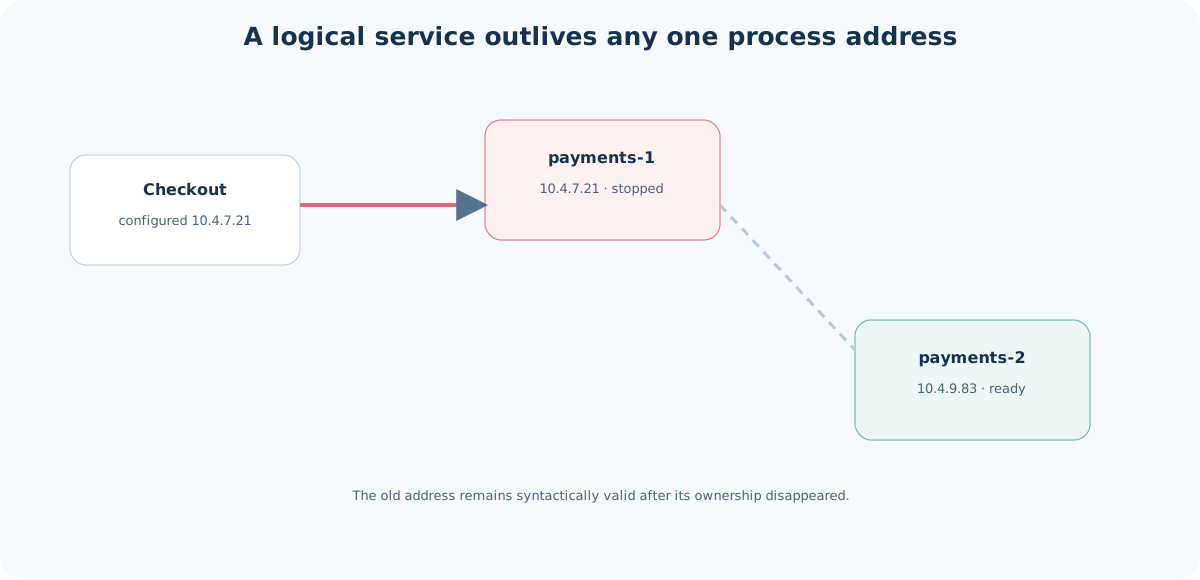
Hard-coding all three addresses does not solve the problem. Instances scale, move, become ready at different times, drain before shutdown, and fail without updating every caller simultaneously.
The application wants to call a stable logical name:
payments.production
Service discovery maintains the changing answer:
payments.production
  -> 10.4.9.83:8443
  -> 10.4.9.91:8443
2. What Service Discovery Is
Service discovery maps a logical service identity to a current set of network endpoints and enough metadata to choose among them.
resolve(service, caller_context) -> endpoint set + version + policy metadata
An endpoint is normally an IP address and port, but the useful record may also contain zone, protocol, weight, deployment revision, health state, and capabilities.
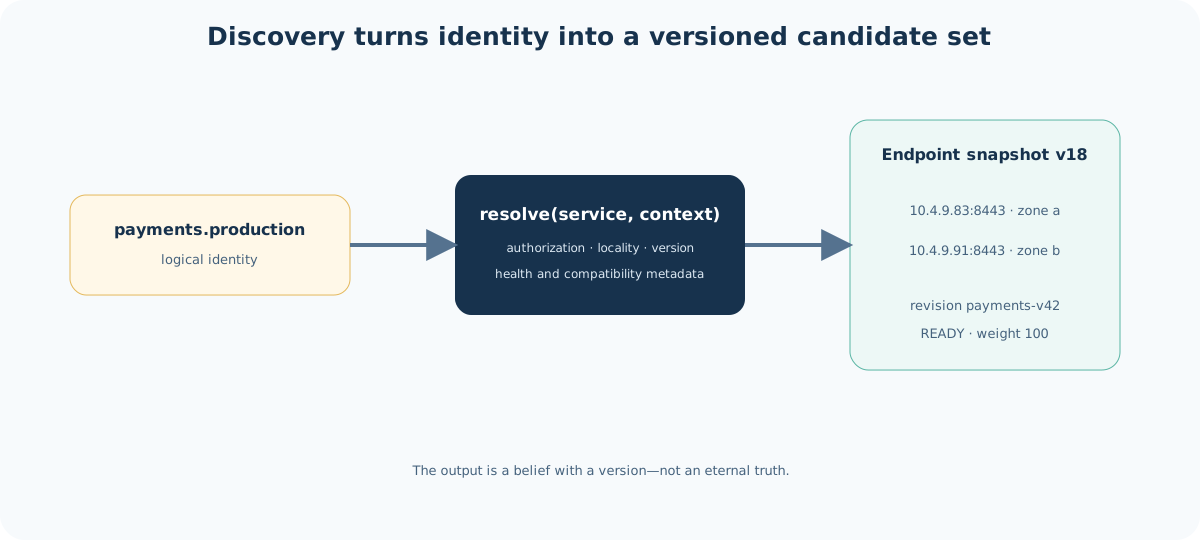
Discovery is not the same as load balancing or health checking:
| Mechanism | Question |
|---|---|
| Discovery | Which endpoints may serve this logical service? |
| Health checking | Is this endpoint currently usable under a defined test? |
| Load balancing | Which eligible endpoint should receive this request? |
| Routing | How do packets or requests reach the selected endpoint? |
The mechanisms compose. Discovery supplies candidates; health and policy make them eligible; a balancer selects one; the network carries the call.
3. One Server Does Not Need a Registry
If payment truly runs on one stable machine, configuration or ordinary DNS may be enough:
checkout -> payments.example.internal -> one server
A registry becomes useful when endpoint membership changes faster than callers can be redeployed, when several instances share one service identity, or when routing must consider locality and health.
This is a recurring distributed-systems boundary:
Discovery does not make one server more reliable. It makes a changing fleet addressable as one logical service.
The cost is another control plane whose stale or incorrect output can misroute every caller. Use the simplest mechanism whose update speed and failure model match the deployment.
4. The Registry Stores Desired Membership
A service registry maintains records such as:
{
  "service": "payments.production",
  "instance": "payments-7f9c",
  "address": "10.4.9.83",
  "port": 8443,
  "zone": "eu-west-1a",
  "revision": "payments-v42",
  "weight": 100,
  "state": "READY"
}
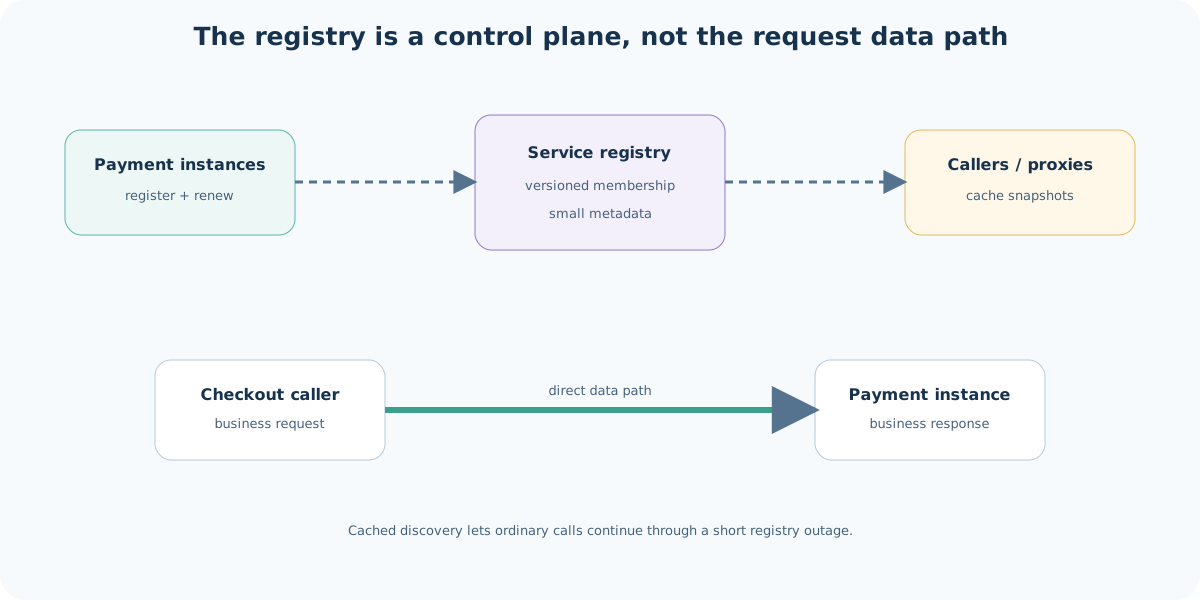
The registry is not usually on the application data path. It carries small, strongly controlled membership metadata. Callers, proxies, or load balancers cache that metadata and send requests directly to service instances.
This control-plane/data-plane split is essential. A registry lookup on every business request would make registry latency and availability part of every call. Cached endpoint snapshots keep ordinary traffic flowing during short registry outages.
5. The Registry Is Itself a Replicated System
One registry process would turn every deployment and membership change into a single point of failure. Production registries therefore expose one logical namespace through several replicas placed in different failure domains.
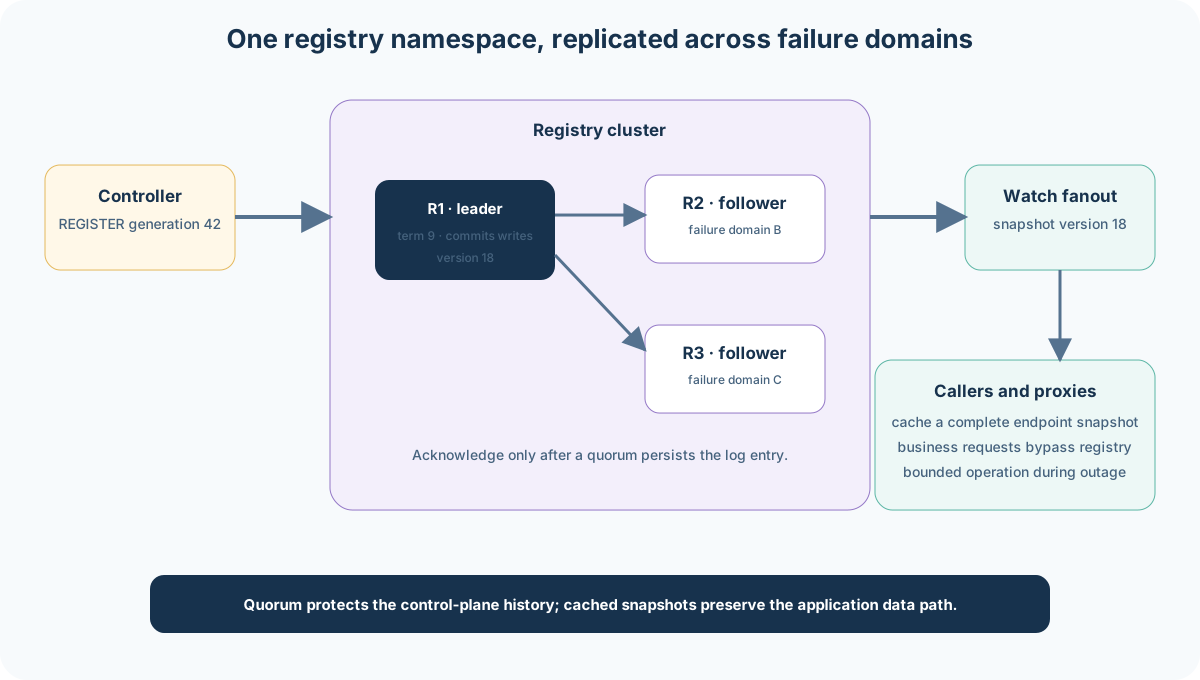
A common design has one elected leader for writes and a replicated log:
- a controller sends
REGISTER payments-7f9c, generation 42to any registry endpoint; - a follower forwards the command to the current leader;
- the leader appends it at log index 18;
- a quorum persists the entry;
- the leader commits version 18 and acknowledges the registration;
- replicas apply the same version and watchers eventually receive it.
The acknowledgement boundary matters. If the registry replies before the record is quorum committed, a leader crash can erase membership that the controller believes exists. Quorum commit preserves acknowledged state through a minority failure, but the registry must stop accepting changes when it cannot reach a quorum.
Reads have an explicit freshness choice. A leader or quorum-confirmed read can provide current committed membership at higher latency. A local follower read is faster and more available but may return version 17 while version 18 is already committed. Discovery clients already tolerate bounded staleness, so many systems combine cached reads with version checks rather than requiring a linearizable read for every lookup.
5.1 Registry Leader Failure
Suppose the leader commits version 18 and crashes before delivering every watch notification.
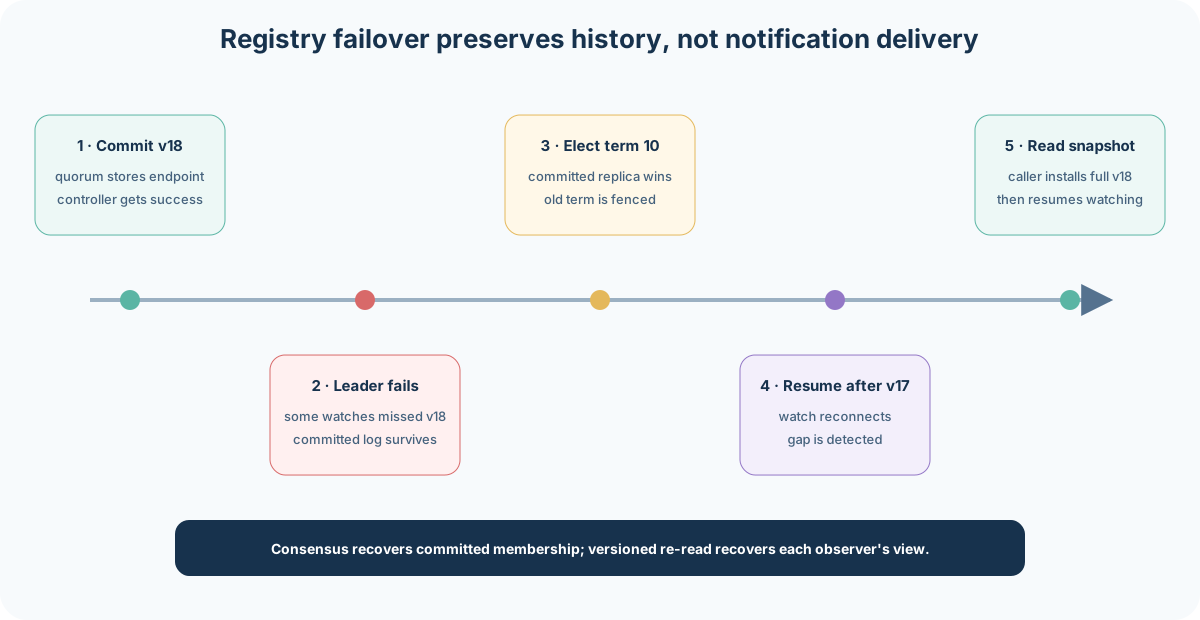
Safe recovery is:
- a quorum elects a leader whose log contains every committed version;
- the new leader publishes a greater term;
- the old leader is fenced if it later reconnects;
- writers retry idempotently with the same instance generation;
- watchers reconnect with their last observed version;
- a watcher that cannot resume from that version fetches a complete snapshot.
Consensus protects registry state; it does not guarantee delivery of every notification. The versioned snapshot and watch-resynchronization protocol close that second gap.
5.2 A Partition Separates Authority from Cached Availability
During a registry partition, only the quorum side may commit registrations, renew leases, or change policy. The minority side must not create a competing membership history. Callers on either side may continue using a bounded last-known-good snapshot, but that is data-plane continuity—not evidence that the registry is writable.
Lease behavior must use the committed registry timeline. A minority replica must not independently extend leases and later merge them, because both sides could claim different live generations for the same instance. When quorum is lost globally:
- existing callers may temporarily use cached endpoints;
- instances may keep serving requests if application policy permits;
- no membership mutation can be acknowledged safely;
- cached views expire according to their stated maximum age;
- recovery first establishes one authoritative log, then rebuilds watches.
The registry is therefore a replicated control plane with quorum availability; the service fleet can have a different, usually longer, cached-data-plane availability window.
6. Registration Can Be Direct or Delegated
In self-registration, the service process creates and renews its own record:
payments process -> register -> registry
payments process -> heartbeat/renew -> registry
The process knows when its application is ready, but it now contains registry credentials and lifecycle code.
In third-party registration, an orchestrator, node agent, or controller observes the workload and writes registry state:
orchestrator -> observes instance -> registry
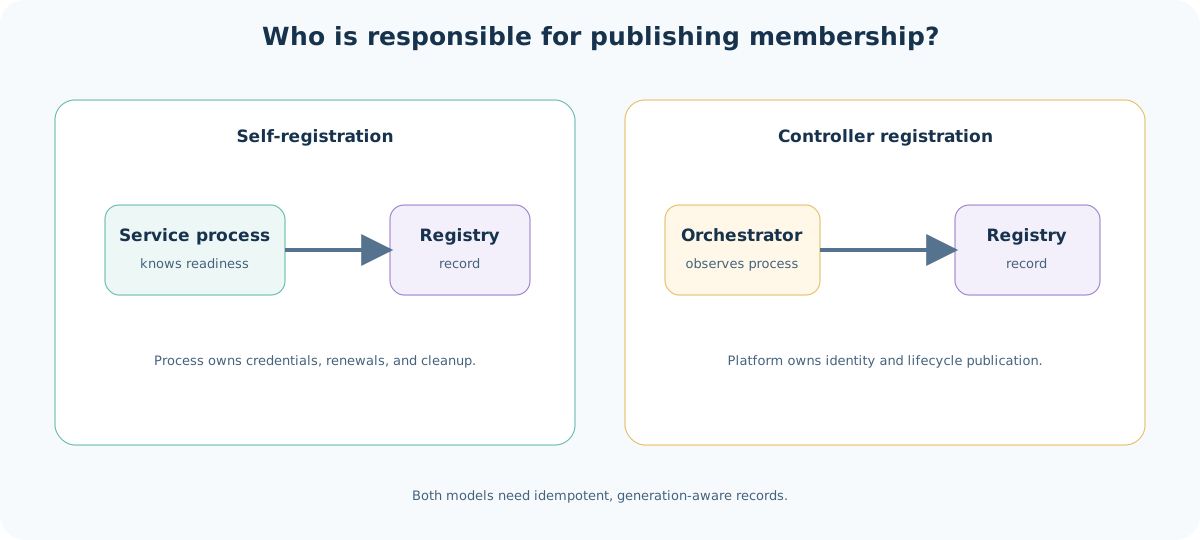
Neither model is inherently correct. The important invariant is that published membership corresponds to endpoints authorized and ready to serve—not merely processes that once existed.
Registration should be idempotent and generation-aware. A restarted process must not accidentally renew an older incarnation’s record with the same instance name.
7. Leases Remove Dead Registrations Eventually
If an instance crashes, it cannot send an explicit deregistration. A registry can bind membership to a lease:
register payments-7f9c with lease L42
renew L42 every 10 seconds
expire after 30 seconds without renewal
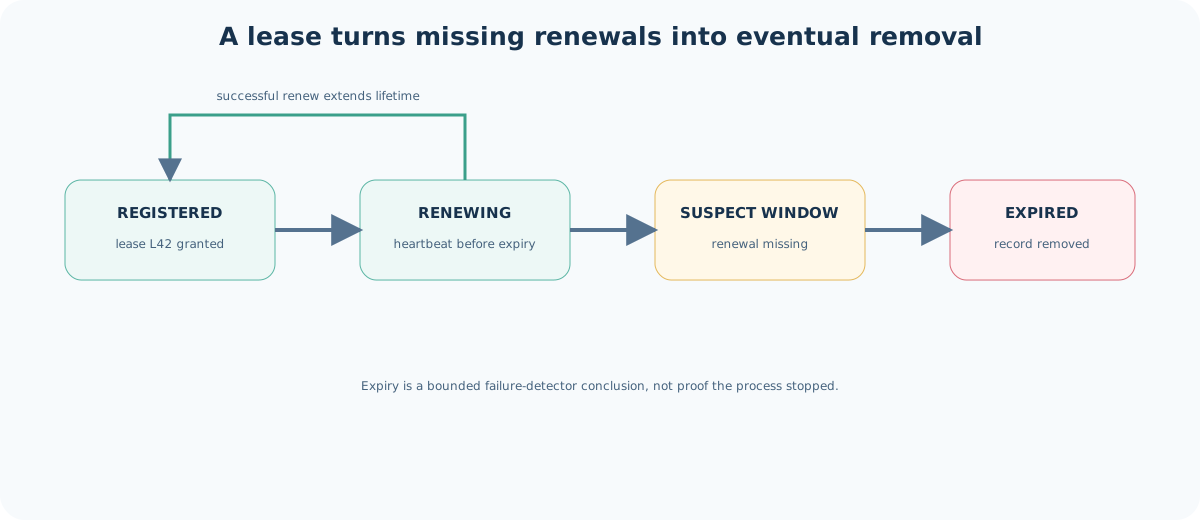
Lease expiry is a failure-detector decision, not proof that the process is dead. A paused or partitioned process may still accept traffic from clients that can reach it. Conversely, an overloaded registry path can expire many healthy instances at once.
The timeout balances:
- shorter stale-endpoint windows;
- tolerance for pauses, packet loss, and registry latency;
- heartbeat traffic and write load;
- risk of synchronized mass expiry.
Jitter renewals and preserve instance generations so an old delayed renewal cannot resurrect removed membership.
8. Liveness, Readiness, and Eligibility Are Different
A running process is not automatically safe for new traffic.
| State | Meaning |
|---|---|
| Live | Process should not yet be restarted |
| Ready | Process can accept new requests |
| Healthy | A particular check currently succeeds |
| Eligible | Policy permits this caller to select the endpoint |
| Draining | Existing work may finish; new work should stop |
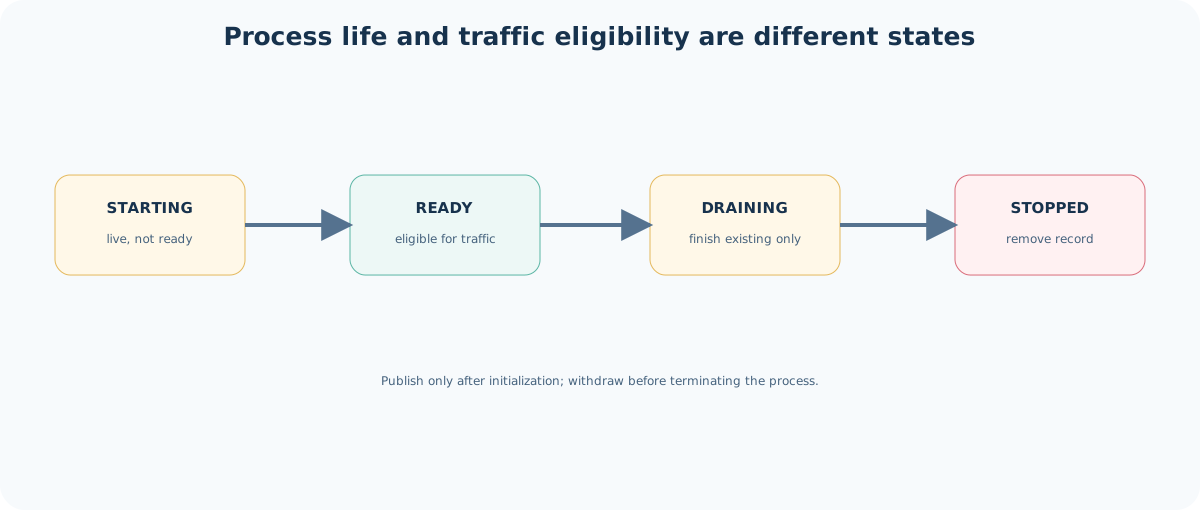
payments-v42 may be live while loading keys, unready until dependencies are usable, ready during normal serving, and draining before shutdown. Publishing it too early creates deployment failures; removing it too late creates calls to a process that can no longer finish them.
A shallow TCP check proves only that something accepted a connection. A deep check can detect dependency failure but may eject every service instance when one shared dependency fails, making an outage worse. Health policy must state which failures should remove an endpoint and which should trigger degraded behavior elsewhere.
9. DNS Is the Simplest Distributed Registry Interface
DNS can map a service name to several addresses:
payments.production. 30 IN A 10.4.9.83
payments.production. 30 IN A 10.4.9.91
SRV records can additionally carry ports, priorities, and weights. DNS is widely supported, highly cacheable, and operationally familiar.
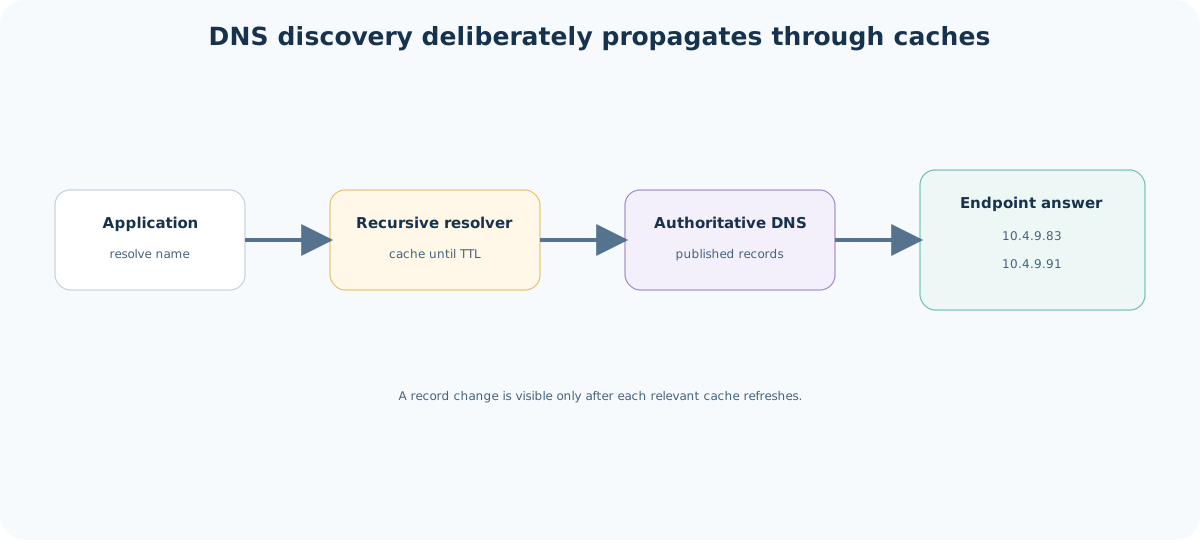
Its caching model creates limitations:
- resolvers and applications may retain answers until TTL expiry;
- some clients use only one returned address;
- record order is not a complete load-balancing policy;
- rapid health changes may propagate more slowly than desired;
- negative answers can also be cached.
A 30-second TTL is not a promise that every client removes an endpoint in exactly 30 seconds. Discovery design must tolerate overlapping old and new views.
10. Client-Side Discovery Routes Directly
With client-side discovery, the checkout client library obtains an endpoint snapshot and selects a payment instance:
checkout library -> registry/DNS -> endpoint snapshot
checkout library -> selected payment instance
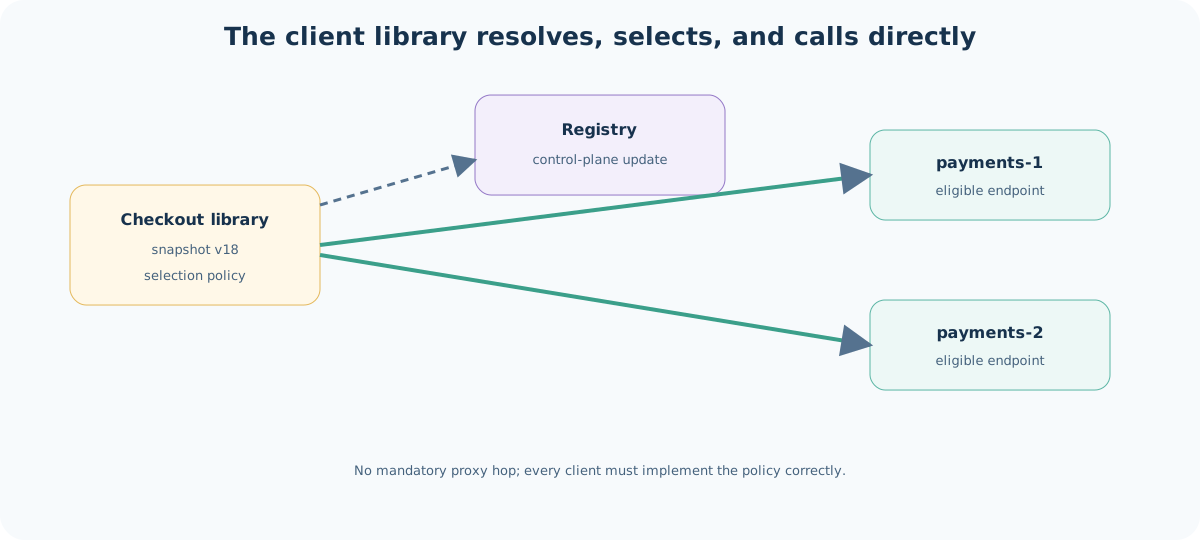
Advantages:
- no mandatory proxy hop;
- selection can use request keys and caller locality;
- data-plane capacity grows with clients and servers.
Costs:
- every language runtime needs correct discovery and balancing behavior;
- stale caches and retry policies vary by client version;
- registry credentials or a local discovery agent are required;
- rolling out policy changes may require library upgrades.
The library must not choose randomly from a list that includes unready or incompatible revisions merely because the registry returned them.
11. Server-Side Discovery Centralizes Routing
With server-side discovery, callers use one stable virtual address. A load balancer or proxy consumes registry state and chooses a backend:
checkout -> stable payment VIP/proxy -> payment instance
                         ^
                         |
                  registry snapshot
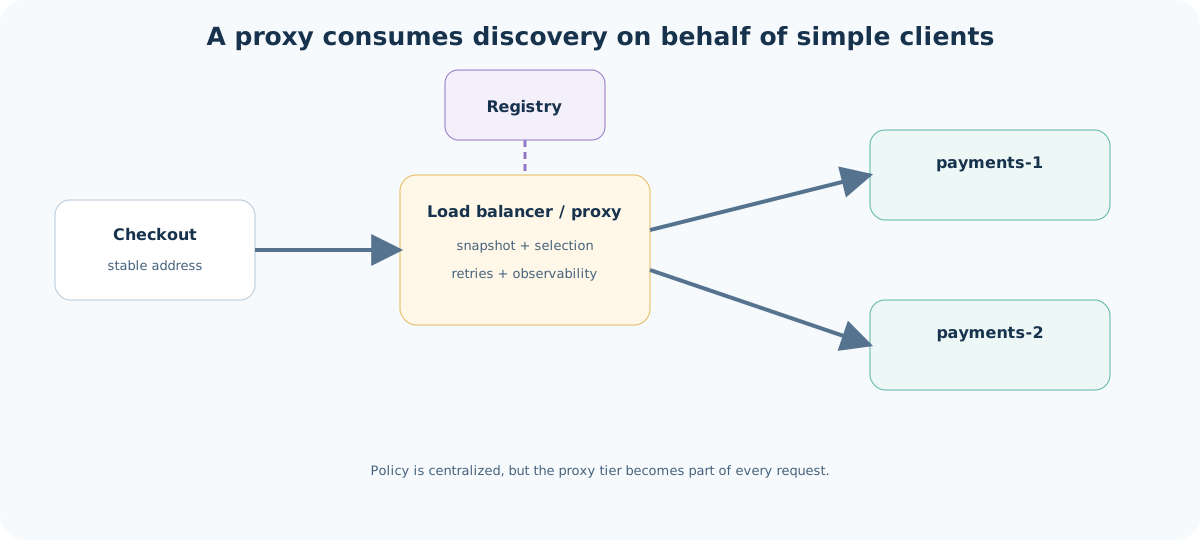
This centralizes policy, security, retries, and observability while keeping clients simple. It adds a network hop and requires the proxy tier itself to be available and scalable.
A sidecar or node-local proxy is a hybrid: the application calls a stable local address, while the proxy on each node performs client-side selection from a shared control plane.
12. Discovery State Is Always Versioned and Eventually Stale
At time t1, checkout holds endpoint version 17:
v17 = {payments-1, payments-2, payments-3}
The registry removes payments-2 and publishes version 18. Until checkout refreshes, it may still call the removed endpoint.
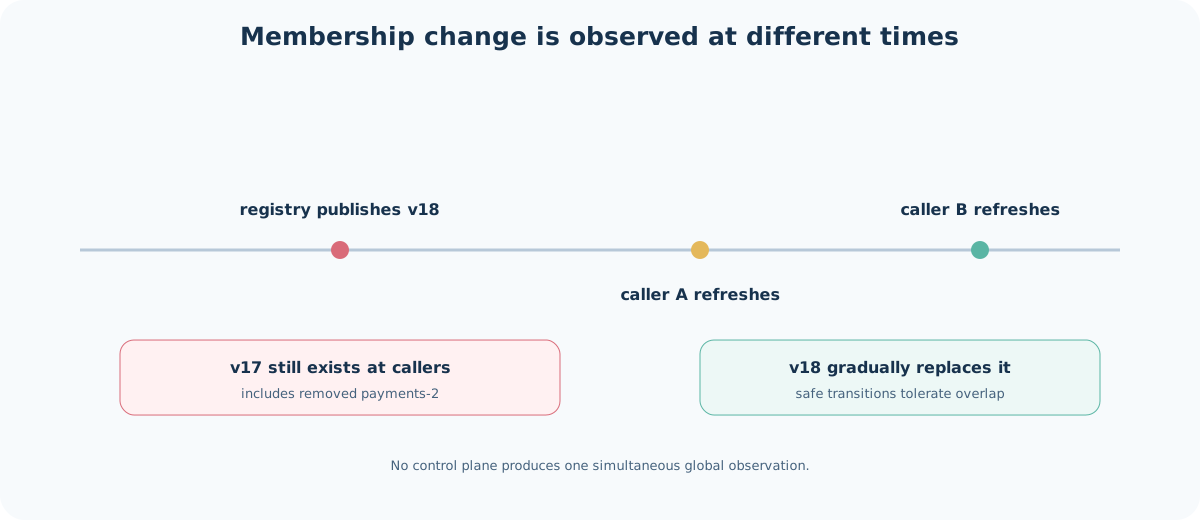
A robust caller treats discovery as a versioned snapshot:
- use the latest complete version, not a partially updated list;
- refresh after explicit stale-route errors;
- apply additions only after readiness;
- retain a last-known-good snapshot during a short control-plane outage;
- bound how long that snapshot remains acceptable;
- stop retrying an endpoint that failed locally before global removal arrives.
No discovery mechanism can make every caller observe membership change at one instant. The system must remain safe while versions overlap.
13. Watches Reduce Polling but Do Not Eliminate Re-Reads
A registry may let clients watch a service key. A notification means relevant state changed; the client should fetch or apply the next version.
Notifications can be delayed, coalesced, duplicated, or lost across a disconnect. The safe pattern is:
read snapshot at version V
establish/watch changes after V
on gap or reconnect -> read a fresh complete snapshot
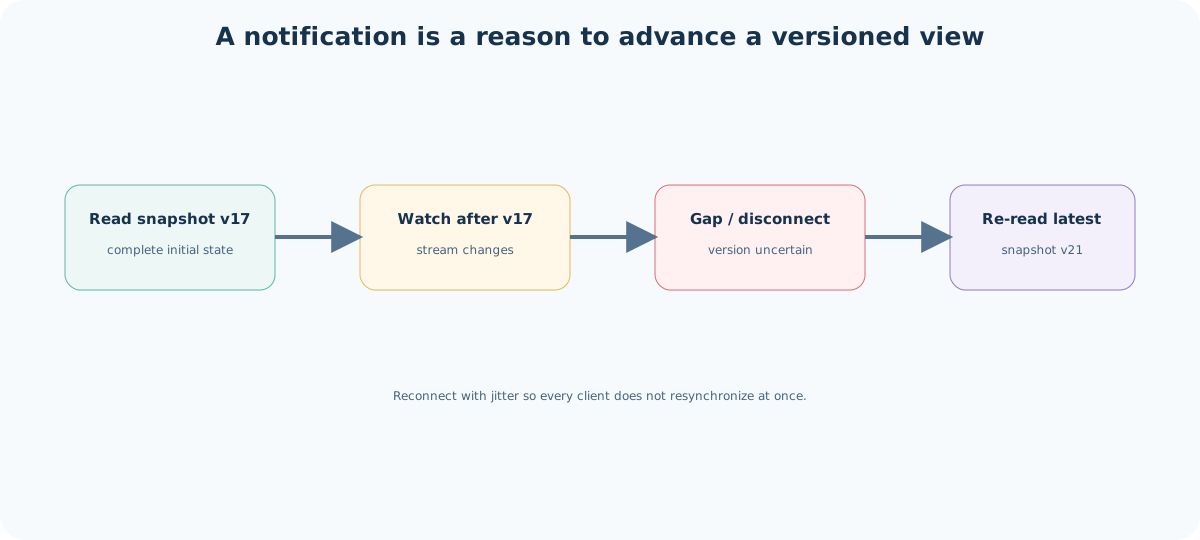
Thousands of clients reconnecting simultaneously can create a thundering herd. Use jitter, streaming fanout tiers, node-local agents, or DNS caching so one registry recovery does not cause every application process to poll at once.
14. Selection Must Consider Locality and Capacity
An endpoint set is not necessarily a set of equal choices. A policy might prefer:
- healthy instances in the caller’s zone;
- healthy instances in another zone in the same region;
- another region only under an explicit failover policy.
Weights can reflect unequal instance capacity or a canary percentage. Least-request or latency-aware selection can adapt to work, while deterministic hashing can preserve cache or session locality.
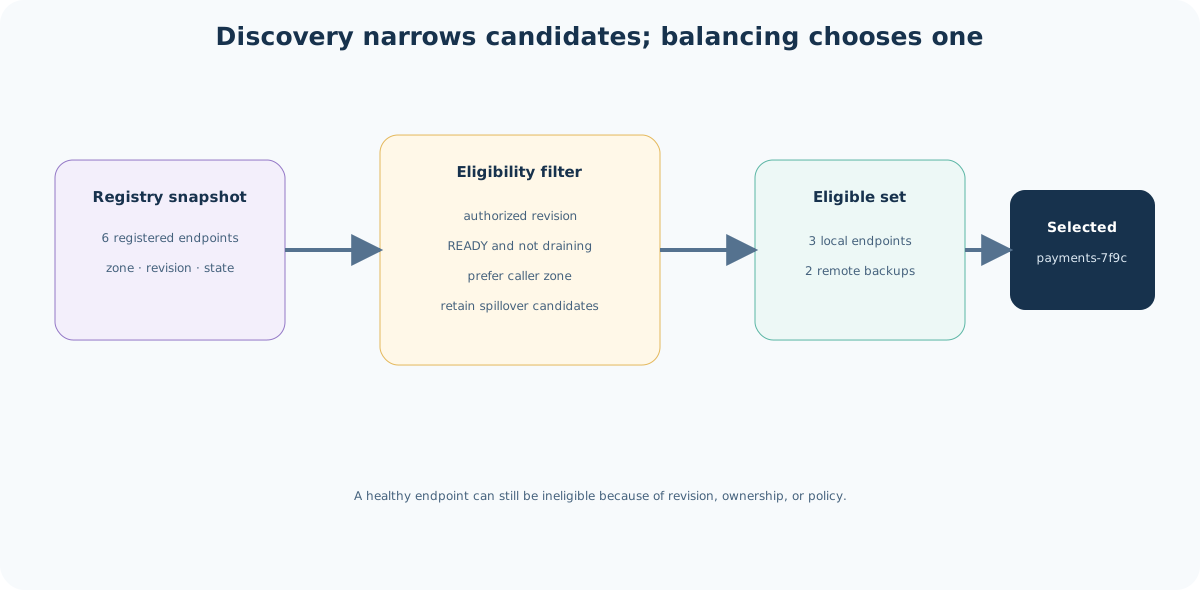
Locality improves latency and limits cross-zone traffic, but strict locality can overload one zone while spare capacity exists elsewhere. Define spillover thresholds and reserve failover headroom rather than assuming locality and balance always agree.
15. Retries Cross the Discovery Boundary
Checkout selects payments-2, but the connection fails. It refreshes discovery and retries payments-3.
For a read, that may be straightforward. For AuthorizePayment, the first attempt may have committed before its reply was lost. Discovery can find another endpoint; it cannot decide whether repeating the business action is safe.
Use:
- stable idempotency keys;
- per-attempt and overall deadlines;
- bounded retry count and jitter;
- retry budgets during fleet failure;
- protocols that expose stale endpoint or draining responses;
- application status lookup for uncertain outcomes.
Service discovery repairs where to send. It does not repair ambiguous operation semantics.
16. Bootstrap and Security Form a Trust Root
To discover everything else, a process must first find DNS, a local agent, a registry, or a proxy. That bootstrap address is intentionally simpler and more stable than ordinary service membership.
The discovery system also controls where sensitive traffic goes. Protect:
- who may register an instance under a service identity;
- who may read internal topology;
- how endpoint identity is authenticated with TLS;
- which controller may change weights or revisions;
- audit records for registration, removal, and policy change.
An attacker who registers payments.production -> attacker has bypassed many application controls. Discovery metadata is security-sensitive control-plane state.
17. Multi-Region Discovery Is a Failure Policy
A global service may publish regional endpoint sets. During a London failure, callers can move to Dublin only if:
- Dublin has reserved compute and dependency capacity;
- data and authorization semantics permit cross-region service;
- routing changes faster than client deadlines;
- retry storms do not multiply traffic;
- the failed region cannot continue conflicting protected writes.
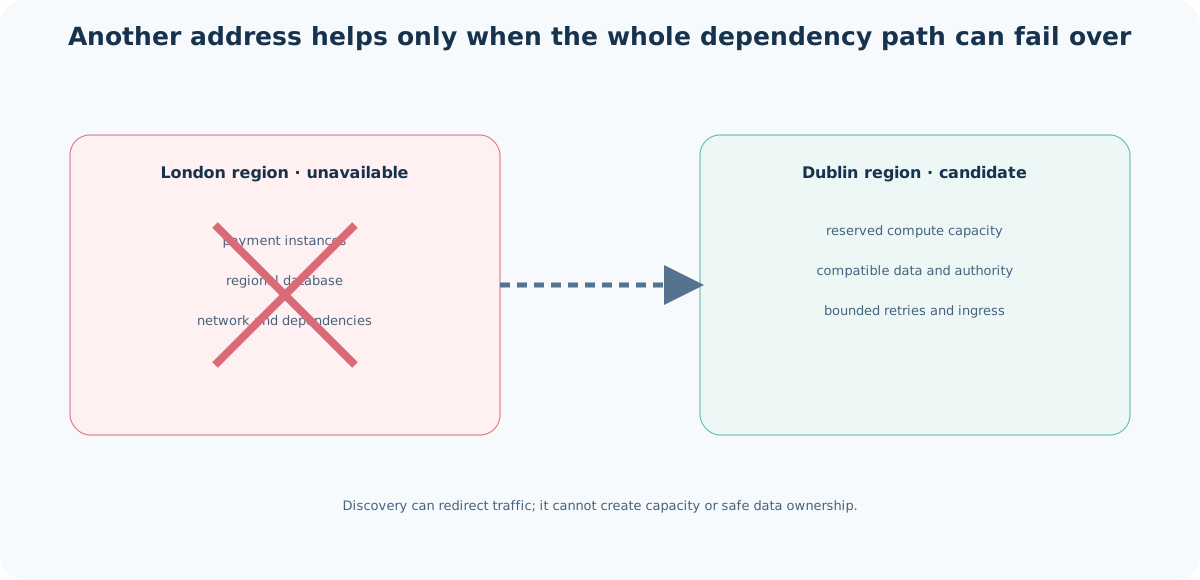
For stateful services, discovery must follow ownership. It must not route a write to a healthy server that is no longer the leader or shard owner. Health answers “is it running?”; metadata generation answers “is it still authoritative?”
18. Failure Matrix
| Failure | Visible risk | Containment |
|---|---|---|
| instance crashes | stale endpoint receives calls | lease expiry plus local passive ejection |
| instance pauses | false removal or late responses | conservative lease, generation, idempotency |
| registry follower crashes | reduced redundancy | continue with quorum and replace the replica |
| registry leader crashes | writes and watches pause briefly | elect committed replica, fence old term, reconnect by version |
| registry loses quorum | competing membership histories | reject mutations; callers use bounded cached snapshots |
| registry unavailable | no membership refresh | cached last-known-good snapshot with age limit |
| watch event lost | client remains on old version | version gaps and full resynchronization |
| bad health check | mass endpoint removal | staged policy and independent signals |
| DNS answer cached | calls continue to removed address | drain longer than propagation window |
| region fails | overload of surviving region | failover headroom and bounded retries |
| unauthorized registration | traffic interception | authenticated identities and write ACLs |
| old owner remains live | split-brain writes | ownership epoch or fencing at resource |
19. Operations and Observability
Measure the complete pipeline:
- registered, ready, draining, and expired instance counts;
- registry term, quorum health, commit index, and replica lag;
- leader-election duration and rejected writes while quorum is unavailable;
- registry commit and watch-delivery latency;
- endpoint snapshot version and age at callers;
- DNS TTL and observed stale-address traffic;
- selection distribution by zone, revision, and endpoint;
- connection failures before and after passive ejection;
- retry amplification during membership changes;
- readiness-to-first-traffic and drain-to-last-traffic time;
- regional spillover and remaining failover headroom.
A useful trace records:
service=payments.production
snapshot_version=18
selected=payments-7f9c
selected_zone=eu-west-1a
selection_reason=local_ready
attempt=2
previous_failure=connect_refused
Without snapshot and selection context, a stale-discovery incident looks like random backend failure.
20. The Complete Checkout Call
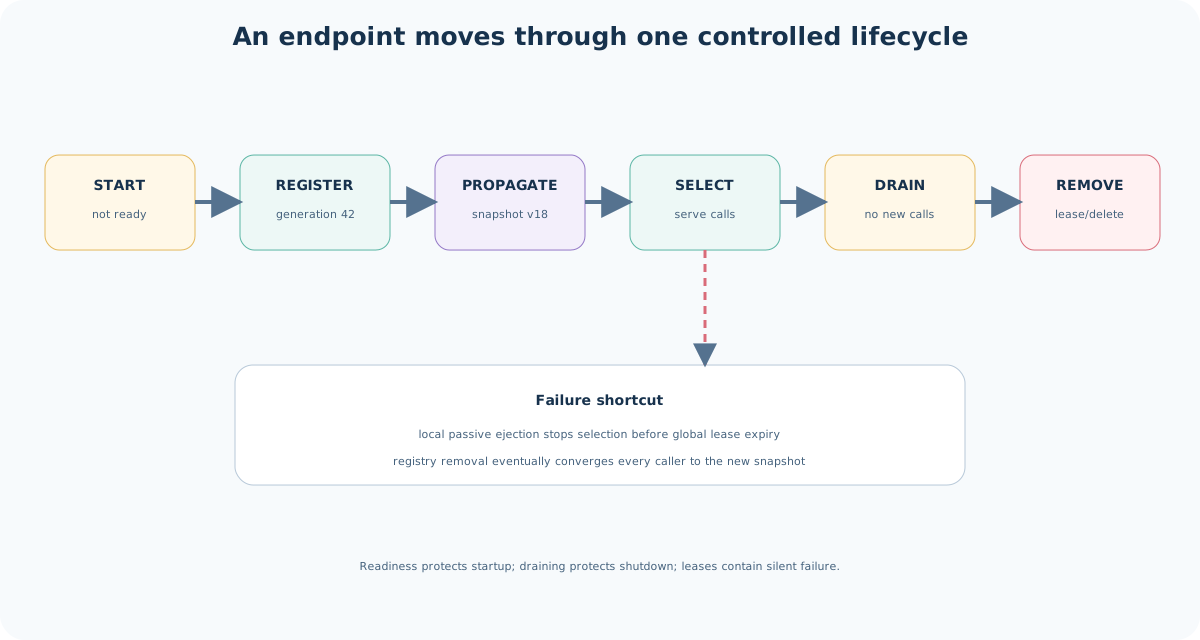
payments-7f9cstarts but is not yet ready.- It loads credentials and dependencies.
- The controller publishes it as ready under generation 42.
- The registry leader commits version 18 on a quorum before acknowledging it.
- Checkout receives the version through DNS, watch, or proxy configuration.
- Locality policy selects
payments-7f9c. - The request carries a stable idempotency key.
- During deployment, the instance enters draining state.
- New snapshots exclude it from new calls.
- Existing calls finish before process shutdown.
- If it crashes instead, passive failure detection stops local selection.
- Lease expiry eventually removes it globally.
- A reconnecting watcher verifies its version and obtains a full snapshot if it missed any event.
21. Final Mental Model
Service discovery turns a stable logical identity into a changing, versioned set of eligible endpoints:
service identity
  -> authenticated registration
  -> quorum-committed registry history
  -> liveness and readiness
  -> versioned registry state
  -> cached caller or proxy snapshot
  -> locality and capacity policy
  -> selected endpoint
  -> retry or refresh after failure
  -> draining and eventual removal
The registry is the control plane; application calls are the data plane. Discovery can tell a caller where an eligible instance is believed to be. It cannot make that belief instantaneous, prove a timed-out operation failed, add failover capacity, or fence an old stateful owner by itself.
The core invariant is not “the registry has a list.” It is:
Every request is routed using a bounded-staleness view of authorized, compatible endpoints, and overlapping views remain safe during change.
Leave a Comment